
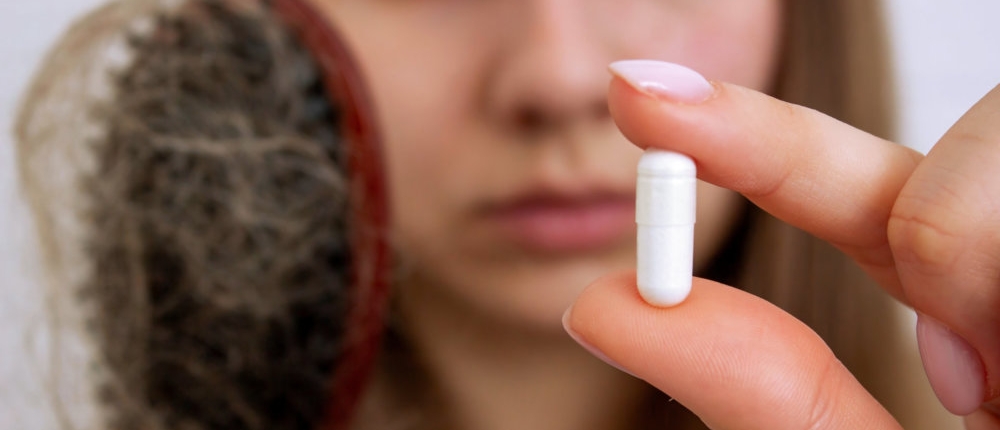
Biotin for Hair Loss: Who Actually Benefits (and Who Won’t)
Biotin is one of the most heavily marketed supplements for hair growth. It appears in countless “hair, skin and nails” products and is often presented as a simple, universal solution for thinning or shedding.
But biotin is not a one-size-fits-all answer.
Whether it helps depends entirely on why your hair is changing.
What Biotin Actually Does
Biotin (vitamin B7) is a water-soluble B vitamin involved in energy metabolism and the production of keratin — the structural protein that makes up hair fibres.
In cases of true biotin deficiency, symptoms can include brittle hair, thinning, skin changes, and fragile nails. Supplementation in these cases can improve hair strength over time.
However, true deficiency is considered relatively uncommon in otherwise healthy adults who consume a varied diet.
What the Research Really Shows
A systematic review published in Skin Appendage Disorders examined reported cases of biotin use for hair loss and found that documented improvement was primarily seen in individuals with underlying deficiency or specific medical conditions affecting absorption (Patel et al., 2017).
More recent reviews have noted that high-quality placebo-controlled trials demonstrating significant hair regrowth in individuals without deficiency remain limited (Yelich et al., 2023).
This is an important distinction. Biotin can correct a deficiency. It does not override hormonal shifts, stress-related shedding, medication effects, or genetic thinning.
Why Biotin Became So Popular
Biotin is inexpensive, widely available, and easy to add to combination supplements. It is also safe at typical doses, which makes it attractive for over-the-counter hair formulas.
Because keratin is the main structural component of hair, the logic seems simple: support keratin production, support hair.
But hair biology is more complex than that.
Hair growth depends on a healthy follicle environment, balanced hormones, adequate iron levels, scalp health, and a stable growth cycle. If one of these larger systems is disrupted, adding biotin alone rarely resolves the issue.
Who May Benefit from Biotin
Biotin supplementation may be helpful if:
- There is a confirmed biotin deficiency
- There are absorption concerns or restrictive diets
- Brittle nails accompany hair changes
- A GP has identified nutritional imbalance
In these cases, correcting the deficiency may improve overall hair fibre strength over time.
Who Is Less Likely to Benefit
In women, hair thinning is more commonly linked to hormonal shifts, stress responses, or pattern-related changes than isolated vitamin deficiency.
Biotin is unlikely to significantly improve thinning driven by:
- Perimenopause or menopause-related hormonal decline
- Female pattern hair loss
- Telogen effluvium triggered by stress or illness
- Rapid weight loss
- Medication-related shedding, including GLP-1 weight loss medications
If shedding began during a hormonal transition or after starting a medication, identifying that trigger is far more impactful than increasing supplement intake.
For example, we commonly see temporary shedding linked to metabolic stress or weight changes. You can read more here:
- Understanding the Link Between Weight Loss Drugs and Hair Shedding
- Ozempic and Hair Loss: What the Research Really Says
Hormonal changes during midlife are also a significant factor for many women:
Can Taking More Biotin Help?
More is not necessarily better.
High-dose biotin supplements are often marketed aggressively, but increasing intake beyond what the body requires does not automatically translate to increased hair growth.
Importantly, high-dose biotin can interfere with certain laboratory tests, including thyroid function and cardiac markers. Anyone supplementing should inform their doctor prior to blood testing.
Why Assessment Comes Before Supplementation
Hair thinning and shedding often involve multiple overlapping factors. Before starting supplements, it is helpful to understand:
- Whether shedding is temporary or ongoing
- Whether hormonal changes may be contributing
- Whether iron, thyroid, or other nutritional markers need review
- Whether scalp health may be influencing growth patterns
At Tricho Health Clinic, our Hair & Scalp Analysis appointments are designed to help identify patterns and contributing factors so you can make informed decisions about care.
If you would like a broader overview of how supplements fit into the bigger picture, you can also read:
Hair Supplements for Hair Loss: What Works and What Doesn’t
The Bottom Line
Biotin is not ineffective. It is simply specific.
When a true deficiency is present, it can support stronger hair over time. When thinning is driven by hormones, stress, or medication-related changes, supplementation alone is unlikely to resolve the issue.
The most valuable first step is understanding what is influencing your hair.
Clarity comes before capsules.
Frequently Asked Questions
What is the recommended daily intake of biotin for women?
The adequate intake level for biotin in adult women is generally around 30 micrograms per day, which is typically achievable through a balanced diet. Many over-the-counter hair supplements contain thousands of micrograms — significantly above daily requirements. Higher doses are not automatically more effective unless a deficiency is present.
How common is biotin deficiency in women?
True biotin deficiency is considered uncommon in healthy adults. It may occur in cases of severe dietary restriction, certain gastrointestinal conditions affecting absorption, prolonged antibiotic use, or rare genetic disorders. Most women experiencing hair thinning do not have isolated biotin deficiency as the primary cause.
Can a blood test confirm whether I need biotin?
Biotin levels can be assessed through laboratory testing, but testing is not routinely performed unless there is suspicion of deficiency. More commonly, doctors may assess broader nutritional markers such as iron (ferritin), thyroid function, or other indicators that may influence hair health. It is important to inform your doctor if you are taking biotin before blood tests, as high doses can interfere with certain results.
Does biotin help with female pattern hair loss?
Female pattern hair loss is primarily influenced by genetic and hormonal factors. While biotin supports keratin production, there is limited evidence that it alters the progression of hormonally driven pattern thinning in women who are not deficient.
Why do some women say biotin worked for them?
If someone had an unrecognised deficiency or brittle hair due to nutritional imbalance, supplementation may improve fibre strength over time. In other cases, improvements may coincide with natural shedding cycles stabilising, improved scalp care, or broader lifestyle changes. Hair growth is cyclical, which can make cause-and-effect difficult to isolate.
Can biotin stop telogen effluvium?
Telogen effluvium is a temporary shedding condition triggered by physiological stress, illness, hormonal change, or rapid weight loss. Biotin does not correct the trigger itself. In most cases, telogen effluvium resolves as the body stabilises, provided underlying causes are addressed.
Is biotin helpful during menopause?
Menopause-related hair thinning is typically influenced by declining oestrogen levels and increased follicle sensitivity to androgens. While biotin may support overall hair fibre quality, it does not directly address hormonal shifts. A broader assessment is often more helpful than supplementation alone.
Can taking too much biotin cause side effects?
Biotin is water-soluble and generally well tolerated at standard doses. However, high-dose supplementation can interfere with certain laboratory blood tests, including thyroid and cardiac markers, potentially leading to inaccurate results. Always inform your healthcare provider if you are supplementing.
Should I try biotin before seeing a specialist?
If hair thinning or shedding is new, sudden, or progressing, understanding the underlying pattern first can prevent unnecessary supplementation. Hair changes often reflect hormonal, metabolic, or stress-related factors that benefit from structured assessment rather than trial-and-error supplementation.
You may be also interested in
 https://www.trichohealthclinic.com.au/wp-content/uploads/2026/02/The-Most-Common-Root-Causes.jpg
500
1000
admin
https://www.trichohealthclinic.com.au/wp-content/uploads/2026/02/Tricho-Health-Clinic-Logo.png
admin2026-02-24 15:48:502026-08-11 12:40:01The Most Common Root Causes of Hair Loss in Women (And Why Supplements Often Miss Them)
https://www.trichohealthclinic.com.au/wp-content/uploads/2026/02/The-Most-Common-Root-Causes.jpg
500
1000
admin
https://www.trichohealthclinic.com.au/wp-content/uploads/2026/02/Tricho-Health-Clinic-Logo.png
admin2026-02-24 15:48:502026-08-11 12:40:01The Most Common Root Causes of Hair Loss in Women (And Why Supplements Often Miss Them) https://www.trichohealthclinic.com.au/wp-content/uploads/2026/02/Why-hair-loss-treatments-fail.jpg
500
1000
admin
https://www.trichohealthclinic.com.au/wp-content/uploads/2026/02/Tricho-Health-Clinic-Logo.png
admin2026-02-24 15:43:032026-08-11 12:41:46Why Hair Loss Treatments Fail Without Identifying the Root Cause
https://www.trichohealthclinic.com.au/wp-content/uploads/2026/02/Why-hair-loss-treatments-fail.jpg
500
1000
admin
https://www.trichohealthclinic.com.au/wp-content/uploads/2026/02/Tricho-Health-Clinic-Logo.png
admin2026-02-24 15:43:032026-08-11 12:41:46Why Hair Loss Treatments Fail Without Identifying the Root Cause https://www.trichohealthclinic.com.au/wp-content/uploads/2026/02/Peptides-for-hair-growth.jpg
500
1000
admin
https://www.trichohealthclinic.com.au/wp-content/uploads/2026/02/Tricho-Health-Clinic-Logo.png
admin2026-02-24 15:41:462026-08-11 12:44:14Peptides for Hair Growth: What the Science Says (and What It Doesn’t)
https://www.trichohealthclinic.com.au/wp-content/uploads/2026/02/Peptides-for-hair-growth.jpg
500
1000
admin
https://www.trichohealthclinic.com.au/wp-content/uploads/2026/02/Tricho-Health-Clinic-Logo.png
admin2026-02-24 15:41:462026-08-11 12:44:14Peptides for Hair Growth: What the Science Says (and What It Doesn’t) https://www.trichohealthclinic.com.au/wp-content/uploads/2026/02/Collagen-and-hair-thinning.jpg
500
1000
admin
https://www.trichohealthclinic.com.au/wp-content/uploads/2026/02/Tricho-Health-Clinic-Logo.png
admin2026-02-24 15:40:532026-08-11 12:44:56Collagen and Hair Thinning: Science, Myths, and Realistic Expectations
https://www.trichohealthclinic.com.au/wp-content/uploads/2026/02/Collagen-and-hair-thinning.jpg
500
1000
admin
https://www.trichohealthclinic.com.au/wp-content/uploads/2026/02/Tricho-Health-Clinic-Logo.png
admin2026-02-24 15:40:532026-08-11 12:44:56Collagen and Hair Thinning: Science, Myths, and Realistic Expectations https://www.trichohealthclinic.com.au/wp-content/uploads/2026/02/Biotin-for-hair-loss.jpg
500
1000
admin
https://www.trichohealthclinic.com.au/wp-content/uploads/2026/02/Tricho-Health-Clinic-Logo.png
admin2026-02-24 15:39:562026-08-11 12:45:39Biotin for Hair Loss: Who Actually Benefits (and Who Won’t)
https://www.trichohealthclinic.com.au/wp-content/uploads/2026/02/Biotin-for-hair-loss.jpg
500
1000
admin
https://www.trichohealthclinic.com.au/wp-content/uploads/2026/02/Tricho-Health-Clinic-Logo.png
admin2026-02-24 15:39:562026-08-11 12:45:39Biotin for Hair Loss: Who Actually Benefits (and Who Won’t) https://www.trichohealthclinic.com.au/wp-content/uploads/2026/02/Hair-supplements-for-hair-loss.jpg
500
1000
admin
https://www.trichohealthclinic.com.au/wp-content/uploads/2026/02/Tricho-Health-Clinic-Logo.png
admin2026-02-24 15:38:432026-08-11 12:46:44Hair Supplements for Hair Loss: What Works, What Doesn’t, and Why Diagnosis Comes First
https://www.trichohealthclinic.com.au/wp-content/uploads/2026/02/Hair-supplements-for-hair-loss.jpg
500
1000
admin
https://www.trichohealthclinic.com.au/wp-content/uploads/2026/02/Tricho-Health-Clinic-Logo.png
admin2026-02-24 15:38:432026-08-11 12:46:44Hair Supplements for Hair Loss: What Works, What Doesn’t, and Why Diagnosis Comes First
