
About Tricho Health Clinic
What does Tricho Health Clinic actually do?
Tricho Health Clinic focuses on assessing the health of your hair and scalp and understanding patterns that may be contributing to changes such as shedding, thinning, breakage, or scalp concerns.
Rather than styling or cosmetic services, the emphasis is on observation, assessment, and supportive care. This includes examining the scalp environment, hair density, growth patterns, and discussing factors such as lifestyle, stress, hormonal changes, or recent health events that may be relevant.
The goal is not to diagnose medical conditions, but to help make sense of what’s happening and support hair and scalp health in an informed, realistic way.
Have you helped women like me before? Have you seen this before?
Yes. Hair loss and scalp conditions are what we work with every day, and it’s very likely we’ve helped women experiencing concerns similar to yours. While every person’s situation is unique, many of the questions and worries we hear are remarkably similar. Whether you’re noticing increased shedding, thinning, changes to your hairline, an itchy scalp or simply feel that your hair isn’t what it used to be, we’ve supported many women through the same uncertainty.
One of the first things many clients say during their appointment is, “I thought I was the only one.”
Rather than making assumptions or recommending the same treatment for everyone, we take the time to understand your individual circumstances. We’ll listen to your concerns, assess your hair and scalp, review your medical history and explain what we believe is contributing to your hair changes. Every treatment plan is personalised because every woman is different.
Our goal is not only to help improve your hair and scalp health but also to ensure you leave your appointment with a clear understanding of what’s happening and what your options are. Many women tell us that simply speaking to someone who understands hair loss and takes the time to explain everything properly is an enormous relief.
Related information:
- Hair & Scalp Analysis
- Hair Loss Treatments
- Personalised Treatment Plans & Follow Up Care
- The Most Common Root Causes of Hair Loss in Women (And Why Supplements Often Miss Them)
You don’t have to work this out on your own.
If you’re worried about changes to your hair or scalp, booking a Hair & Scalp Analysis is the first step towards understanding what’s happening and receiving personalised advice based on your individual needs.
Have you seen other women like me get better?
Yes. We’ve supported many women experiencing a wide range of hair loss and scalp conditions, and many have seen significant improvements after receiving the right diagnosis and personalised treatment plan. While every woman’s journey is different, it’s incredibly reassuring to know that you’re not the first person to feel this way—and you certainly won’t be the last.
The level of improvement depends on many factors, including the underlying cause of your hair loss, how long it has been present, your overall health and how your hair responds to treatment. Some women notice a reduction in shedding, others experience healthier regrowth or improved hair density, while some see improvements in scalp health and comfort. Every outcome is individual, which is why we avoid making unrealistic promises.
One of the most rewarding parts of our work is seeing women regain confidence as they begin to understand what’s happening and notice positive changes over time. For many clients, improvement isn’t measured only by the amount of hair they’ve regained. It’s also about no longer feeling frightened every time they wash their hair, no longer constantly checking the mirror and finally feeling hopeful again.
We’ll always be honest with you about what we believe is achievable based on your individual circumstances. If we believe treatment is likely to help, we’ll explain why. If there are limitations, we’ll discuss those openly as well. Our goal is to provide realistic expectations, evidence-based care and ongoing support throughout your journey.
Related information:
Everyone’s hair journey is different, but you don’t have to face yours alone.
A Hair & Scalp Analysis can help identify what’s causing your hair changes and provide a personalised treatment plan designed around your individual needs.
How is Tricho Health Clinic different from a salon?
While salons focus on the appearance of hair, Tricho Health Clinic focuses on why hair is behaving the way it is.
At a clinic, the emphasis is on assessment rather than styling. Appointments are designed to understand shedding patterns, density changes, scalp health, and contributing factors rather than cutting, colouring, or cosmetic outcomes.
Many people come to Tricho Health Clinic after noticing changes that can’t be explained by products or styling alone. The clinic approach is slower, more investigative, and centred on long-term hair health rather than immediate cosmetic results.
Do you diagnose medical conditions?
No. Tricho Health Clinic does not diagnose medical conditions, prescribe medication, or advise on starting or stopping treatments.
Diagnosis sits with medical professionals such as GPs, dermatologists, or specialists.
What the clinic does provide is professional assessment of hair and scalp health. This includes identifying patterns that may be consistent with known conditions and, where appropriate, suggesting that medical review may be helpful. This collaborative approach ensures clients are supported without overstepping clinical boundaries.
Do I need a referral to book an appointment?
No referral is needed to book an appointment at Tricho Health Clinic.
Many clients choose to book because they’ve noticed changes they don’t fully understand and want professional guidance. Others arrive after seeing a GP or specialist and are looking for ongoing support for hair and scalp health.
You don’t need to have everything figured out before you come in – assessment is often the first step in gaining clarity.
Can you help even if I don’t know what’s causing my hair changes?
Yes. In fact, this is one of the most common reasons people book.
Most clients do not arrive with a clear explanation for what’s happening. Hair changes often involve multiple overlapping factors, and it’s not always obvious what’s contributing.
A hair and scalp assessment is designed to explore patterns, timing, and possible influences so that you don’t have to guess or self-diagnose.
Do you work alongside doctors or dermatologists?
Yes. Tricho Health Clinic works alongside medical professionals when appropriate.
If assessment findings suggest that medical input would be helpful, clients may be encouraged to speak with their GP or specialist. This ensures that hair and scalp care remains ethical, appropriate, and within scope.
The clinic’s role is supportive and complementary, not a replacement for medical care.
What types of hair concerns do you see most often?
The clinic commonly sees concerns related to hair shedding, thinning, reduced density, scalp irritation, and changes linked to stress or hormonal transition.
Many clients also attend because they feel their hair no longer behaves the way it used to, even if they can’t pinpoint a specific issue.
Importantly, the clinic is not limited to one “type” of problem – assessment is about understanding what’s happening for each individual.
What if I’m not sure whether my issue is “serious enough”?
You don’t need to decide that on your own.
Hair changes don’t have to be severe to deserve attention. If something feels different, worrying, or confusing, assessment can provide reassurance or guidance before concerns escalate.
Many people book simply to understand what’s happening and what, if anything, they should be doing next. That alone is a valid reason to attend.
Appointments, Assessments & What to Expect
What happens during a hair and scalp analysis?
A hair and scalp analysis is a structured assessment designed to understand what’s happening beneath the surface, not just what can be seen in the mirror.
During the appointment, the focus is on observing hair density, distribution, shedding patterns, and scalp condition. Time is also spent discussing your hair history, recent changes, and any factors that may be relevant, such as stress, hormonal shifts, health events, or lifestyle changes.
The purpose is not to label or diagnose, but to build a clear picture of what may be influencing your hair and scalp so that appropriate support can be discussed.
How long does an assessment appointment take?
Assessment appointments are longer than a standard salon visit because they are not rushed.
The appointment allows time for observation, discussion, and explanation. This ensures that concerns are properly explored and that you have the opportunity to ask questions without feeling hurried.
Hair changes often develop over time, so understanding the full context matters. A thorough assessment helps avoid assumptions and sets realistic expectations from the start.
Do I need to prepare anything before my appointment?
In most cases, no special preparation is required.
However, it can be helpful to think about when you first noticed changes and whether anything significant was happening around that time, such as illness, stress, hormonal changes, or dietary shifts.
If you’ve had recent blood tests, medical advice, or previous hair assessments, you’re welcome to bring that information along. This isn’t essential, but it can help provide context.
Will I receive a treatment plan on the day?
In many cases, yes.
Following assessment, you’ll usually be given an overview of what the findings suggest and what supportive options may be appropriate. This may include immediate care, monitoring over time, or a longer-term support plan.
If findings suggest that medical review would be helpful, this will be discussed clearly and calmly. There is no pressure to commit to anything on the spot.
What if my hair concern has more than one possible cause?
This is very common.
Hair and scalp changes are rarely caused by a single factor. Hormonal changes, stress, nutrition, scalp health, and genetics can all interact.
An assessment is designed to consider how multiple factors may be overlapping rather than trying to force a single explanation. Support plans are usually flexible and may evolve as changes become clearer over time.
Can I bring photos or medical information with me?
Yes, and many clients find this helpful.
Photos showing changes over time can provide valuable insight into progression, particularly when changes have been gradual. Medical information, such as previous advice or test results, can also offer useful context.
Nothing is required, but anything you feel helps explain your experience is welcome.
Will you tell me if I need to see a doctor?
If assessment findings suggest that medical input would be appropriate, this will be discussed openly.
Tricho Health Clinic does not diagnose medical conditions, but part of ethical care is recognising when referral may be helpful. This ensures that hair and scalp support remains appropriate and within scope.
Being advised to seek medical input does not mean something is “wrong” – it simply means further clarification may be beneficial.
Do I need to start treatments immediately?
No.
You will never be pressured to begin treatments on the day of your assessment. The goal of the appointment is understanding and clarity, not rushed decision-making.
Some clients prefer to take time to process information or consider options. That is completely respected.
What happens after the initial assessment?
After the initial assessment, next steps depend on individual needs.
Some clients proceed with supportive care or treatments, while others are advised to monitor changes over time. Follow-up appointments may be recommended to track progress, adjust care, or reassess if changes continue.
Hair growth is slow, so ongoing review can be an important part of understanding how hair is responding.
Can my plan change over time?
Yes – and it often does.
Hair and scalp health is not static. As hormonal patterns settle, stress levels change, or recovery progresses, support needs may change as well.
A flexible approach allows care to adapt rather than locking clients into rigid plans that no longer make sense. This responsiveness is an important part of ethical, long-term hair care.
Do you review blood test results?
Yes. As part of your assessment, relevant blood markers may be reviewed to help identify possible contributing factors. Where needed, further testing may be recommended in collaboration with your GP.
What do I need to do first?
If you’re concerned about changes to your hair or scalp, the first step is to book a comprehensive Hair & Scalp Analysis. Rather than trying to guess the cause or spending more money on products that may not be right for you, we’ll start by understanding exactly what’s happening.
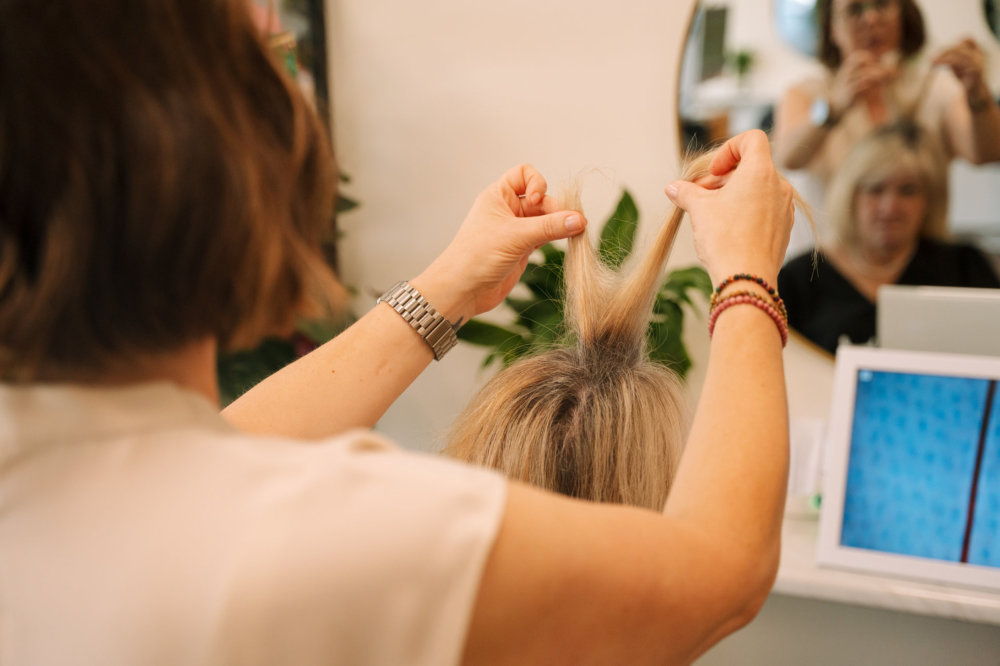
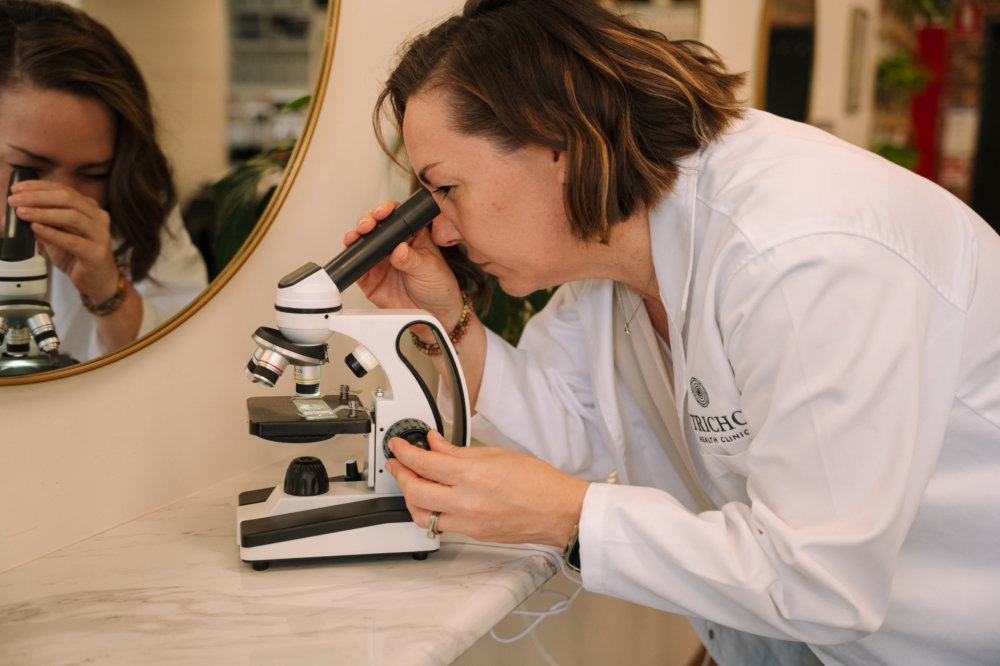
During your appointment, we’ll discuss your concerns, medical history, medications, lifestyle, family history and any recent events that may have contributed to your hair changes. We’ll also examine your hair and scalp using specialised equipment to help identify patterns and signs that aren’t visible to the naked eye.
If you’ve had recent blood tests, bring those with you, as they can provide valuable information. If not, don’t worry. We’ll let you know if we believe further investigation or blood tests would be beneficial after your assessment.
By the end of your appointment, you’ll have a much clearer understanding of what’s causing your hair changes, what treatment options are available and what realistic results you can expect. Most importantly, you’ll leave with a personalised plan that’s tailored specifically to you.
Related information:
Ready to take the first step?
Booking a Hair & Scalp Analysis will give you the answers, reassurance and personalised advice you need to move forward with confidence.
What’s the most important thing I should focus on?
If you’re experiencing hair loss, the most important thing to focus on is understanding why it’s happening. It can be tempting to immediately buy supplements, change your shampoo, try a new treatment you’ve seen online or follow advice from friends. However, without knowing the underlying cause, it’s difficult to know whether those changes are likely to help.
Hair loss is often influenced by more than one factor. Hormonal changes, genetics, nutritional deficiencies, illness, medications, stress and scalp conditions can all play a role. That’s why we encourage women to avoid trying multiple treatments at once. If everything changes at the same time, it becomes almost impossible to know what’s helping and what’s not.
Instead, focus on getting an accurate assessment, understanding your diagnosis and following a personalised treatment plan. Once you know what’s contributing to your hair loss, you can make informed decisions based on evidence rather than guesswork.
It’s also important to be patient with yourself. Hair grows slowly, and meaningful improvement takes time. Try not to compare your progress with someone else’s or judge your results from one week to the next. Small improvements often become much more noticeable over several months.
Our advice is always to focus on what you can control. Looking after your overall health, following your treatment plan, attending your review appointments and asking questions whenever you’re unsure will give you the best opportunity to improve your hair and scalp health.
Related information:
- Hair & Scalp Analysis
- Personalised Treatment Plans & Follow Up Care
- Why Hair Loss Treatments Fail Without Identifying the Root Cause
- The Most Common Root Causes of Hair Loss in Women (And Why Supplements Often Miss Them)
Ready to take the next step?
A Hair & Scalp Analysis will help identify the underlying cause of your hair changes and give you a clear, personalised plan so you can focus on what will make the biggest difference.
When should I come back?
Your follow-up schedule will depend on your diagnosis, treatment plan and how your hair and scalp are responding. During your initial consultation, we’ll recommend when we’d like to see you again and explain why that timing is appropriate for your individual situation.
Hair grows slowly, so meaningful changes usually occur over months rather than weeks. Follow-up appointments allow us to monitor your progress, compare your hair and scalp with previous assessments, discuss any changes you’ve noticed and determine whether your treatment plan is working as expected.
These appointments are also an opportunity to ask questions, discuss any concerns and make adjustments if your circumstances have changed. Hair loss isn’t always static. Hormonal changes, stress, illness, medications and other life events can all influence your hair over time, so your treatment plan may need to evolve as well.
Some women require more frequent reviews during the early stages of treatment, while others only need occasional maintenance appointments once their condition has stabilised. We’ll always recommend a follow-up schedule that’s based on your individual needs rather than a one-size-fits-all approach.
Attending your review appointments also helps us monitor your progress objectively. Because changes often happen gradually, it can be difficult to notice improvements from day to day. Comparing your hair and scalp over time gives us a much clearer picture of how you’re responding to treatment.
Related information:
Ready to take the next step?
Whether you’re attending your first appointment or continuing your hair recovery journey, we’ll recommend a follow-up plan that’s tailored to your individual needs and designed to give you the best possible outcome.
How will we know if it’s working?
One of the biggest challenges with hair loss is that improvements often happen gradually. When you see your hair every day, it can be difficult to notice small changes, which is why many women worry that nothing is happening—even when they’re making good progress.
We’ll assess your progress in several ways. Depending on your individual condition, we may look for a reduction in hair shedding, improvements in scalp health, changes in hair density, signs of new hair growth or improvements in the overall quality and strength of your hair. We’ll also discuss any changes you’ve noticed, as your own experience is an important part of measuring success.
During your follow-up appointments, we’ll compare your hair and scalp with previous assessments to monitor your progress over time. This gives us a much more objective picture than relying on memory alone and helps us determine whether your treatment plan is achieving the results we’d expect.
If you’re progressing well, we’ll explain what to expect next. If you’re not responding as anticipated, we’ll review your diagnosis, discuss any changes that may have occurred and adjust your treatment plan if necessary. Our goal is to make sure you’re receiving the most appropriate care based on your individual response.
Hair recovery isn’t always a straight line, and some conditions naturally take longer to respond than others. We’ll guide you through the process, explain what we’re seeing and make sure you understand how your treatment is progressing every step of the way.
Related information:
Ready to take the next step?
We’ll continue to monitor your progress throughout your treatment journey, adjusting your personalised plan where needed to help you achieve the best possible outcome for your hair and scalp health.
What happens if my blood tests come back normal?
Normal blood test results are reassuring, but they don’t always explain why you’re experiencing hair loss. Many women come to us feeling frustrated because they’ve been told their blood tests are “normal”, yet they’re still losing hair or noticing significant changes in its thickness, texture or overall health.
Hair loss is rarely caused by a single factor. While blood tests can provide valuable information about your overall health and help identify issues such as iron deficiency, thyroid disorders or nutritional deficiencies, they don’t diagnose every type of hair loss. Hormonal changes, genetics, inflammatory scalp conditions, autoimmune disorders, medications and the natural hair growth cycle can all play a role, even when blood test results are within the normal range.
It’s also important to remember that blood tests are only one piece of the puzzle. A comprehensive assessment considers your medical history, family history, lifestyle, recent illnesses, medications, scalp health and the pattern of your hair loss. Looking at all of these factors together often provides answers that blood tests alone cannot.
If you’ve already had blood tests, please bring a copy to your appointment. We’ll review the results as part of your overall assessment and explain whether they may be relevant to your hair concerns. If we believe further investigation is appropriate, we’ll discuss this with you and, where necessary, work alongside your GP or specialist.
Our goal is to understand the complete picture—not just one test result—so we can provide the most appropriate advice and treatment recommendations for your individual situation.
Related information:
- Hair & Scalp Analysis
- The Most Common Root Causes of Hair Loss in Women (And Why Supplements Often Miss Them)
- Hair Loss Treatments
- Personalised Treatment Plans & Follow Up Care
Ready to take the next step?
Even if your blood tests are normal, a Hair & Scalp Analysis can help identify other factors that may be contributing to your hair loss and provide a personalised plan based on your individual circumstances.
Hair Shedding, Thinning, Causes & Common Concerns
Is it normal to lose more hair at certain times of life?
Yes, it is. Hair growth is influenced by many factors that change across a lifetime, including hormones, stress levels, health events, and ageing.
Periods such as postpartum recovery, perimenopause, menopause, times of illness, or significant stress can all affect the hair growth cycle. During these times, it’s common to notice increased shedding or changes in hair behaviour.
What’s important is not just that hair is changing, but how it’s changing and whether those changes settle over time.
How do I know if my hair shedding is temporary?
Temporary shedding often has a clear pattern. It may start a few months after a triggering event, increase for a period of time, and then gradually reduce as regrowth begins.
In many cases, people notice hair coming out more easily when washing or brushing, but without obvious bald patches. Over time, fine regrowth may appear along the hairline or part.
However, because hair growth is slow, it’s not always easy to tell what’s temporary without assessment. A professional evaluation helps clarify whether shedding appears consistent with short-term disruption or something more ongoing.
Can stress really affect hair growth?
Yes. Stress can have a significant impact on the hair growth cycle.
Both physical stress (such as illness, surgery, or rapid weight loss) and emotional stress can signal the body to conserve energy. Hair growth is not essential for survival, so it may be temporarily deprioritised.
This doesn’t mean stress causes permanent hair loss, but it can trigger shedding or slow regrowth. The effects often appear months after the stressful period rather than immediately, which can make the connection hard to recognise.
Why does hair loss sometimes start months after a trigger?
This delayed timing is one of the most confusing aspects of hair shedding.
Hair follicles respond to stress or change by shifting into a resting phase. The hair doesn’t fall out straight away – it remains in place for weeks or months before shedding.
As a result, people often experience hair loss long after the original trigger has passed. Understanding this delay helps explain why hair changes can feel sudden or unexpected.
Is thinning the same as hair loss?
Not necessarily.
Hair thinning usually refers to a reduction in overall volume or density, while hair loss often describes noticeable shedding. Someone can experience thinning without excessive shedding, particularly if regrowth is slower or hair grows back finer.
Understanding whether thinning is due to shedding, slowed regrowth, or changes in hair texture is important. Each process has different implications and expectations for recovery.
Can hair regrow after shedding?
In many cases, yes.
If hair follicles remain healthy and active, regrowth is possible once the underlying trigger stabilises. However, regrowth is gradual. Hair grows slowly, and it can take months before changes are noticeable.
It’s also common for regrowth to initially feel fine or soft. Over time, hair often strengthens as it matures. Realistic expectations are key during this phase.
Why does my hair feel different even if I’m not shedding more?
Hair can change in texture, strength, or manageability even without increased shedding.
Hormonal changes, ageing, and cumulative stress can affect the hair shaft itself, making hair feel finer, drier, or more fragile. Scalp health also plays a role in how hair feels and behaves.
These changes are valid concerns and deserve attention, even if hair isn’t visibly falling out more than usual.
Is hair change always related to hormones?
No. While hormones play a significant role, they are not the only factor.
Hair changes can also be influenced by stress, nutritional status, illness, medications, scalp health, and genetics. Often, more than one factor is involved.
Assuming hormones are the sole cause can delay appropriate assessment and support, especially when multiple influences are overlapping.
Can multiple factors affect hair at the same time?
Yes – and this is extremely common.
For example, someone may be experiencing hormonal change while also dealing with stress, disrupted sleep, or dietary changes. Each factor may contribute a small amount, but together they can significantly affect hair growth.
This is why a comprehensive assessment that looks at the bigger picture is often more helpful than focusing on a single cause.
What if my hair concern doesn’t fit neatly into one category?
That’s completely normal.
Hair concerns don’t always fit into tidy labels. Many people experience a mix of shedding, thinning, texture change, and scalp discomfort.
An assessment helps identify patterns rather than forcing your experience into a predefined category. Not having a clear label doesn’t mean your concern isn’t valid or understandable.
What do you think is causing my hair loss?
One of the most common questions we hear is, “What’s causing my hair loss?” The honest answer is that hair loss is rarely caused by a single factor. In many cases, it’s the result of several things happening at the same time, which is why it’s important not to assume the cause without a proper assessment.
Hair growth is influenced by many factors, including your hormones, genetics, nutrition, overall health, medications, stress levels and scalp health. Significant life events such as illness, surgery, childbirth or rapid weight loss can also disrupt the normal hair growth cycle and lead to increased shedding. In other cases, ongoing conditions such as female pattern hair loss, chronic scalp inflammation or certain autoimmune disorders may be contributing to gradual thinning over time.
Many people try to identify the cause themselves by searching online or taking supplements recommended by friends or social media. While understandable, this can sometimes delay finding the real reason for the problem. Two women may experience similar hair thinning, but have completely different underlying causes and therefore require different approaches to treatment.
At Tricho Health Clinic, we begin by understanding your individual situation rather than making assumptions. During your consultation we review your medical history, recent health changes, medications, family history and lifestyle, and examine your scalp and hair using specialised imaging. Where appropriate, we may also review blood test results or recommend further investigation with your GP.
Understanding the cause is one of the most important steps in managing hair loss. Once the contributing factors have been identified, we can recommend a personalised treatment plan that focuses on addressing the underlying causes rather than simply trying to manage the symptoms.
Related information:
Am I losing more hair than is expected?
Suddenly noticing more hair on your brush, in the shower or on your pillow can be frightening. Many women tell us they feel as though their hair is falling out overnight. While this can be alarming, a sudden increase in hair shedding doesn’t always mean you’re experiencing permanent hair loss.
Hair grows in natural cycles. At any given time, it’s normal to lose around 50 to 100 hairs each day as older hairs complete their growth cycle and new hairs begin to grow. However, certain events can cause a much larger number of hairs to enter the shedding phase at the same time, resulting in noticeably increased hair loss.
Common triggers include illness, surgery, high levels of stress, hormonal changes, childbirth, rapid weight loss, nutritional deficiencies and some medications. One of the confusing things about this type of hair loss is that the shedding often doesn’t begin until two or three months after the trigger. By the time you notice the increased hair loss, the event that caused it may seem unrelated.
It’s also important to remember that not all increased shedding is the same. While temporary conditions such as telogen effluvium are common, excessive shedding can also occur alongside female pattern hair loss, scalp conditions or other underlying causes. This is why looking at the amount of hair you’re losing alone rarely provides the full answer.
If you’ve noticed a sudden change in the amount of hair you’re shedding, it’s worth having it assessed rather than assuming it will settle on its own. Understanding what has changed in your health, lifestyle or scalp condition can help identify the underlying cause and determine whether the shedding is likely to be temporary or whether further investigation is needed.
At Tricho Health Clinic, we look beyond the hair that’s falling out. We assess your recent health history, medical background, scalp health and hair growth patterns to understand why the shedding has increased and recommend the most appropriate next steps.
Related information:
Why is this happening to me?
Hair loss can feel incredibly personal, which is why many women ask, “Why is this happening to me?” It’s a completely understandable question, especially if you’ve always had thick, healthy hair or you feel as though you’ve done everything “right” when it comes to looking after yourself.
The reality is that hair loss is very rarely caused by one single factor. Hair growth is influenced by your overall health, hormones, genetics, nutrition, medications, stress levels, scalp health and significant life events. Sometimes the cause is obvious, but more often it’s a combination of factors that have gradually affected the hair growth cycle over time.
Many women are surprised to discover that hair loss doesn’t always begin immediately after a trigger. An illness, surgery, emotional stress, rapid weight loss or hormonal change may not result in noticeable shedding until two or three months later. By then, it’s easy to assume the two events aren’t connected.
It’s also important to remember that hair changes are common at different stages of life. Hormonal fluctuations during perimenopause and menopause, nutritional deficiencies, inflammatory scalp conditions and inherited forms of hair loss can all contribute to thinning or increased shedding. Even if you’ve experienced one of these before, the reason for your current hair loss may be different.
Rather than trying to guess the cause, the most helpful approach is to identify the factors that are affecting your hair. Everyone’s situation is different, and a treatment that works well for one person may not be appropriate for someone else.
At Tricho Health Clinic, we take the time to understand your health history, lifestyle, family history, medications and recent changes before examining your scalp and hair in detail. By identifying the underlying causes, we can recommend a personalised treatment plan that’s based on your individual needs rather than assumptions.
Related information:
Could low iron be causing my hair loss?
Low iron is one of the many factors that can contribute to hair loss, particularly in women. However, it’s important to remember that not everyone with low iron will experience hair thinning, and not everyone with hair loss has an iron deficiency. This is why it’s essential to look at your overall health rather than assuming iron is the cause.
Iron plays an important role in many functions throughout the body, including delivering oxygen to tissues and supporting rapidly growing cells such as those found in the hair follicle. When iron stores are low, your body prioritises essential organs over hair growth, which may contribute to increased shedding or slower regrowth in some people.
Many women have been told that their blood tests are “normal”, yet continue to experience ongoing hair loss. This is because interpreting blood test results isn’t always straightforward. Your GP or specialist will consider a range of factors, including your symptoms, medical history and blood results, when determining whether iron may be contributing to your hair loss.
It’s also worth remembering that hair loss is often caused by more than one factor. Even if low iron is identified, there may also be hormonal changes, nutritional factors, scalp conditions, genetics or other health issues affecting your hair. Focusing on iron alone may not provide the complete answer.
At Tricho Health Clinic, we consider iron as one piece of the overall picture. If you’ve already had blood tests, we can review the results as part of your assessment. If further medical investigation is needed, we’ll work alongside your GP or specialist so that all contributing factors can be appropriately addressed.
Rather than guessing or self-prescribing supplements, it’s always best to understand whether low iron is actually contributing to your hair loss before deciding on the most appropriate course of action.
Related information:
Is this genetic because my mum has lost most of her hair?
Family history can certainly play a role in hair loss, but it doesn’t automatically mean you’ll experience the same pattern or degree of thinning as your mother or other relatives. Genetics is just one of many factors that influence hair growth, and every person’s situation is unique.
Inherited hair loss, often referred to as female pattern hair loss, tends to develop gradually over time. You may notice your part becoming wider, your ponytail feeling thinner or reduced hair density across the top of the scalp. However, not every woman with a family history will experience these changes, and they may occur at different ages or progress at different rates.
It’s also important to remember that genetics doesn’t exclude other causes of hair loss. Hormonal changes, nutritional deficiencies, medications, stress, illness and scalp conditions can all contribute to hair thinning, sometimes alongside an inherited tendency. This means that even if your mother experienced hair loss, your own hair changes may have different or additional underlying causes.
Rather than assuming your hair loss is purely genetic, it’s important to have it assessed properly. Identifying all of the contributing factors helps determine which aspects may be treatable and allows us to develop a personalised management plan that is appropriate for your individual circumstances.
At Tricho Health Clinic, we take your family history into account as part of a comprehensive assessment, but we also look at your medical history, recent health changes, hormones, scalp health and lifestyle. This helps us build a clearer understanding of what’s contributing to your hair changes and recommend the most appropriate treatment options.
Related information:
Why is my hair becoming thinner even though I’m healthy and my blood tests say "normal"?
This is one of the most common concerns we hear from women. Many tell us they’ve been reassured that their blood tests are “normal”, yet they’re continuing to notice thinning hair, increased shedding or a widening part line. It can be incredibly frustrating, especially when you feel well otherwise and can’t understand why your hair is changing.
The first thing to know is that hair loss isn’t diagnosed by a single blood test. While blood tests are an important part of investigating certain causes of hair loss, they only provide one piece of the puzzle. Hair growth is influenced by many factors, including hormones, genetics, scalp health, nutrition, medications, stress, recent illness and the natural ageing process. It’s quite possible for your blood test results to be within the normal range while another underlying factor is affecting your hair.
It’s also important to remember that “normal” doesn’t necessarily explain why your hair is changing. Early female pattern hair loss, hormonal fluctuations during perimenopause or menopause, inflammatory scalp conditions and some medications may all contribute to hair thinning without producing abnormal blood test results. In many cases, several factors are involved at the same time.
Rather than relying on blood tests alone, we look at your overall health, medical history, family history, recent life events, scalp condition and the pattern of your hair loss. This broader assessment often provides valuable clues that blood tests alone cannot.
At Tricho Health Clinic, we don’t dismiss your concerns simply because your results have been reported as normal. If your hair has changed, there is usually an underlying reason. Our goal is to identify the factors contributing to your hair loss so we can recommend a personalised treatment plan that’s based on your individual circumstances rather than assumptions.
Related information:
Is my hair loss temporary or permanent?
One of the biggest concerns people have is whether their hair will grow back. The answer depends entirely on what is causing the hair loss. Some forms of hair loss are temporary and improve once the underlying trigger has been addressed, while others are progressive conditions that require ongoing management.
Temporary hair loss often occurs after a significant event such as illness, surgery, emotional stress, childbirth, rapid weight loss or certain medications. In these situations, the hair follicles usually remain healthy, and once the trigger has passed, many people begin to see regrowth over time. However, because hair grows slowly, recovery isn’t immediate and may take several months before noticeable improvement occurs.
Other types of hair loss, such as female pattern hair loss or some forms of scarring alopecia, are different. These conditions don’t usually resolve on their own and often require early assessment and ongoing treatment to help slow progression and support the healthiest possible hair growth.
It’s also important to remember that more than one type of hair loss can occur at the same time. For example, someone may experience temporary shedding following illness while also having an underlying genetic tendency towards hair thinning. This is one of the reasons why self-diagnosis can be difficult.
At Tricho Health Clinic, we don’t simply ask whether your hair is falling out. We look at how it’s falling out, where it’s thinning, your scalp health, medical history, family history and any recent changes in your health or lifestyle. This helps us determine whether your hair loss is likely to be temporary, ongoing or influenced by several contributing factors.
Understanding the cause is the key to understanding the likely outlook. The sooner an accurate assessment is carried out, the sooner you can begin the most appropriate management plan and avoid spending time and money on treatments that may not address the real problem.
Related information:
Why is my hair falling out so much?
Noticing more hair than usual on your brush, in the shower or on your clothes can be frightening. Many women tell us they suddenly realise they’re shedding handfuls of hair and immediately fear they’re going bald. While increased hair shedding can certainly be concerning, it doesn’t always mean permanent hair loss.
There are many possible reasons why your hair may be falling out more than usual. Common causes include hormonal changes, significant stress, illness, surgery, rapid weight loss, nutritional deficiencies, certain medications, inflammatory scalp conditions and genetic hair loss. In many cases, more than one factor is contributing at the same time.
It’s also important to remember that everyone naturally sheds hair as part of the normal hair growth cycle. The difference is that when something disrupts that cycle, many hairs can enter the shedding phase at the same time, making the hair loss appear sudden or excessive.
Rather than focusing on how much hair you’re losing, the most important question is why it’s happening. Once the underlying cause has been identified, we can explain whether the shedding is likely to be temporary, ongoing or related to another hair or scalp condition, and recommend the most appropriate treatment plan.
If your hair has been falling out for several weeks or months, or you’re also noticing thinning, widening of your part or increased scalp visibility, it’s worth having it professionally assessed rather than hoping it will settle on its own.
Related information:
- Telogen Effluvium Explained: The Temporary Hair Loss No One Talks About
- The Most Common Root Causes of Hair Loss in Women (And Why Supplements Often Miss Them)
- Hair Loss Treatments
- Hair & Scalp Analysis
Ready to take the next step?
If you’re worried about how much hair you’re losing, a Hair & Scalp Analysis can help identify the underlying cause and provide a personalised treatment plan based on your individual needs.
Do you think it’s hormones?
Hormones are one of the most common causes of hair changes in women, but they’re not the only possibility. Changes during perimenopause, menopause, pregnancy and the months after childbirth can all affect the hair growth cycle. Hormonal conditions such as polycystic ovary syndrome (PCOS) and thyroid disorders may also contribute to hair thinning or increased shedding.
However, it’s important not to assume hormones are always the cause. Hair loss can also be influenced by genetics, nutritional deficiencies, medications, illness, significant stress, inflammatory scalp conditions and rapid weight loss. In many cases, more than one factor is contributing at the same time.
This is why we don’t recommend guessing the cause based on age or symptoms alone. During your consultation, we’ll discuss your medical history, recent life changes, medications and family history before assessing your hair and scalp. If we believe hormones may be contributing to your hair loss, we’ll explain why and discuss whether further investigation or collaboration with your GP or specialist may be appropriate.
Understanding whether hormones are involved is important because it helps us develop a treatment plan that’s appropriate for your individual circumstances rather than relying on trial and error.
Related information:
- Hormonal Changes and Hair Loss: What Happens During Perimenopause and Menopause
- Hormonal Hair Changes vs Pattern Hair Loss: How They’re Different
- When Hair Changes During Menopause Should Be Assessed
- Hair & Scalp Analysis
Ready to take the next step?
If you think hormonal changes may be affecting your hair, a Hair & Scalp Analysis can help determine whether hormones are likely to be contributing and what treatment options may be appropriate for you.
Why does it seem like so much hair comes out when I wash it?
Seeing hair come out in the shower can be one of the most upsetting parts of experiencing hair loss. Many women tell us they dread washing their hair because they’re afraid of how much they’ll see in the drain or on their hands.
In most cases, washing your hair isn’t causing the hair loss. The hairs you see have usually already reached the end of their natural growth cycle and were ready to shed. Washing simply helps release hairs that were already loose.
If you’ve been avoiding washing your hair because you’re worried about losing more hair, it’s quite common to notice even more shedding the next time you do wash it. That’s because several days’ worth of naturally shed hairs have accumulated and are all coming out at once. While this can be alarming, it doesn’t necessarily mean your hair loss has suddenly become worse.
If you’re consistently noticing excessive amounts of hair coming out when you wash your hair, or you’re also seeing thinning, widening of your part or increased scalp visibility, it’s worth having your hair and scalp assessed. Increased shedding can be caused by a number of factors, including hormonal changes, illness, nutritional deficiencies, stress, medications and other hair or scalp conditions.
The most important thing isn’t counting the hairs in the shower—it’s understanding why they’re shedding in the first place. Once the underlying cause has been identified, we can recommend the most appropriate treatment and explain what you can realistically expect.
Related information:
- Telogen Effluvium Explained: The Temporary Hair Loss No One Talks About
- The Most Common Root Causes of Hair Loss in Women (And Why Supplements Often Miss Them)
- Hair Breakage & Thinning
- Hair & Scalp Analysis
Ready to take the next step?
If you’re concerned about the amount of hair you’re seeing in the shower, a Hair & Scalp Analysis can help determine whether your shedding is within the expected range or whether an underlying condition is contributing to the problem.
Scalp Health & Scalp Conditions
What is causing all the inflammation on my scalp?
An inflamed scalp can have many different causes, which is why it’s important not to assume that every itchy, red or flaky scalp is simply dandruff. Inflammation is your body’s response to irritation or an underlying condition, and identifying the cause is the first step towards improving both your scalp health and, in some cases, your hair growth.
Common causes of scalp inflammation include seborrhoeic dermatitis, psoriasis, eczema, allergic reactions to hair products, fungal infections and folliculitis. Some people experience persistent itching, redness, tenderness or burning, while others notice flaky patches, excess oiliness or soreness without significant itching. The symptoms can vary considerably depending on the underlying condition.
Inflammation doesn’t always cause hair loss, but if it persists over a long period it can affect the environment in which your hair follicles grow. In some cases, ongoing inflammation may contribute to increased hair shedding or make existing hair loss conditions more noticeable. This is one of the reasons why maintaining a healthy scalp is an important part of supporting healthy hair growth.
Because several scalp conditions can look very similar, it’s not always possible to identify the cause by appearance alone. A treatment that works well for one condition may actually make another worse, which is why self-diagnosis isn’t always the best approach.
At Tricho Health Clinic, we examine your scalp using specialised imaging to assess its condition in detail. This allows us to identify signs of inflammation, scaling, excess oil, blocked follicles or other abnormalities that may be contributing to your symptoms. Where appropriate, we’ll also advise whether further assessment by your GP or dermatologist is recommended.
If you’re experiencing an itchy, sore, flaky or inflamed scalp, the sooner the underlying cause is identified, the sooner appropriate treatment can begin. Addressing scalp inflammation not only improves comfort but may also help create a healthier environment for your hair to grow.
Related information:
Should I be worried about my scalp symptoms?
Not every itchy, flaky or irritated scalp is a cause for concern, but persistent scalp symptoms shouldn’t be ignored. If your scalp is regularly itchy, sore, inflamed, flaky, painful or becoming increasingly uncomfortable, it’s worth finding out why rather than simply changing shampoos or hoping it will improve on its own.
Many scalp conditions have very similar symptoms, making them difficult to identify without a professional assessment. Conditions such as dandruff, seborrhoeic dermatitis, psoriasis, eczema and other inflammatory scalp disorders can all cause irritation, yet each requires a different approach to treatment.
An unhealthy scalp can also affect the environment in which your hair grows. In some cases, ongoing inflammation may contribute to increased hair shedding or affect the health of your hair follicles, making early diagnosis and appropriate treatment particularly important.
If your symptoms have persisted for several weeks, continue to return despite treatment or are accompanied by increased hair loss, it’s a good idea to have your scalp professionally assessed.
Related information:
- Scalp Conditions and Scalp Health: Common Causes, Symptoms and Treatment Options
- Why Is My Scalp Itchy? Common Causes Explained
- Scalp Treatments
Ready to take the next step?
A Hair & Scalp Analysis can help identify the cause of your scalp symptoms and recommend the most appropriate treatment for your individual condition.
Can scalp problems cause hair loss?
Yes, some scalp conditions can contribute to hair loss or increased hair shedding, while others affect the scalp without having a significant impact on hair growth. The key is identifying exactly what’s causing your symptoms, as different conditions require different treatment approaches.
Inflammatory conditions such as seborrhoeic dermatitis, scalp psoriasis and certain forms of scarring alopecia can affect the health of your scalp and, in some cases, interfere with the normal hair growth cycle. Persistent inflammation may increase shedding or, if left untreated, affect the hair follicles themselves.
It’s important to remember that not everyone with an itchy, flaky or irritated scalp will experience hair loss. Likewise, not everyone with hair loss has a scalp condition. Sometimes the two occur together, and sometimes they’re completely unrelated. That’s why a professional assessment is so important.
During your Hair & Scalp Analysis, we’ll examine both your hair and your scalp to determine whether a scalp condition is contributing to your hair concerns. Understanding the underlying cause allows us to recommend the most appropriate treatment and, where necessary, work alongside your GP or dermatologist.
The sooner a scalp condition is correctly identified, the sooner appropriate treatment can begin.
Why is my scalp so itchy?
An itchy scalp is one of the most common reasons people seek help, but it’s not something you should simply ignore or try to cover up with a different shampoo. While occasional itching can happen for many reasons, ongoing or persistent itchiness is often a sign that your scalp needs attention.
There are many possible causes of an itchy scalp, including dandruff, seborrhoeic dermatitis, psoriasis, eczema, allergic reactions, product sensitivity and other inflammatory scalp conditions. Because these conditions often have similar symptoms, it can be difficult to know exactly what’s causing the problem without a professional assessment.
Scratching may provide temporary relief, but it doesn’t address the underlying cause and can sometimes make irritation worse. If your scalp is itchy as well as flaky, sore, red or accompanied by increased hair shedding, it’s important to identify what’s driving the inflammation rather than simply treating the symptoms.
During your Hair & Scalp Analysis, we’ll examine your scalp, discuss your symptoms and determine the most likely cause of the itching. From there, we’ll recommend a personalised treatment plan to improve your scalp health and help relieve your symptoms.
Related information:
- Why Is My Scalp Itchy? Common Causes Explained
- Dandruff vs Dry Scalp: How to Tell the Difference
- Scalp Treatments
- Hair & Scalp Analysis
Ready to take the next step?
If your scalp has been persistently itchy or uncomfortable, a Hair & Scalp Analysis can help identify the underlying cause and provide a treatment plan tailored to your scalp condition.
Why is my scalp so flaky?
A flaky scalp doesn’t always mean you have dandruff. While dandruff is one of the most common causes, flaking can also be associated with a dry scalp, seborrhoeic dermatitis, psoriasis, eczema or other scalp conditions. Because many of these conditions look similar, it isn’t always possible to tell the difference just by looking in the mirror.
The type of flakes, whether your scalp is itchy or inflamed, and whether you’re also experiencing redness, soreness or increased hair shedding can all provide important clues about what’s causing your symptoms. Treating the wrong condition may provide temporary relief or, in some cases, make the problem worse.
Rather than trying multiple shampoos and hoping one works, it’s important to identify the underlying cause of the flaking. Once we understand what’s affecting your scalp, we can recommend the most appropriate treatment to improve your scalp health and reduce your symptoms.
If your flaky scalp isn’t improving, keeps returning or is accompanied by irritation or hair loss, it’s worth having it professionally assessed.
Related information:
- Dandruff vs Dry Scalp: How to Tell the Difference
- Seborrhoeic Dermatitis: Causes, Symptoms and Treatment
- Scalp Psoriasis: Signs, Symptoms and Management
- Scalp Treatments
Ready to take the next step?
If you’re unsure what’s causing your flaky scalp, a Hair & Scalp Analysis can help identify the underlying condition and recommend the treatment that’s right for you.
Recovery, Regrowth & Expectations
Can this be fixed?
In many cases, yes – but the answer depends on why your hair is changing.
Hair loss isn’t a single condition. It can be caused by nutritional deficiencies, hormonal changes, stress, genetics, inflammatory scalp conditions, autoimmune disorders, certain medications, or a combination of factors. That’s why the first step is always identifying the underlying cause rather than guessing or trying multiple treatments in the hope that something works.
Some forms of hair loss are temporary and can recover once the trigger has been addressed. Others can often be managed very successfully when diagnosed early, helping to slow progression, improve hair density and support healthier regrowth. In some cases, particularly where permanent scarring has occurred, the focus may be on preserving the healthy hair that remains rather than regrowing hair that has already been lost.
At Tricho Health Clinic, we don’t believe in one-size-fits-all treatments. Every recommendation is based on a thorough Hair & Scalp Analysis, your medical history, lifestyle, and where appropriate, your blood test results.
If you’ve already tried shampoos, supplements or other treatments without success, it doesn’t necessarily mean your hair can’t improve. It may simply mean the underlying cause hasn’t yet been identified.
For more information, you may also find these articles helpful:
Will my hair grow back?
Whether your hair will grow back depends on the underlying cause of your hair loss. The encouraging news is that many types of hair loss can improve once the cause has been identified and treated appropriately. The key is understanding why your hair is changing, rather than assuming all hair loss behaves the same way.
For some women, hair shedding is temporary and hair growth resumes naturally once the trigger has resolved. For others, particularly those with genetic, hormonal or inflammatory conditions, treatment may be needed to slow progression, encourage healthier regrowth and preserve existing hair. In cases of permanent scarring hair loss, regrowth may be limited, which is why early assessment is so important.
During your consultation, we’ll explain what type of hair loss you have, whether recovery is likely, what results you can realistically expect and the treatment options available. Our goal is to give you honest answers based on your individual situation, not false hope or unrealistic promises.
If you’ve been worrying that this might simply be your “new normal”, remember that many women are surprised to discover there are treatment options available once the correct diagnosis has been made.
A comprehensive Hair & Scalp Analysis is the first step towards understanding your condition and developing an appropriate treatment plan.
You may also find these articles helpful:
Do women actually recover from this?
Yes, many women do experience significant improvement, although every journey is different. Recovery depends on what’s causing the hair loss, how long it has been present, how early it’s identified, and how your individual hair follicles respond to treatment. Some women experience noticeable regrowth, while others see a reduction in shedding, improved hair density or healthier, stronger hair over time.
It’s important to remember that recovery doesn’t always mean returning to the exact hair you had ten or twenty years ago. For many women, success means stabilising hair loss, improving the quality and thickness of existing hair, encouraging new growth where possible and restoring confidence in how their hair looks and feels.
One of the biggest challenges is that hair grows slowly. Improvements often happen gradually, which is why regular reviews and realistic expectations are so important. Many women don’t notice changes from week to week, but when they compare photographs or scalp images taken several months apart, the progress becomes much clearer.
At Tricho Health Clinic, we’ll always be honest about what we believe is achievable based on your individual circumstances. If we believe improvement is possible, we’ll explain why. If there are factors that may limit recovery, we’ll discuss those openly too. Our aim is to give you realistic hope based on evidence, not unrealistic promises.
If you’re feeling discouraged, remember that many women who come to the clinic have already tried numerous products and treatments before finally discovering the underlying cause of their hair loss. Having the right assessment is often the first step towards meaningful improvement.
Related information:
Is there still hope for my hair?
Yes, there is often reason to be hopeful. Many women come to Tricho Health Clinic feeling frightened, discouraged or convinced that nothing more can be done because they’ve already tried countless products, supplements or treatments without success. In many cases, the problem isn’t that they’ve run out of options—it’s that the underlying cause of their hair loss hasn’t yet been properly identified.
Every woman’s situation is different. Some forms of hair loss respond very well once the underlying cause is addressed, while others require ongoing management to slow progression and maintain healthy hair growth. Even when complete regrowth isn’t possible, many women are able to improve the health of their scalp, reduce excessive shedding, strengthen existing hair and feel much more confident about their appearance.
One of the biggest reasons people lose hope is because they’re expecting quick results. Hair grows slowly, and meaningful improvement takes time. That’s why it’s so important to have realistic expectations and a personalised plan that’s based on your individual circumstances rather than promises of an overnight solution.
At Tricho Health Clinic, we’ll always be honest with you about what we believe is achievable. If we think there’s an opportunity to improve your hair, we’ll explain why. If there are factors that may limit recovery, we’ll discuss those openly as well. Our goal is to provide clear advice, realistic expectations and ongoing support so you feel informed and confident about your next steps.
No one should have to navigate hair loss alone. Sometimes, simply understanding what’s happening and having a clear plan can replace uncertainty with hope.
Related information:
What if I’m not one of the success stories?
It’s completely understandable to have this concern, especially if you’ve already spent time, money and emotional energy trying different products or treatments without seeing the results you hoped for. Many women arrive at their first appointment worried that they’ll be the person nothing works for.
The truth is that every person’s hair loss journey is different. Hair growth is influenced by many factors, including the underlying cause of your hair loss, how long it has been present, your overall health, genetics, hormonal changes, scalp health and how your hair responds to treatment. Because of this, no ethical practitioner can promise the same outcome for every client.
What we can promise is that we’ll take the time to understand your individual situation before making recommendations. Rather than offering a one-size-fits-all solution, we’ll assess your hair and scalp, discuss your medical history and explain what we believe is realistically achievable. If we think a treatment is unlikely to help, we’ll tell you. Likewise, if we believe there’s a good opportunity to improve your hair health, we’ll explain why and what that journey may look like.
Success doesn’t always mean returning to the hair you had years ago. For many women, success means slowing the progression of hair loss, reducing excessive shedding, improving scalp health, encouraging healthier regrowth or simply feeling more confident because they finally understand what’s happening and have a clear plan moving forward.
Our goal is to provide honest advice, evidence-based care and ongoing support. While no one can guarantee results, having the correct assessment and a personalised treatment plan gives you the best possible opportunity to improve your hair and scalp health.
Related information:
Is it too late to fix this?
Many women worry that they’ve left it too late to seek help, particularly if they’ve been noticing changes for months or even years. The good news is that it’s rarely too late to benefit from having your hair and scalp assessed. While earlier intervention is often beneficial, understanding what’s happening is valuable at any stage.
The amount of improvement that’s possible depends on the underlying cause of your hair loss. Some conditions respond well once the contributing factors have been identified and addressed, while others are best managed by slowing progression, improving scalp health and preserving the hair you currently have. The sooner some conditions are identified, the more treatment options may be available, but that doesn’t mean there is no value in seeking help later.
Many women delay making an appointment because they hope the problem will resolve on its own or because they’ve become discouraged after trying products that didn’t work. Others simply become busy with work, family or caring responsibilities and put their own concerns aside. These experiences are incredibly common, and you certainly won’t be judged for waiting.
At Tricho Health Clinic, we’ll assess where your hair and scalp are today, explain what we’re seeing and discuss what may realistically be achievable from this point forward. Rather than focusing on what can’t be changed, we’ll help you understand the opportunities that still exist to improve the health of your hair and scalp.
Even if complete regrowth isn’t possible, gaining clarity about your condition, reducing ongoing hair loss and having a personalised management plan can make a significant difference to both your hair and your confidence.
Related information:
What are realistic expectations around recovery and timelines?
One of the most important parts of any treatment plan is having realistic expectations. Hair grows slowly, so meaningful improvement doesn’t happen overnight. While it’s understandable to want quick results, healthy hair growth follows a natural cycle that simply can’t be rushed.
What you can expect depends on the underlying cause of your hair loss, how long it has been present, your overall health and how your hair follicles respond to treatment. Some women notice improvements in scalp comfort or a reduction in shedding within the first few months, while visible improvements in hair density or regrowth often take longer. Every person’s timeline is different.
Recovery also doesn’t always mean returning to the exact hair you had years ago. For many women, success means slowing the progression of hair loss, reducing excessive shedding, improving the health of the scalp, encouraging stronger regrowth where possible and feeling more confident about how their hair looks and feels.
Throughout your treatment journey, we’ll continue to monitor your progress and adjust your treatment plan if needed. Hair and scalp health can change over time, and your care should be flexible enough to reflect those changes. Follow-up appointments allow us to assess your response to treatment, review your progress and discuss any concerns you may have along the way.
At Tricho Health Clinic, we’ll always be honest about what we believe is realistically achievable. Our goal isn’t to promise miracle results, but to give you a clear understanding of your condition, support you with evidence-based care and help you achieve the best possible outcome for your individual circumstances.
Related information:
How long will it take before I see results?
We completely understand why this is one of the first questions people ask. When you’re worried about your hair, it’s natural to want to know when you’ll start seeing improvement. The honest answer is that it depends on the underlying cause of your hair loss, your individual hair growth cycle and how your hair responds to treatment.
Hair grows much more slowly than most people realise. Even when the underlying cause has been identified and appropriate treatment has begun, your hair follicles need time to respond. Some women notice that excessive shedding begins to settle before they see visible regrowth, while others first notice improvements in the way their hair feels or behaves before they see an increase in density.
It’s important not to become discouraged if you don’t see immediate changes. Hair growth is a gradual process, and meaningful improvement is usually measured over months rather than weeks. Comparing your hair every day can make it difficult to notice progress because the changes are often subtle at first.
At Tricho Health Clinic, we’ll explain what is realistic for your individual situation and monitor your progress throughout your treatment. Follow-up appointments allow us to review your response, compare changes over time and adjust your treatment plan if needed. This helps ensure you’re moving in the right direction while maintaining realistic expectations.
Rather than focusing on finding the quickest solution, our goal is to identify the underlying cause of your hair loss and recommend the most appropriate treatment plan for long-term improvement. Taking the right approach from the beginning is far more valuable than chasing treatments that promise fast results but fail to address the real problem.
Related information:
Can my hair loss be fixed permanently or will I constantly be fighting this battle?
This is a question we hear often, and the honest answer is that it depends on the underlying cause of your hair loss. Some forms of hair loss are temporary and resolve once the trigger has been addressed, while others are ongoing conditions that need to be managed over time. Understanding which type of hair loss you’re experiencing is one of the most important reasons to have a professional assessment.
For example, temporary shedding following illness, surgery, childbirth, significant stress or rapid weight loss often improves once your body has recovered and the hair growth cycle returns to normal. On the other hand, conditions such as female pattern hair loss or some forms of scarring alopecia may require ongoing management to slow progression and maintain the healthiest possible hair growth.
It’s also important to remember that many women experience more than one contributing factor. You may recover from one cause of hair loss while continuing to manage another. This is why treatment plans are personalised rather than based on a single diagnosis or a one-size-fits-all approach.
Our goal isn’t simply to treat your hair today. It’s to help you understand your condition, identify the factors that may continue to influence your hair over time and develop a plan that supports your long-term hair and scalp health. For some women, that means completing treatment and simply monitoring their progress. For others, it may involve periodic reviews or maintenance care to help keep their hair as healthy as possible.
At Tricho Health Clinic, we’ll always explain whether your condition is likely to be temporary, ongoing or somewhere in between. Having realistic expectations doesn’t mean losing hope—it means understanding what you can do to achieve the best possible outcome for your individual situation.
Related information:
Treatments, Care & Ongoing Support
Do your treatments work for everyone?
Treatments work differently for everyone, and it’s important to be upfront about that.
Hair and scalp health is influenced by many factors, including genetics, hormonal changes, overall health, stress levels, and how long an issue has been present. Treatments are designed to support the hair and scalp under the conditions that exist, not to override biology or promise unrealistic outcomes.
The goal of treatment is improvement, stabilisation, or support – not guarantees. Clear assessment helps set expectations that are honest and achievable.
How long does it usually take to see changes?
Hair growth is slow, so meaningful changes rarely happen quickly.
In many cases, early improvements relate to scalp comfort, reduced irritation, or improved hair condition rather than immediate changes in density. Subtle progress within the hair growth cycle can often be observed through scalp imaging at around 3 months during follow-up appointments.
To the naked eye, visible changes in thickness, shedding patterns, or regrowth typically become noticeable between 4–6 months, depending on the underlying cause and individual response.
Part of ongoing care is helping you understand what realistic progress looks like for your specific situation, so expectations feel clear and achievable.
Can treatments stop hair shedding immediately?
In most cases, no.
If shedding is related to disruption of the hair growth cycle, the process has already been set in motion before shedding becomes visible. Treatments cannot instantly stop this cycle.
Supportive care focuses on scalp health, reducing additional stress on the hair, and supporting regrowth over time. Understanding this helps prevent frustration and unrealistic expectations.
Are results guaranteed?
No, and any service that guarantees results should be approached with caution.
Hair responds differently depending on the individual and the underlying factors involved. Some people see noticeable improvement, others experience stabilisation, and some may see more subtle changes.
Honest conversations about what is realistic are a core part of ethical hair and scalp care.
What happens if my hair doesn’t respond as expected?
If hair doesn’t respond as hoped, that information is still valuable.
Lack of response can help clarify whether factors outside the clinic’s scope may be contributing, such as hormonal or medical influences. In some cases, treatment plans may be adjusted, paused, or discontinued if they’re not appropriate.
The focus is always on doing what makes sense for your hair, not persisting with something that isn’t helping.
Will I need ongoing care or maintenance?
Some people benefit from short-term support, while others choose longer-term maintenance.
Hair and scalp health can change over time, particularly during life stages such as menopause or periods of stress. Maintenance care can help support scalp health and monitor changes, but it is always optional.
Ongoing care is discussed collaboratively, not assumed.
Can I pause or adjust my treatment plan?
Yes. Treatment plans are not fixed contracts.
Hair and scalp care should be flexible enough to adapt to changes in your health, lifestyle, or priorities. Pausing, adjusting, or changing direction is sometimes the most appropriate choice.
Open communication is encouraged so that care remains relevant and respectful.
How do you track progress over time?
Progress is not measured by a single factor.
Tracking may include observing changes in shedding patterns, hair density, scalp condition, hair texture, and how the hair feels and behaves day to day. Follow-up appointments allow these changes to be reviewed over time rather than relying on short-term impressions.
Because hair changes slowly, tracking over months rather than weeks provides a more accurate picture.
Are treatments the same for everyone?
No. Treatments are tailored to individual needs.
Two people may experience similar symptoms but require very different approaches depending on the underlying factors involved. This is why assessment is essential before recommending care.
A personalised approach helps avoid unnecessary treatments and focuses support where it’s most appropriate.
What role does scalp health play in hair recovery?
Scalp health plays a foundational role in hair growth.
An unhealthy scalp environment can affect how hair grows, how it feels, and how resilient it is. Supporting scalp health does not override genetic or hormonal factors, but it can optimise conditions for hair growth and comfort.
This is why scalp care is often a key part of supportive treatment plans, even when the primary concern appears to be hair-related.
Do I need to purchase supplements from you?
No. Supplements are only recommended where appropriate and based on identified need. We prioritise clarity and safety over unnecessary products.
Why hasn‘t anything else worked? I’ve tried everything?
You’re certainly not alone in feeling this way. Many women come to Tricho Health Clinic after spending months or even years trying different shampoos, supplements, serums and treatments without seeing the improvement they were hoping for. It’s understandable to feel frustrated, disappointed and wonder whether anything will ever make a difference.
One of the most common reasons treatments don’t work is because they’re trying to solve the wrong problem. Hair loss isn’t a diagnosis—it’s a symptom. Two women may experience similar thinning or shedding but have completely different underlying causes. If the cause hasn’t been identified correctly, even a good treatment may produce little or no improvement.
Another factor is that hair growth is influenced by many different systems within the body. Hormones, nutritional deficiencies, genetics, scalp health, medications, illness, stress and inflammatory conditions can all affect how your hair grows. Sometimes more than one factor is contributing at the same time, which is why a single product or supplement rarely provides the complete answer.
It’s also important to remember that many products marketed for hair loss make broad promises without considering your individual circumstances. What works well for one person may not be appropriate for another. Rather than recommending the same solution for everyone, we focus on understanding why your hair is changing before recommending treatment.
At Tricho Health Clinic, we begin with a comprehensive Hair & Scalp Analysis to assess your hair, scalp and overall history. This allows us to identify the factors that may be contributing to your hair loss and develop a personalised treatment plan based on your individual needs rather than guesswork.
If you’ve tried many different treatments without success, don’t lose hope. It doesn’t necessarily mean your hair can’t improve. It may simply mean that the underlying cause hasn’t yet been identified or that your previous treatments weren’t addressing the right problem.
Related information:
What can I do? What should I do?
What can I do? What should I do?
If you’ve noticed changes in your hair, the most important thing you can do is avoid guessing the cause. It can be tempting to buy supplements, try the latest shampoo or follow advice you’ve seen online, but hair loss is rarely that straightforward. Without understanding what’s causing the problem, it’s easy to spend time and money on treatments that aren’t addressing the real issue.
Your first step should be to understand why your hair is changing. Hair loss can be influenced by many different factors, including hormones, nutritional deficiencies, genetics, stress, illness, medications, scalp conditions and significant life events. In many cases, more than one factor is contributing at the same time, which is why a personalised assessment is so important.
At Tricho Health Clinic, we begin with a comprehensive Hair & Scalp Analysis. We’ll take the time to understand your medical history, lifestyle, family history and any recent changes that may be affecting your hair. Where appropriate, we’ll also review blood test results and work alongside your GP or specialist if further medical investigation is needed.
Once we have a clear understanding of what’s contributing to your hair loss, we’ll explain your treatment options, what you can realistically expect and what steps are likely to give you the best opportunity for improvement. Every treatment plan is tailored to the individual because no two people experience hair loss in exactly the same way.
If you’re feeling overwhelmed, remember that you don’t have to work it out on your own. Seeking professional advice early can provide reassurance, prevent unnecessary trial and error, and help you move forward with confidence.
Related information:
Will changing my diet actually make a difference?
It can, but it depends on what’s contributing to your hair loss. While nutrition plays an important role in healthy hair growth, changing your diet alone won’t resolve every type of hair loss. Hair is influenced by many factors, including hormones, genetics, medications, scalp health, stress and underlying medical conditions. This is why it’s important to understand the cause of your hair loss before making significant dietary changes or spending money on supplements.
Your hair follicles require a steady supply of nutrients to produce healthy hair. If your body is lacking essential nutrients such as protein, iron or certain vitamins and minerals, improving your diet or correcting a deficiency may help support healthier hair growth. However, if your hair loss is primarily related to genetics, hormonal changes or an inflammatory scalp condition, diet alone is unlikely to provide the results you’re hoping for.
It’s also worth remembering that more isn’t always better. Taking high doses of supplements without a confirmed deficiency doesn’t necessarily improve hair growth and, in some cases, may even be harmful. That’s why we recommend identifying any nutritional deficiencies before deciding whether supplementation is appropriate.
At Tricho Health Clinic, we consider nutrition as one part of the overall picture. During your Hair & Scalp Analysis, we’ll discuss your health history, lifestyle and any relevant blood test results to determine whether nutrition may be contributing to your hair changes. If we believe dietary changes or supplementation could be beneficial, we’ll explain why and guide you towards the most appropriate approach.
Rather than following the latest trend or eliminating foods unnecessarily, our goal is to help you make informed decisions that support both your overall health and your hair.
Related information:
What products should I be using - or avoiding?
Choosing the right hair and scalp products depends on your individual condition. While there are many shampoos, serums, supplements and styling products marketed for hair loss, no single product is suitable for everyone. Using the wrong products may not necessarily make your hair loss worse, but they may do little to address the underlying cause or, in some cases, irritate an already sensitive scalp.
Rather than following the latest trend or purchasing products based on online reviews, it’s important to understand what your hair and scalp actually need. For example, someone experiencing dandruff or seborrhoeic dermatitis may benefit from a very different approach to someone with female pattern hair loss, telogen effluvium or a nutritional deficiency.
At Tricho Health Clinic, we assess your hair and scalp before making any recommendations. If we believe a particular shampoo, treatment product or scalp care routine would benefit you, we’ll explain why it’s appropriate for your specific condition. We’ll also let you know if there are products or ingredients you should avoid because they may irritate your scalp or interfere with your treatment plan.
It’s also important to remember that expensive doesn’t always mean better. Many products make impressive marketing claims, but healthy hair starts with identifying and managing the underlying cause of the problem. Products can support healthy hair and scalp care, but they work best as part of a personalised treatment plan rather than as a stand-alone solution.
If you’re currently using several different products and aren’t sure whether they’re helping, bring them with you to your appointment. We’ll happily review your current routine and provide guidance on what to continue, what may be unnecessary and whether any changes are likely to benefit your hair and scalp.
Related information:
Do I need a wig?
Not necessarily. Many women worry that hair loss automatically means they’ll need to wear a wig, but that isn’t the case. Whether a wig is appropriate depends on the type of hair loss you’re experiencing, how much hair has been affected and how you feel about your appearance and confidence.
For many women, the goal is to identify the underlying cause of their hair loss as early as possible and begin appropriate treatment. Depending on your diagnosis, treatment may help reduce excessive shedding, improve scalp health, support healthier hair growth or slow the progression of hair loss. In these situations, a wig may never be necessary.
For women experiencing more advanced hair loss, or while waiting for treatment to take effect, some choose to wear a wig, topper, scarf or other hair piece to help them feel more comfortable and confident. Others prefer not to. There is no right or wrong choice—it’s a very personal decision.
At Tricho Health Clinic, our role is never to pressure you into wearing a wig or any other cosmetic solution. Instead, we’ll help you understand your condition, discuss your treatment options and support you in making the decisions that are right for you. If a wig or hair piece may improve your confidence while your hair is recovering, we’ll discuss that with compassion and honesty.
Many women tell us that simply understanding what’s happening to their hair and having a personalised treatment plan gives them back a sense of control. Whether or not you choose to wear a wig, our focus is always on helping you achieve the best possible outcome for your individual situation.
Related information:
Practical, Emotional & “Unspoken” Questions
Is it normal to feel emotional about hair changes or hair loss?
Yes – and it’s far more common than people realise.
Hair is closely tied to identity, confidence, and how we recognise ourselves. When it changes unexpectedly, it can trigger grief, frustration, anxiety, or a sense of losing control. These feelings don’t mean you’re overreacting or being vain.
Acknowledging the emotional impact of hair changes is an important part of caring for overall wellbeing, not something to dismiss or rush past.
What if I feel embarrassed about my hair or scalp?
Feeling embarrassed is incredibly common, especially when changes feel visible or hard to explain.
Tricho Health Clinic is a non-judgemental space. Practitioners see a wide range of concerns every day, and nothing you’re experiencing will be unusual or shocking.
Embarrassment often eases once concerns are spoken about openly and understood in context. You don’t need to have the “right words” – simply explaining what you’ve noticed is enough.
What if I’ve already tried things and nothing has worked?
Many clients arrive feeling discouraged after trying products, supplements, or advice that didn’t help.
That experience doesn’t mean nothing can be done – it often means the underlying issue hasn’t been properly assessed. Hair changes are complex, and trial-and-error approaches can miss important factors.
Assessment helps clarify what’s been tried, what may or may not be relevant, and whether a different approach or expectations are needed.
Can you help even if I’ve been dealing with this for years?
Yes. Time alone does not rule out support.
While earlier assessment can sometimes make things clearer sooner, many people live with hair concerns for years before seeking help. An assessment can still provide understanding, reassurance, and guidance, even when changes are long-standing.
Support may look different depending on how long an issue has been present, but understanding what’s happening is valuable at any stage.
What if I’m scared to look too closely at what’s happening?
That hesitation is very understandable.
For some people, avoiding assessment feels safer than confronting uncertainty. The fear is often less about the hair itself and more about what the findings might mean.
A professional assessment is not about delivering bad news or forcing decisions. It’s about clarity, context, and calm explanation. Many clients feel relieved simply knowing what they’re dealing with, even if answers aren’t instant.
Will you be honest with me about what’s realistic?
Yes. Honesty is essential.
Part of ethical care is explaining what may improve, what may stabilise, and what may not change significantly. Overpromising creates false hope and disappointment.
Clear, respectful honesty helps people make informed decisions and feel supported rather than misled.
Is it okay to take time to decide on next steps?
Absolutely.
There is no expectation that decisions need to be made immediately. Hair changes often unfold over time, and it’s reasonable to reflect, ask questions, or seek additional input before proceeding.
Taking time does not mean missing an opportunity – it means choosing thoughtfully.
What if my hair changes are affecting my confidence or mental health?
That matters, and it’s taken seriously.
Hair changes can affect how people feel socially, professionally, and emotionally. Loss of confidence, avoidance of mirrors or photos, and increased anxiety are all valid responses.
Assessment can help by providing understanding and direction. In some cases, additional emotional or medical support may also be appropriate, and this can be discussed respectfully.
Can I book an appointment just for information and reassurance?
Yes. Many people do.
Not every appointment leads to treatment. Some clients simply want clarity, reassurance, or confirmation that what they’re experiencing makes sense.
An appointment can be a space to ask questions, understand options, and decide what – if anything – feels right for you.
What if I leave the appointment feeling overwhelmed?
That’s okay, and it happens sometimes.
Hair information can be a lot to absorb, especially if you’ve been carrying concern for a long time. Feeling overwhelmed doesn’t mean the appointment wasn’t helpful.
You’re encouraged to take time, reflect, and follow up with questions. Support doesn’t end when the appointment does – understanding often continues afterwards.
Is it going to get worse?
It’s completely understandable to worry about this. For many women, one of the hardest parts of experiencing hair loss is not knowing what will happen next. Every time they wash or brush their hair, they wonder whether the shedding will continue or whether they’ll wake up to find even more hair has fallen out.
The honest answer is that it depends on the underlying cause of your hair loss. Some conditions cause temporary shedding that settles naturally once the trigger has been addressed. Others are progressive conditions that may continue to worsen if left untreated. This is why identifying the cause as early as possible is so important.
The good news is that hair loss isn’t something you should simply ignore and hope will improve on its own. Many conditions can be stabilised or managed effectively when they’re diagnosed early. Even if your hair loss has been happening for some time, understanding what’s causing it allows you to make informed decisions about your treatment options and future hair health.
If you’re noticing ongoing shedding, widening of your part, increasing scalp visibility or rapid changes in your hair, it’s worth having your hair and scalp assessed rather than waiting to see what happens. Early intervention often provides more treatment options and can help prevent further progression in some conditions.
Most importantly, try not to assume the worst. Hair loss can feel frightening, but every person’s situation is different. A proper assessment provides answers, realistic expectations and a clear plan, replacing uncertainty with knowledge and direction.
Related information:
- Hair & Scalp Analysis
- The Most Common Root Causes of Hair Loss in Women (And Why Supplements Often Miss Them)
- Hair Loss Treatments
- Personalised Treatment Plans & Follow Up Care
Ready to stop wondering what’s happening?
A Hair & Scalp Analysis can identify the underlying cause of your hair loss, explain whether your condition is likely to progress and help you understand the most appropriate treatment options for your individual situation.
Am I overreacting, or is this really serious?
Many women ask us this because they don’t want to seem vain or make a fuss over “just hair”. The truth is that your concerns are valid. While some hair shedding is a normal part of the hair growth cycle, ongoing or noticeable changes to your hair can sometimes indicate an underlying issue that’s worth investigating.
Hair loss isn’t simply a cosmetic concern. It can be influenced by hormonal changes, nutritional deficiencies, autoimmune conditions, genetics, inflammatory scalp disorders, illness, medications and other health factors. In some cases, early assessment allows treatment to begin before the condition progresses further.
That doesn’t mean every change in your hair is a sign of a serious medical condition. Many causes of hair loss are temporary or manageable. However, if you’ve noticed increased shedding, thinning, widening of your part, changes in your scalp or your hair simply doesn’t feel like it used to, it’s worth finding out why rather than continuing to worry.
We also understand the emotional impact that hair loss can have. It’s common to question yourself, wonder if you’re imagining it or compare your hair with everyone else’s. Many women tell us they spent months putting off an appointment because they thought they were overreacting. More often than not, they’re relieved to finally have answers and a plan.
You know your hair better than anyone else. If something has changed and it’s concerning you, it’s worth having it assessed. Even if the outcome is reassuring, you’ll have peace of mind knowing you sought professional advice.
Related information:
- Hair & Scalp Analysis
- The Most Common Root Causes of Hair Loss in Women (And Why Supplements Often Miss Them)
- Hair Loss Treatments
Not sure whether your hair changes are something to worry about?
Booking a Hair & Scalp Analysis can provide clarity, identify any underlying causes and help you understand whether treatment is recommended or simple reassurance is all that’s needed.
Is there something wrong with me?
It’s completely understandable to feel this way. Many women experiencing hair loss begin to wonder if they’ve done something wrong, if something is seriously wrong with their health or if their body is somehow “failing” them. These thoughts are incredibly common, but they don’t mean they’re true.
Hair loss is rarely caused by one single factor. It can be influenced by hormones, genetics, nutritional deficiencies, illness, medications, stress, inflammatory scalp conditions and changes that occur naturally throughout different stages of life. Sometimes it’s caused by several factors occurring at the same time.
In many cases, hair loss is your body’s way of signalling that something has changed. That doesn’t automatically mean there’s a serious underlying illness. It simply means it’s worth taking the time to understand what’s happening rather than making assumptions or trying to diagnose yourself.
One of the biggest sources of anxiety is not knowing the cause. Once you have a clear diagnosis and understand why your hair has changed, many women tell us they immediately feel more in control. Even before treatment begins, simply having answers can replace uncertainty with confidence.
At Tricho Health Clinic, we’ll take the time to understand your individual situation, explain our findings in plain English and answer your questions honestly. Our goal is to help you understand what’s happening—not to overwhelm you with medical jargon or leave you feeling more anxious than when you arrived.
Related information:
- Hair & Scalp Analysis
- The Most Common Root Causes of Hair Loss in Women (And Why Supplements Often Miss Them)
- Hair Loss Treatments
- Personalised Treatment Plans & Follow Up Care
You don’t have to figure this out on your own.
A Hair & Scalp Analysis can help identify what’s contributing to your hair loss, answer your questions and provide a personalised plan based on your individual needs.
Am I doing something wrong?
Many women blame themselves when they notice changes in their hair. They wonder if they’ve washed it too often, used the wrong shampoo, coloured it too many times, worn it up too tightly or somehow caused the problem themselves. In most cases, the answer is no.
Hair loss is usually the result of underlying factors that are outside your control. Hormonal changes, genetics, nutritional deficiencies, illness, medications, stress and inflammatory scalp conditions can all affect the hair growth cycle. While healthy hair care habits are important, they rarely cause significant hair loss on their own.
It’s also common to feel guilty for not doing something sooner. Many women tell us they ignored the early signs because they thought the shedding would stop on its own or assumed it was simply part of getting older. Others have spent months trying different products before deciding to seek professional advice. These experiences are incredibly common, and they don’t mean you’ve done anything wrong.
Rather than focusing on what you could have done differently, it’s much more helpful to understand what’s happening now and what steps you can take moving forward. Once the underlying cause has been identified, you’ll be able to make informed decisions based on evidence rather than guesswork.
Our role at Tricho Health Clinic isn’t to judge the decisions you’ve made in the past. We’re here to help you understand your hair, answer your questions and develop a personalised plan that gives you the best opportunity to improve your hair and scalp health.
Related information:
- Hair & Scalp Analysis
- The Most Common Root Causes of Hair Loss in Women (And Why Supplements Often Miss Them)
- Why Hair Loss Treatments Fail Without Identifying the Root Cause
- Personalised Treatment Plans & Follow Up Care
Concerned that something you’re doing may be contributing to your hair loss?
A Hair & Scalp Analysis can help identify the underlying cause of your hair changes and provide practical, personalised advice about your hair care routine, treatment options and next steps.
Can I brush or wash it? I’m scared to touch it.
Yes, you can. This is one of the most common fears we hear from women experiencing hair loss. When you see hair coming out in the shower or on your hairbrush, it’s completely understandable to think that washing or brushing your hair is making the problem worse. In reality, that’s usually not what’s happening.
Healthy hair naturally sheds as part of the normal hair growth cycle. When you’re experiencing increased shedding, those hairs have already reached the end of their growth cycle and are ready to fall out. Washing or brushing your hair isn’t causing the shedding—it simply allows hairs that were already loose to come away.
Many women begin avoiding washing or brushing their hair because they’re frightened by how much hair they see. Ironically, waiting longer between washes often means more loose hairs accumulate, so the next wash can appear even more alarming. This can create the impression that your hair loss is suddenly getting worse, when in fact you’re simply seeing several days’ worth of natural shedding all at once.
Being gentle with your hair is still important. Avoid excessive pulling, harsh brushing or very tight hairstyles that place unnecessary tension on the hair shaft. Using products that are appropriate for your scalp condition can also help keep your hair and scalp healthy while you’re undergoing treatment.
If you’re finding yourself avoiding washing your hair because you’re afraid of what you’ll see, you’re certainly not alone. Many women tell us they dread shower days for exactly this reason. Understanding why the shedding is happening and knowing what’s normal for your condition can help take away some of that fear.
Related information:
- Hair & Scalp Analysis
- Telogen Effluvium Explained: The Temporary Hair Loss No One Talks About
- Hair Breakage & Thinning
- Scalp Conditions and Scalp Health: Common Causes, Symptoms and Treatment Options
If you’re worried about how much hair you’re losing when you wash or brush it, we can help.
A Hair & Scalp Analysis can determine whether your shedding is within the expected range or whether there’s an underlying condition that needs further investigation.
I just want to style it and have it look good... Will I ever enjoy styling my hair again?
Many women tell us they miss enjoying their hair. Instead of looking forward to styling it, they find themselves worrying about how thin it looks, trying to hide areas of scalp, avoiding certain hairstyles or feeling disappointed every time they look in the mirror. If that’s how you’re feeling, you’re certainly not alone.
Whether you’ll enjoy styling your hair again depends on what’s causing your hair changes and how your hair responds to treatment. For many women, as shedding settles or hair health improves, they gradually regain confidence in the way their hair looks and feels. Even before significant regrowth occurs, small improvements in texture, volume or manageability can make styling feel less stressful.
It’s also important to remember that your hair doesn’t have to be “perfect” for you to feel good about it again. Sometimes understanding what’s happening, having realistic expectations and knowing you have a personalised treatment plan can make a significant difference to your confidence while your hair is recovering.
During your consultation, we’ll also discuss practical ways to care for your hair while you’re undergoing treatment. Depending on your diagnosis, there may be simple changes to your hair care routine, styling techniques or products that can help minimise breakage, protect fragile hair and make styling easier.
Our goal isn’t simply to improve your hair—it’s to help you feel like yourself again. We know that hair loss affects much more than appearance, and we’ll support you throughout your journey with honest advice, realistic expectations and personalised care.
Related information:
- Hair Breakage & Thinning
- Hair Loss Treatments
- Personalised Treatment Plans & Follow Up Care
- Hair & Scalp Analysis
If you’re avoiding styling your hair because you’ve lost confidence, you don’t have to face it alone.
A Hair & Scalp Analysis can help identify the cause of your hair changes and provide a personalised treatment plan designed to improve the health of your hair and scalp.
Can I stop worrying about my hair every day?
If your hair is constantly on your mind, you’re not alone. Many women tell us they think about their hair from the moment they wake up until they go to bed. They avoid mirrors, dread washing their hair, check their part line several times a day, worry about windy weather or bright lighting, and constantly wonder whether other people have noticed the changes.
One of the hardest parts of hair loss is the uncertainty. When you don’t know what’s causing it or what will happen next, it’s easy to imagine the worst. That uncertainty can become exhausting, leaving you feeling anxious, overwhelmed and constantly searching for answers.
For many women, the worrying begins to ease once they understand what’s happening. Having a diagnosis, knowing the underlying cause and having a personalised treatment plan can replace uncertainty with knowledge and direction. Even though treatment takes time, simply knowing you’re taking the right steps often brings enormous relief.
That doesn’t mean you’ll stop thinking about your hair overnight. Hair recovery is a journey, and it’s normal to have good days and more difficult days along the way. However, many of our clients tell us they gradually stop checking their hair every day because they feel reassured that they’re doing everything they reasonably can.
Our goal isn’t just to improve your hair and scalp health—it’s to help you regain confidence and stop letting your hair dominate your thoughts. You deserve to enjoy your life without constantly worrying about what your hair is doing.
Related information:
- Hair & Scalp Analysis
- Personalised Treatment Plans & Follow Up Care
- Why Hair Loss Treatments Fail Without Identifying the Root Cause
- The Most Common Root Causes of Hair Loss in Women (And Why Supplements Often Miss Them)
You don’t have to keep wondering what’s happening to your hair.
A Hair & Scalp Analysis can help identify the cause of your hair changes, answer your questions and give you a personalised plan so you can move forward with confidence.
What would you do if you were in my position?
If I were experiencing ongoing hair loss or changes to my hair, the first thing I’d want is answers. Rather than guessing, trying countless products or hoping it would simply improve on its own, I’d want to understand why it was happening.
Hair loss isn’t a diagnosis—it’s a symptom. It can be caused by hormones, genetics, nutritional deficiencies, illness, medications, stress, inflammatory scalp conditions or a combination of factors. Until you know what’s causing it, it’s very difficult to choose the right treatment.
That’s why my advice would always be to start with a thorough assessment. Understanding what’s happening gives you the confidence to make informed decisions instead of relying on trial and error or spending money on treatments that may not be appropriate for your condition.
From there, I’d focus on following a personalised treatment plan, being patient with the process and monitoring progress over time. Hair grows slowly, so meaningful improvement takes time, but having a clear diagnosis and realistic expectations makes the journey much less overwhelming.
Most importantly, I’d remind myself that I’m not alone. Hair loss affects many women, and seeking help isn’t about vanity—it’s about understanding what’s happening to your body and giving yourself the best opportunity to improve your hair and scalp health.
Related information:
- Hair & Scalp Analysis
- Personalised Treatment Plans & Follow Up Care
- Why Hair Loss Treatments Fail Without Identifying the Root Cause
If you’re unsure where to start, we’re here to help.
Booking a Hair & Scalp Analysis is the first step towards understanding what’s causing your hair changes and developing a personalised plan that’s right for you.
I‘m sorry I’m so emotional. Why do I feel so emotional about this?
Please don’t apologise. Hair loss affects much more than your appearance, and it’s completely normal to feel emotional about it. We hear this from women of all ages and at every stage of their hair loss journey. In fact, one of the most common things we hear during consultations is, “I don’t know why I’m crying.”
Your hair is often closely connected to your confidence, identity and sense of self. When it begins to change unexpectedly, it can affect the way you feel every day. Many women tell us they avoid social events, become anxious about windy weather or bright lighting, spend extra time trying to style their hair or constantly worry that other people are noticing the thinning. These feelings are far more common than you might realise.
The emotional impact is often made worse by uncertainty. Not knowing why your hair is changing or whether it will continue to get worse can be incredibly stressful. Many women also feel isolated because they don’t know anyone else experiencing the same thing or they’re embarrassed to talk about it.
One of the things we hear most often after a consultation is, “I finally feel like someone understands.” Having answers, understanding the underlying cause of your hair loss and knowing there’s a personalised plan in place can make an enormous difference—not just to your hair, but to your peace of mind.
At Tricho Health Clinic, we understand that hair loss isn’t “just cosmetic.” We know how deeply it can affect confidence and emotional wellbeing. You’ll never be judged for feeling upset, asking questions or becoming emotional during your appointment. We’re here to listen, support you and help you move forward with clarity and confidence.
Related information:
- Hair & Scalp Analysis
- Personalised Treatment Plans & Follow Up Care
- The Most Common Root Causes of Hair Loss in Women (And Why Supplements Often Miss Them)
You don’t have to go through this alone.
If you’re feeling overwhelmed by changes to your hair, booking a Hair & Scalp Analysis is the first step towards understanding what’s happening and receiving compassionate, personalised support.
When I saw you I wondered... Is there finally someone who understands what I’m going through?
Many women tell us this is exactly how they felt before booking their appointment. Hair loss can be an incredibly isolating experience. You may have spoken to friends or family who tried to reassure you that “it’s just hair”, or perhaps you’ve been told it’s simply part of getting older. While those comments are usually well intentioned, they don’t change how deeply hair loss can affect your confidence, self-esteem and daily life.
At Tricho Health Clinic, we understand that hair loss is about far more than what you see in the mirror. We know it’s the anxiety you feel every time you wash your hair, the frustration of trying another product that doesn’t work, the time spent trying to cover thinning areas and the emotional toll of wondering whether things will ever improve.
We also understand that every woman’s experience is different. That’s why we take the time to listen to your story, understand your concerns and investigate the factors that may be contributing to your hair loss. Our goal isn’t simply to recommend treatment—it’s to help you understand what’s happening, answer your questions honestly and work with you to develop a personalised plan.
Many women tell us that one of the biggest reliefs is finally having someone explain their condition in a way that makes sense. Even before treatment begins, having clarity, realistic expectations and a clear path forward often replaces fear and uncertainty with confidence and hope.
If you’ve been feeling like no one understands what you’re going through, please know that you’re not alone. Hair loss is something we see every day, and we’re here to support you with compassion, honesty and evidence-based care throughout your journey.
Related information:
You don’t have to keep searching for answers on your own.
A Hair & Scalp Analysis gives you the opportunity to discuss your concerns with someone who understands hair and scalp conditions, explain what’s happening and provide a personalised plan based on your individual needs.