When Hair Changes During Menopause Should Be Assessed
Hair changes during menopause are extremely common, yet many people are unsure when those changes should be professionally assessed. Some are told to “wait it out,” while others worry that any shedding or thinning means something is seriously wrong.
The reality sits somewhere in between. While many menopausal hair changes are temporary and part of normal hormonal transition, others benefit from assessment to clarify what’s happening and to support hair health appropriately.
This article explains when menopausal hair changes can be monitored at home, when assessment is helpful, and what a professional hair and scalp assessment can (and cannot) determine.
Why hair changes during menopause can be confusing
Menopause is not a single event. It is a gradual transition involving fluctuating hormone levels, changes in sleep, metabolism, stress response, and overall physiology.
Because these changes occur over time, hair changes often develop slowly. Shedding, thinning, and density changes may appear inconsistently, making it difficult to tell whether the situation is improving, stabilising, or worsening.
Healthdirect Australia notes that menopausal symptoms vary widely between individuals, both in type and severity. Hair changes are just one possible manifestation of this broader hormonal transition.
Healthdirect Australia – Menopause
Hair changes that are often part of normal hormonal transition
Some hair changes during perimenopause and menopause are common and do not automatically indicate a problem.
These may include:
- Mild to moderate shedding that fluctuates over time
- Temporary thinning following a period of increased stress or hormonal change
- Changes in hair texture or growth speed
- Periods of shedding followed by visible regrowth
In many cases, these changes reflect temporary disruption of the hair growth cycle rather than permanent hair loss.
One common mechanism is telogen effluvium, where physiological stress pushes more hairs into the resting phase of the hair cycle. This process is explained in detail in:
Telogen Effluvium Explained: The Temporary Hair Loss No One Talks About
When hair changes may benefit from assessment
While some menopausal hair changes resolve over time, others benefit from professional assessment to clarify what is happening and to guide appropriate support.
Assessment is often recommended when:
- Shedding continues for longer than expected without signs of regrowth
- Hair density continues to decline over time
- Changes are progressive rather than fluctuating
- Hair changes are causing significant distress or affecting quality of life
- There is uncertainty about whether changes are temporary or ongoing
Assessment does not mean that a medical diagnosis will be made. Instead, it provides clarity about hair and scalp health and whether referral or further investigation may be appropriate.
The difference between assessment and diagnosis
It is important to distinguish between assessment and diagnosis.
Tricho Health Clinic does not diagnose medical conditions, prescribe medication, or advise on hormone therapy. Diagnosis of medical or hormonal conditions sits with a GP or specialist.
What a hair and scalp clinic does offer is professional assessment of:
- Hair shedding patterns
- Hair density and distribution
- Scalp condition and follicle health
- Signs consistent with known hair loss mechanisms
This assessment helps determine whether hair changes appear consistent with temporary hormonal effects, longer-term thinning patterns, or a combination of factors.
Common scenarios where assessment is particularly helpful
Prolonged shedding
Telogen effluvium related to hormonal fluctuation is often temporary. However, if shedding continues for many months without improvement, assessment can help determine whether additional factors are contributing.
Clinical research has shown that physiological stress can prolong telogen effluvium when triggers overlap or persist (Telogen Effluvium and Physiological Stress – PubMed).
Gradual but ongoing thinning
Gradual thinning may reflect changes in hair growth patterns rather than active shedding. Differentiating between these processes is important for setting realistic expectations.
This distinction is explored further in:
Hair Thinning During Menopause: Temporary Shedding or Ongoing Change?
Uncertainty about pattern hair loss
Hormonal changes during menopause can make underlying hair thinning patterns more noticeable. Assessment helps distinguish between hormonally driven changes and pattern hair loss.
For a detailed comparison, see:
Hormonal Hair Changes vs Pattern Hair Loss: How They’re Different
What happens during a Tricho Health Clinic assessment
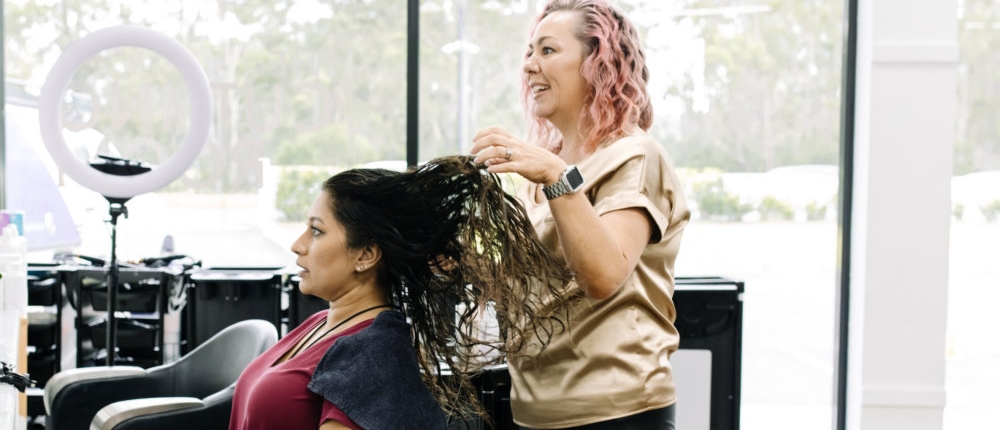
A professional Hair & Scalp Analysis focuses on understanding what is happening at the scalp and follicle level.
This may include:
- Assessment of hair density and distribution
- Evaluation of scalp health and inflammation
- Identification of active shedding versus slowed regrowth
- Discussion of recent health, hormonal, or lifestyle changes
Based on findings, supportive care may involve:
- Targeted Scalp Treatments
- Appropriate Hair Loss Treatments where suitable
- Structured Personalised Treatment Plans & Follow Up Care
- Ongoing support through Preventative & Maintenance Care
When medical referral may be suggested
In some cases, assessment findings suggest that medical review may be helpful. This may include situations where hair changes are severe, rapidly progressive, or accompanied by other health symptoms.
Authoritative dermatology guidance from the Australian College of Dermatologists highlights the importance of appropriate referral when hair loss patterns are unclear or concerning.
Australian College of Dermatologists – Hair Loss in Women
Key takeaway
Hair changes during menopause are common, but not all changes should be ignored.
Assessment provides clarity, reassurance, and direction. It helps distinguish between temporary hormonal effects and changes that benefit from ongoing support or referral – without unnecessary alarm or assumptions.
Seeking assessment is not about “overreacting.” It is about understanding what’s happening and supporting hair health thoughtfully and responsibly.
Frequently Asked Questions
How do I know if my menopausal hair changes are normal or need assessment?
Some hair changes are common during menopause, particularly mild shedding or texture changes. Assessment is helpful when changes persist, worsen, or cause distress, or when it’s unclear whether the changes are temporary or ongoing.
Is it too early to seek help if I’m only in perimenopause?
No. Perimenopause can last several years, and early assessment can help identify patterns before changes become more noticeable or distressing.
Does assessment mean something is wrong?
Not at all. Assessment provides information and reassurance. In many cases, it confirms that changes are temporary or manageable.
Will a hair and scalp clinic diagnose a medical condition?
No. Hair and scalp clinics assess hair and scalp health but do not diagnose medical conditions or prescribe medication. Referral to a GP or specialist may be suggested if appropriate.
What if my hair changes are affecting my confidence?
Emotional impact matters. Hair changes can significantly affect wellbeing, and assessment can help provide clarity, support, and realistic expectations.
Can assessment help even if hair changes can’t be reversed?
Yes. Understanding what’s happening allows for appropriate care, monitoring, and supportive strategies, even when changes are long-term.
You may be also interested in
 https://www.trichohealthclinic.com.au/wp-content/uploads/2026/10/PCOS-and-Hair-Loss.jpg
500
1000
admin
https://www.trichohealthclinic.com.au/wp-content/uploads/2026/02/Tricho-Health-Clinic-Logo.png
admin2026-10-15 17:30:402026-10-15 17:30:40PCOS and Hair Loss: Why It Happens and What You Can Do
https://www.trichohealthclinic.com.au/wp-content/uploads/2026/10/PCOS-and-Hair-Loss.jpg
500
1000
admin
https://www.trichohealthclinic.com.au/wp-content/uploads/2026/02/Tricho-Health-Clinic-Logo.png
admin2026-10-15 17:30:402026-10-15 17:30:40PCOS and Hair Loss: Why It Happens and What You Can Do https://www.trichohealthclinic.com.au/wp-content/uploads/2026/10/What-does-PCOS-Hair-Loss-Look-Like.jpg
500
1000
admin
https://www.trichohealthclinic.com.au/wp-content/uploads/2026/02/Tricho-Health-Clinic-Logo.png
admin2026-10-15 17:28:322026-10-15 17:28:32What Does PCOS Hair Loss Look Like? Early Signs of Thinning
https://www.trichohealthclinic.com.au/wp-content/uploads/2026/10/What-does-PCOS-Hair-Loss-Look-Like.jpg
500
1000
admin
https://www.trichohealthclinic.com.au/wp-content/uploads/2026/02/Tricho-Health-Clinic-Logo.png
admin2026-10-15 17:28:322026-10-15 17:28:32What Does PCOS Hair Loss Look Like? Early Signs of Thinning https://www.trichohealthclinic.com.au/wp-content/uploads/2026/10/Can-PCOS-Hair-Loss-Grow-Back.jpg
500
1000
admin
https://www.trichohealthclinic.com.au/wp-content/uploads/2026/02/Tricho-Health-Clinic-Logo.png
admin2026-10-15 17:21:272026-10-15 17:21:27Can PCOS Hair Loss Grow Back? What You Need to Know About Regrowth
https://www.trichohealthclinic.com.au/wp-content/uploads/2026/10/Can-PCOS-Hair-Loss-Grow-Back.jpg
500
1000
admin
https://www.trichohealthclinic.com.au/wp-content/uploads/2026/02/Tricho-Health-Clinic-Logo.png
admin2026-10-15 17:21:272026-10-15 17:21:27Can PCOS Hair Loss Grow Back? What You Need to Know About Regrowth https://www.trichohealthclinic.com.au/wp-content/uploads/2026/10/PCOS-Hair-Loss-Treatment.jpg
500
1000
admin
https://www.trichohealthclinic.com.au/wp-content/uploads/2026/02/Tricho-Health-Clinic-Logo.png
admin2026-10-15 17:19:592026-10-15 17:19:59PCOS Hair Loss Treatment: What Works and What to Expect
https://www.trichohealthclinic.com.au/wp-content/uploads/2026/10/PCOS-Hair-Loss-Treatment.jpg
500
1000
admin
https://www.trichohealthclinic.com.au/wp-content/uploads/2026/02/Tricho-Health-Clinic-Logo.png
admin2026-10-15 17:19:592026-10-15 17:19:59PCOS Hair Loss Treatment: What Works and What to Expect https://www.trichohealthclinic.com.au/wp-content/uploads/2026/10/PCOS-Hair-Loss-Connection.jpg
500
1000
admin
https://www.trichohealthclinic.com.au/wp-content/uploads/2026/02/Tricho-Health-Clinic-Logo.png
admin2026-10-15 17:18:132026-10-15 17:18:13PCOS Hair Loss vs Female Pattern Hair Loss: Understanding the Connection
https://www.trichohealthclinic.com.au/wp-content/uploads/2026/10/PCOS-Hair-Loss-Connection.jpg
500
1000
admin
https://www.trichohealthclinic.com.au/wp-content/uploads/2026/02/Tricho-Health-Clinic-Logo.png
admin2026-10-15 17:18:132026-10-15 17:18:13PCOS Hair Loss vs Female Pattern Hair Loss: Understanding the Connection https://www.trichohealthclinic.com.au/wp-content/uploads/2026/10/PCOS-When-to-See-Trichologist.jpg
500
1000
admin
https://www.trichohealthclinic.com.au/wp-content/uploads/2026/02/Tricho-Health-Clinic-Logo.png
admin2026-10-15 17:16:442026-10-15 17:16:44When Should You See a Trichologist for PCOS Hair Loss?
https://www.trichohealthclinic.com.au/wp-content/uploads/2026/10/PCOS-When-to-See-Trichologist.jpg
500
1000
admin
https://www.trichohealthclinic.com.au/wp-content/uploads/2026/02/Tricho-Health-Clinic-Logo.png
admin2026-10-15 17:16:442026-10-15 17:16:44When Should You See a Trichologist for PCOS Hair Loss?
