
When Should You See a Trichologist for PCOS Hair Loss?
When you first notice your hair becoming thinner, it’s tempting to wait and see what happens. Perhaps your part looks a little wider, your ponytail doesn’t feel as thick as it once did, or you’re finding more hair in your brush than usual. You might change your shampoo, try a supplement or experiment with a different hairstyle, hoping things will improve on their own.
If you have polycystic ovary syndrome (PCOS), you may assume these changes are simply another symptom of the condition. After all, PCOS can affect hormone activity and hair growth. But how do you know whether your thinning hair is related to PCOS, another type of hair loss or something entirely different?
It’s also common to feel unsure about whom to see. Should you book an appointment with your GP, ask for a dermatologist referral or arrange a consultation with a trichologist?
Each professional has a different role, and understanding those differences can help you make an informed decision. A professional hair and scalp assessment may provide useful information about visible changes in your hair, while medical investigations are important for identifying and managing PCOS and other health conditions.
Let’s look at when a trichology appointment may be helpful, what you can expect during an assessment and why you don’t necessarily need to wait until your hair loss becomes severe before seeking advice.
When Should You Seek Help for PCOS-Related Hair Loss?
There’s no need to wait until your hair thinning becomes obvious to other people before seeking professional advice. In fact, some of the earliest changes are things only you may notice, particularly if you’ve always had relatively thick hair.
You might find that your central part has gradually widened, your hair feels less dense around the crown or the amount of hair you can gather into a ponytail has noticeably decreased. These changes can develop over months or years, making them difficult to recognise without comparing your hair with how it looked previously.
For women with PCOS, androgen activity may contribute to female pattern hair loss, where susceptible follicles gradually produce finer hairs. However, other conditions can create similar changes, and having PCOS doesn’t automatically mean it’s responsible for your thinning.
If you’ve noticed persistent or progressive hair changes, arranging an assessment is a sensible step. Your GP can investigate potential medical causes, while a professional hair and scalp assessment can help document the visible changes and provide practical guidance about caring for your hair.
Our main guide to PCOS and Hair Loss: Why It Happens and What You Can Do explains the connection between PCOS, androgen activity and scalp thinning in more detail.
Signs That Your Hair Changes Are Worth Investigating
Not every change in your hair indicates an underlying medical problem. Hair can look and feel different depending on your haircut, styling routine, chemical treatments and natural changes over time. However, certain patterns are worth paying attention to, particularly when they persist or become more noticeable.
Your Part Is Gradually Becoming Wider
A widening central part is one of the recognisable signs of female pattern hair loss. You may notice more scalp showing between your hair, particularly under bright lighting or when looking at photographs taken from above.
This type of thinning can develop gradually as affected follicles produce finer hairs. If you have PCOS, hormonal influences may be contributing, but female pattern hair loss can also occur independently of PCOS.
Your Ponytail Feels Noticeably Thinner
Sometimes reduced density is easier to feel than to see. You may find yourself wrapping your hair elastic around an extra time or noticing that your usual bun doesn’t have the same fullness.
A thinner ponytail can reflect gradual patterned hair loss, increased shedding or breakage along the hair shaft. Looking at where the changes are occurring and whether other symptoms are present can help identify what needs further investigation.
You’re Experiencing More Shedding Than Usual
Everyone sheds hair as part of the natural growth cycle, but a noticeable and sustained increase in shedding may indicate that something has disrupted that cycle.
Illness, significant stress, nutritional deficiencies, certain medications and other medical conditions can contribute to excessive shedding. This may occur independently of PCOS or alongside existing female pattern thinning.
If shedding has increased suddenly or continues without an obvious explanation, your GP should assess possible medical causes. Our article on Telogen Effluvium Explained explores one of the conditions that can cause excessive shedding.
Your Hair Has Become Finer or More Difficult to Style
Perhaps your hair still grows, but it no longer feels as substantial as it once did. Your usual hairstyle may look flatter, your fringe may appear thinner or you may need more styling products to create volume.
Changes in hair shaft diameter can contribute to this loss of fullness. However, chemical processing, heat damage, breakage and changes in hair texture may also affect how your hair behaves.
A hair and scalp assessment can help examine these visible changes rather than assuming every styling difficulty is caused by hormonal hair loss.
Your Scalp Is Painful, Inflamed or Developing Bald Patches
These symptoms deserve particular attention because they aren’t typical features of uncomplicated female pattern hair loss. Sudden bald patches, significant scalp pain, persistent redness, inflammation or signs of scarring may indicate another condition requiring medical diagnosis and treatment.
If you’re experiencing these symptoms, arrange prompt assessment with a GP or dermatologist rather than attributing them to PCOS or relying on cosmetic scalp treatments.
What’s Happening to My Hair? Symptoms and Next Steps
Different hair concerns can require different types of professional support. The following table provides a practical starting point for understanding what your symptoms might indicate and where to seek advice.
| What you’re noticing | What may be contributing | Suggested next step |
|---|---|---|
| A gradually widening central part | Female pattern hair loss, possibly associated with androgen activity | GP assessment and professional hair and scalp analysis |
| Reduced ponytail thickness or crown volume | Gradual density loss, shedding or breakage | Hair and scalp assessment; GP review if changes are persistent or progressive |
| Sudden or substantial increased shedding | Telogen effluvium, illness, medication effects or other medical factors | GP assessment to investigate potential causes |
| Hair snapping or breaking along the lengths | Heat, chemical treatments, friction or fragile hair shafts | Haircare review or professional hair assessment to distinguish breakage from shedding |
| Hair thinning alongside irregular periods or increased facial hair | Possible hormonal factors, including PCOS | GP assessment for appropriate medical investigations |
| Bald patches, scalp pain, marked inflammation or scarring | Alopecia areata, inflammatory or other scalp disorders | Prompt GP or dermatologist assessment |
This table is a general guide and cannot establish a diagnosis. More than one condition may be contributing to the changes you’re experiencing.
Should You See a GP, Dermatologist or Trichologist?
One of the most common sources of confusion surrounding hair loss is understanding the difference between the professionals who may be involved in its assessment and management.
These roles can complement each other, but they aren’t interchangeable. PCOS is a medical condition, and diagnosing or treating it requires an appropriately qualified healthcare professional. Trichology focuses on the health and condition of the hair and scalp, providing a different type of assessment and supportive care.
| Professional | What they can help with | When to consider an appointment |
|---|---|---|
| GP | Medical assessment, PCOS investigation and management, blood tests, medication review and referrals | Unexplained hair loss, suspected hormonal concerns, persistent shedding or other medical symptoms |
| Dermatologist | Specialist medical diagnosis and treatment of hair loss disorders and scalp disease | Progressive or complex hair loss, uncertain diagnosis, inflammatory scalp disorders or when specialist treatment is needed |
| Trichologist | Non-medical hair and scalp assessment, documentation of visible changes, haircare guidance and supportive monitoring | Changes in hair density, thinning, breakage, scalp condition or concerns about haircare and styling |
You don’t necessarily have to choose between these professionals. For example, your GP may investigate possible hormonal or nutritional causes while a trichologist helps you understand the visible changes in your hair and how to care for it.
Where a medical diagnosis or prescription treatment is required, the GP or dermatologist remains responsible for those decisions.
What Happens During a Hair and Scalp Assessment?
If you’ve never visited a trichologist before, you may be unsure what the appointment involves or what information you’ll receive.
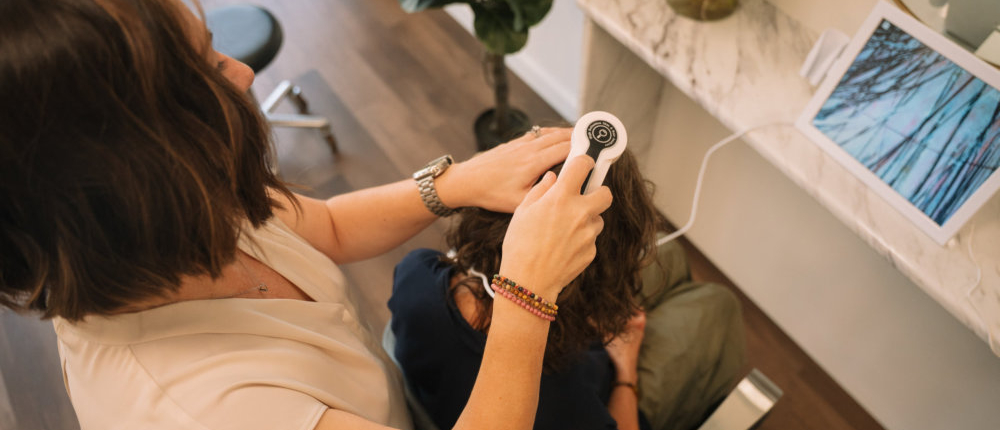
At Tricho Health Clinic in Riverstone, Cassandra provides professional hair and scalp assessments that consider the condition of your hair, visible changes in density and the health of your scalp.
Rather than looking only at how much hair appears to have been lost, an assessment can consider when the changes began, whether thinning has developed gradually or suddenly, how your hair behaves during styling and whether other factors may be relevant.
Discussing Your Hair History
Understanding the history of your hair concerns is an important part of assessing visible changes. You may be asked when you first noticed thinning, whether shedding has increased, if you’ve recently experienced illness or stress and whether your haircare routine has changed.
If you have PCOS, it’s useful to mention your diagnosis and any relevant information from your GP. Medication changes, previous blood test results and other health concerns may also provide context, although medical interpretation remains the responsibility of your healthcare professional.
Examining Your Hair and Scalp
A professional assessment can examine visible hair density, hair shaft thickness, growth patterns and scalp condition. This may help distinguish concerns such as hair breakage, diffuse shedding and gradual patterned thinning, although clinical diagnosis of a hair loss disorder may require a doctor or dermatologist.
Scalp assessment can also identify visible concerns such as irritation, flaking or changes that warrant further medical investigation.
Discussing Haircare and Practical Support
Hair thinning doesn’t only affect the number of hairs on your head. It can also change how your hair behaves, how easily it holds a style and how confident you feel managing it.
Cassandra’s background in the hair industry provides a practical perspective on hair condition and care. Guidance may include gentler styling techniques, managing fragile lengths and choosing appropriate products for your hair and scalp.
Where suitable, the clinic’s Personalised Treatment Plans and Follow-Up Care service may provide ongoing supportive haircare guidance and monitoring. This is separate from medical treatment for PCOS or diagnosed hair loss disorders.
A Practical Example: When Hair Changes Aren’t as Simple as They Seem
Imagine you’ve been living with PCOS for several years and have recently noticed that your hair feels thinner. Your central part seems wider, and your ponytail is noticeably smaller than it used to be.
You assume that your hormones are responsible and begin trying shampoos or supplements advertised for hair growth. After several months, you haven’t noticed much improvement.
But perhaps you’ve also been through a particularly stressful period, changed medication or experienced significant weight loss. These factors may contribute to shedding independently of PCOS, making it difficult to determine exactly what’s happening.
A professional hair and scalp assessment could help document whether the visible concern involves gradual density loss, hair shaft breakage or another pattern requiring further investigation. Your GP could then assess possible hormonal, nutritional or other medical causes and determine whether specialist referral is appropriate.
This is a hypothetical situation, but it illustrates why assuming that PCOS explains every change in your hair may lead you towards products or treatments that don’t address the full picture.
Our article on Why Hair Loss Treatments Fail Without Identifying the Root Cause explains why understanding the problem matters before choosing a treatment.
What Should You Bring to Your Hair and Scalp Appointment?
You don’t need to prepare extensively for a hair and scalp assessment. However, thinking about your symptoms beforehand can make it easier to explain what’s concerning you and when you first noticed a change.
If you’ve been dealing with thinning hair for several months, details that seemed unimportant at the time may provide helpful context.
Before Your Appointment: A Simple Checklist
- When did the changes begin? Think about whether thinning developed gradually or appeared suddenly.
- Where have you noticed changes? Consider your central part, crown, hairline and overall ponytail thickness.
- Has shedding increased? Note whether you’re finding more hair in your brush, shower or on clothing.
- Have you experienced recent health changes? Consider illness, surgery, significant stress or rapid weight changes.
- What medications or supplements are you taking? Bring a current list, including treatments related to PCOS.
- Have you had any relevant blood tests? If available, bring copies of results already discussed with your GP.
- Has your haircare routine changed? Mention recent colouring, bleaching, extensions, heat styling or new products.
- Do you have older photographs? Photos showing your part, crown or general hair density may help illustrate changes over time.
Tip: You don’t need to have answers to every question. The purpose is simply to help build a clearer picture of what you’ve noticed, without trying to diagnose the cause yourself.
Can a Trichologist Diagnose PCOS Hair Loss?
A trichologist can assess hair and scalp concerns, but a trichologist who is not also a registered medical practitioner cannot diagnose PCOS or prescribe medical treatments.
Diagnosing PCOS involves considering medical history, symptoms and relevant investigations in accordance with recognised diagnostic guidelines. A GP or appropriately qualified specialist may also need to exclude other conditions that can produce similar hormonal symptoms.
Similarly, diagnosing a specific medical hair loss disorder may require clinical examination and investigations by a GP or dermatologist.
A trichology assessment can provide complementary information about visible changes in hair density, scalp condition and hair shaft characteristics, along with practical guidance about managing haircare concerns.
For more information about PCOS diagnosis and management, Jean Hailes for Women’s Health offers Australian health information, while the International Evidence-based PCOS Guideline provides guidance for healthcare professionals.
Should You Wait Until Your Hair Loss Gets Worse?
It’s understandable to put off seeking advice when hair thinning seems mild. You may hope that the shedding will settle or that your hair will eventually return to its previous thickness.
However, different types of hair loss have different patterns of progression and recovery. Temporary shedding may improve once a triggering factor resolves, while female pattern hair loss can gradually progress over time.
Early medical assessment may provide an opportunity to identify treatable causes and consider appropriate interventions before additional density is lost. It can also help rule out conditions that require more urgent attention.
For women with PCOS, it may be particularly useful to distinguish androgen-associated patterned thinning from shedding caused by other factors, especially when several possible contributors are present.
If you’re wondering what improvement might look like, read Can PCOS Hair Loss Grow Back? What You Need to Know About Regrowth.
What Can You Do While Waiting for Your Appointment?
While you’re arranging professional advice, there are practical ways to care for your hair without relying on expensive products or attempting to treat an undiagnosed condition.
Choose a gentle haircare routine that suits your scalp and hair type, avoid excessive tension from tight hairstyles and use heat styling carefully. If your hair has become fragile, consider reducing unnecessary chemical processing until you’ve had an opportunity to discuss its condition with a professional.
It’s also sensible to avoid starting multiple supplements or changing prescribed medications without medical advice. Products marketed for hair growth may not address the underlying cause of thinning, and some supplements can cause side effects or interfere with blood tests.
If you want to monitor your hair, occasional photographs taken under similar lighting conditions are generally more useful than checking your part repeatedly throughout the day. Changes in lighting, washing and styling can make hair density appear very different.
Most importantly, if your hair loss is sudden, severe, patchy or accompanied by scalp pain, inflammation or signs of scarring, prioritise medical assessment.
How Tricho Health Clinic Can Support Your Hair and Scalp Health
At Tricho Health Clinic in Riverstone, Cassandra combines more than 30 years of experience in the hair industry with her qualifications as a certified trichologist.
Her professional hair and scalp assessments focus on understanding the visible changes you’re experiencing, examining the condition of your hair and scalp, and providing practical guidance tailored to your concerns.
For women with PCOS, this may help clarify the difference between ongoing thinning, excessive shedding and hair breakage, while offering support with the everyday challenges of managing finer or more fragile hair.
Where medical investigation or treatment is appropriate, the clinic’s support can complement the care provided by your GP or dermatologist.
Hair thinning can affect confidence as well as appearance, and understanding what’s happening can make it easier to decide which steps are worthwhile and which products or approaches may be unnecessary.
Understanding Your Hair Is a Good Place to Start
If you’ve noticed your hair becoming thinner, it’s natural to want an immediate explanation. When you have PCOS, it may seem reasonable to assume hormones are responsible, particularly if you’ve experienced other symptoms of the condition.
But hair loss is rarely something that should be judged by one symptom alone. Genetics, hormonal influences, temporary shedding, nutritional factors and hair shaft damage can all contribute to changes in the way your hair looks and feels.
Knowing when to seek appropriate medical advice and when professional hair and scalp support may be useful can help you move forward with greater clarity.
You don’t have to wait until your thinning becomes severe to ask questions about your hair health. Taking the time to understand what’s changed is a sensible first step towards choosing appropriate care.
Concerned About PCOS-Related Hair Loss?
If you’re experiencing thinning, ongoing shedding, a widening part or changes in hair density, Tricho Health Clinic can help you take a closer look at your hair and scalp.
Cassandra offers professional, non-invasive hair and scalp assessments and personalised guidance about caring for thinning or fragile hair. The assessment can complement medical care and help you better understand the visible changes you’re experiencing.
Book a Hair & Scalp Analysis at Tricho Health Clinic
This article provides general educational information and does not replace medical advice, diagnosis or treatment. PCOS diagnosis, medical investigations and prescription treatments should be managed by an appropriately qualified healthcare professional.
Frequently Asked Questions
When should I see a trichologist for PCOS hair loss?
Consider seeing a trichologist if you’ve noticed persistent changes in hair density, a widening part, reduced ponytail thickness or ongoing shedding that you’re struggling to understand. These changes can develop gradually, particularly when PCOS is associated with female pattern hair loss. A trichologist can examine visible changes in your hair and scalp, discuss your hair loss history and provide practical advice about maintaining hair condition and managing thinning or fragile hair. However, having PCOS doesn’t automatically mean it’s responsible for your hair loss, so medical assessment is also important. Your GP can investigate hormonal, nutritional or other health factors and determine whether medical treatment or referral to a dermatologist is appropriate. Seeking advice early can help establish what’s happening and provide a starting point for monitoring changes.
Can a trichologist tell if PCOS is causing my hair loss?
A trichologist can assess visible changes in hair density, hair shaft thickness, growth patterns and scalp condition, but cannot definitively establish that PCOS is responsible for your hair loss. PCOS is a medical condition that requires diagnosis and management by an appropriately qualified healthcare professional. Although androgen activity associated with PCOS may contribute to female pattern hair loss, similar thinning can occur in women without PCOS or elevated hormone levels. Other causes, including thyroid conditions, nutritional deficiencies, temporary shedding and hair breakage, may also need consideration. A trichology assessment can provide complementary information about the condition of your hair and scalp, while your GP or dermatologist can investigate medical causes and recommend appropriate treatment where necessary.
Should I see my GP or a trichologist first for PCOS hair loss?
If you’re experiencing unexplained hair loss, particularly alongside symptoms such as irregular periods, acne or increased facial hair growth, your GP is an appropriate first point of contact. A GP can assess whether PCOS or another medical condition may be contributing, arrange relevant investigations and discuss treatment or specialist referral where needed. If you’ve already been diagnosed with PCOS and are concerned about changes in hair density, a professional trichology assessment can provide additional information about visible thinning, scalp health and haircare needs. These services can complement each other, although a trichologist cannot replace medical diagnosis or treatment. If your hair loss is sudden, patchy or accompanied by scalp pain, inflammation or signs of scarring, prompt medical assessment should take priority.
What happens during a trichology consultation for hair loss?
A trichology consultation generally involves discussing your hair concerns, reviewing when changes began and examining the visible condition of your hair and scalp. You may be asked about shedding patterns, changes in density, haircare practices, recent illness, stress, medications and relevant medical history. If you have PCOS, it’s useful to mention your diagnosis and any relevant investigations already undertaken by your GP. The assessment may examine hair shaft condition, scalp health and the distribution of thinning, with the aim of providing practical information about your hair and identifying concerns that warrant further medical investigation. At Tricho Health Clinic, Cassandra combines her trichology qualifications with extensive hair industry experience to provide supportive guidance about haircare and managing thinning or fragile hair.
Do I need blood tests before seeing a trichologist for PCOS hair loss?
You don’t necessarily need new blood tests before arranging a hair and scalp assessment. However, if you’ve already had relevant investigations through your GP, bringing copies of the results may provide useful background information. Depending on your symptoms and medical history, your GP may consider testing for factors such as thyroid dysfunction, iron deficiency or hormonal abnormalities. Blood tests aren’t always necessary for every type of hair loss, and normal hormone results don’t automatically rule out female pattern hair loss. A trichologist can review the information you provide as part of your hair history, but medical interpretation and decisions about additional tests remain the responsibility of your healthcare professional. Avoid ordering unnecessary tests or taking supplements solely to address hair loss without appropriate medical advice.
Can a trichologist help with hair regrowth caused by PCOS?
A trichologist can provide supportive hair and scalp care, help document visible changes in hair density and offer practical guidance about managing thinning or fragile hair. However, a trichology assessment itself cannot guarantee regrowth or correct the hormonal influences associated with PCOS. When PCOS contributes to female pattern hair loss, medical treatments such as topical minoxidil may be considered by an appropriate healthcare professional, depending on the diagnosis and individual circumstances. A trichologist can complement that medical care by helping you understand changes in your hair’s appearance and condition, reviewing haircare practices and monitoring visible changes over time. At Tricho Health Clinic, Cassandra focuses on professional hair and scalp assessment and practical support rather than diagnosing PCOS or prescribing medical treatments.
What should I bring to my first hair and scalp assessment?
It can be helpful to bring information about when your hair changes began, whether you’ve noticed increased shedding and where thinning appears most noticeable. If you’ve been diagnosed with PCOS, mention this during your consultation and bring any relevant medical information you’re comfortable sharing, including previous blood test results or a list of current medications and supplements. Older photographs showing your hair density, central part or crown may also help illustrate changes that have developed gradually. Consider whether you’ve experienced significant stress, illness, surgery, rapid weight changes or changes in your haircare routine. You don’t need to prepare a detailed medical history or know exactly what’s causing your hair loss. The purpose is simply to provide useful background information so your concerns can be assessed in context.
Is it worth seeing a trichologist if my PCOS hair loss is only mild?
Yes, a professional hair and scalp assessment may be useful even when thinning is relatively mild, particularly if you’ve noticed changes that are continuing over time. Early female pattern hair loss can be subtle, and some women recognise reduced volume or a widening part long before the thinning becomes obvious to others. An assessment can help document your current hair density, examine visible changes and provide practical guidance about caring for your hair. However, a trichologist cannot determine on their own whether PCOS is the underlying medical cause, so discussing unexplained or progressive thinning with your GP remains important. If medical treatment is appropriate, earlier diagnosis may provide an opportunity to address contributing factors before further density is lost. Even when the changes are mild, understanding your hair’s condition can help you make informed decisions.
You may be also interested in
 https://www.trichohealthclinic.com.au/wp-content/uploads/2026/10/PCOS-and-Hair-Loss.jpg
500
1000
admin
https://www.trichohealthclinic.com.au/wp-content/uploads/2026/02/Tricho-Health-Clinic-Logo.png
admin2026-10-15 17:30:402026-10-15 17:30:40PCOS and Hair Loss: Why It Happens and What You Can Do
 https://www.trichohealthclinic.com.au/wp-content/uploads/2026/10/What-does-PCOS-Hair-Loss-Look-Like.jpg
500
1000
admin
https://www.trichohealthclinic.com.au/wp-content/uploads/2026/02/Tricho-Health-Clinic-Logo.png
admin2026-10-15 17:28:322026-10-15 17:28:32What Does PCOS Hair Loss Look Like? Early Signs of Thinning
 https://www.trichohealthclinic.com.au/wp-content/uploads/2026/10/Can-PCOS-Hair-Loss-Grow-Back.jpg
500
1000
admin
https://www.trichohealthclinic.com.au/wp-content/uploads/2026/02/Tricho-Health-Clinic-Logo.png
admin2026-10-15 17:21:272026-10-15 17:21:27Can PCOS Hair Loss Grow Back? What You Need to Know About Regrowth
 https://www.trichohealthclinic.com.au/wp-content/uploads/2026/10/PCOS-Hair-Loss-Treatment.jpg
500
1000
admin
https://www.trichohealthclinic.com.au/wp-content/uploads/2026/02/Tricho-Health-Clinic-Logo.png
admin2026-10-15 17:19:592026-10-15 17:19:59PCOS Hair Loss Treatment: What Works and What to Expect
 https://www.trichohealthclinic.com.au/wp-content/uploads/2026/10/PCOS-Hair-Loss-Connection.jpg
500
1000
admin
https://www.trichohealthclinic.com.au/wp-content/uploads/2026/02/Tricho-Health-Clinic-Logo.png
admin2026-10-15 17:18:132026-10-15 17:18:13PCOS Hair Loss vs Female Pattern Hair Loss: Understanding the Connection
 https://www.trichohealthclinic.com.au/wp-content/uploads/2026/10/PCOS-When-to-See-Trichologist.jpg
500
1000
admin
https://www.trichohealthclinic.com.au/wp-content/uploads/2026/02/Tricho-Health-Clinic-Logo.png
admin2026-10-15 17:16:442026-10-15 17:16:44When Should You See a Trichologist for PCOS Hair Loss?

