Why Hair Density Changes During Perimenopause
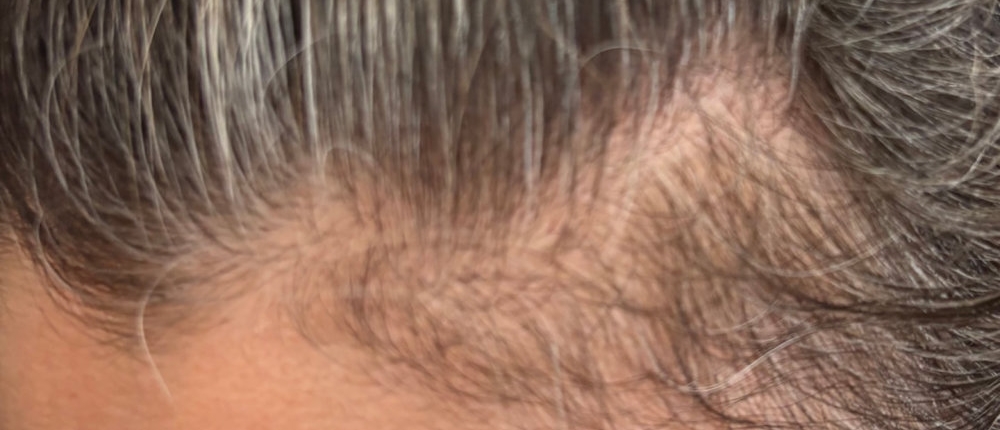
For many people, changes in hair density are one of the earliest and most confusing signs of perimenopause. Unlike sudden shedding, density changes often happen gradually. Hair may feel flatter, finer, or less full, even when there is no obvious increase in hair falling out.
This can be particularly unsettling because perimenopause is often poorly understood. Many people don’t realise they are in this stage of hormonal transition, and hair changes may be dismissed as stress, ageing, or “just one of those things”.
In reality, perimenopause can influence hair growth in several subtle but important ways. Understanding these mechanisms helps explain why density changes occur and why the experience varies so widely between individuals.
What is perimenopause?
Perimenopause is the transitional phase leading up to menopause. It can begin years before periods stop completely and is characterised by fluctuating hormone levels rather than a steady decline.
During this stage, oestrogen and progesterone levels rise and fall unpredictably. Some cycles may be ovulatory, others not. Hormone levels can vary significantly from month to month, which is why symptoms often feel inconsistent or confusing.
According to Healthdirect Australia, perimenopause can last several years and affects people differently, both in timing and symptom severity.
Healthdirect Australia – Menopause
What does “hair density” actually refer to?
Hair density refers to the number of hairs growing per square centimetre of scalp. It is different from hair thickness (the width of each hair strand) and different again from shedding.
A person can have normal shedding but still experience reduced density if regrowth is slower, hairs grow back finer, or fewer follicles are actively producing hair at the same time.
During perimenopause, density changes are often gradual. This makes them harder to notice at first and more distressing once they become obvious.
How hormonal fluctuation affects hair growth cycles
Hair grows in cycles that include a growth phase, a transition phase, and a resting phase. Hormones influence how long hairs remain in each stage.
Oestrogen supports the growth phase of the hair cycle. When oestrogen levels fluctuate, hairs may spend less time growing before entering the resting phase. Over time, this can reduce the number of hairs actively growing at any one moment.
This does not mean hair follicles are damaged. Instead, growth becomes less efficient. Hair may regrow more slowly, reach a shorter length, or feel less robust than it did previously.
Why density can change without obvious shedding
One of the most confusing aspects of perimenopausal hair change is that density can decline without noticeable hair fall.
This often happens when regrowth is slower or when new hairs grow back finer than before. Even if shedding remains within a normal range, overall volume can decrease.
This is different from telogen effluvium, where increased shedding is the primary feature. However, the two processes can overlap, particularly during periods of hormonal fluctuation.
For more on shedding-related changes, see:
Telogen Effluvium Explained: The Temporary Hair Loss No One Talks About
The role of physiological stress during perimenopause
Perimenopause itself represents a form of physiological stress. Sleep disruption, mood changes, and changes in metabolism are common during this stage and can influence hair growth indirectly.
Research has shown that physiological stress can disrupt the hair growth cycle and contribute to both shedding and slowed regrowth (Telogen Effluvium and Physiological Stress – PubMed).
When hormonal fluctuation and stress occur together, their combined effect can make density changes more noticeable and more persistent.
How perimenopause can unmask underlying hair tendencies
Some individuals have a genetic tendency toward pattern hair thinning that may not be obvious earlier in life. During perimenopause, hormonal changes can make these patterns more visible.
This does not mean that perimenopause causes pattern hair loss. Rather, it can reduce the margin of hormonal support that previously helped maintain density.
Dermatology references such as DermNet NZ describe pattern hair loss as a gradual process involving changes in follicle size rather than sudden shedding.
DermNet NZ – Female Pattern Hair Loss
This distinction is explored further in:
Hormonal Hair Changes vs Pattern Hair Loss: How They’re Different
Why density changes can feel progressive during perimenopause
Because perimenopause involves ongoing hormonal fluctuation rather than stability, hair may go through repeated periods of stress, shedding, and slow regrowth.
If each regrowth cycle is slightly less robust than the last, density can appear to decline gradually over time. This can create the impression that hair is “constantly getting thinner”, even when follicles remain active.
This is one reason early assessment can be helpful, particularly when changes begin to affect confidence or wellbeing.
How Tricho Health Clinic assesses density changes
Tricho Health Clinic does not diagnose medical conditions or manage hormone therapy. Our role is to assess hair and scalp health and identify patterns consistent with known causes of density change.
A professional Hair & Scalp Analysis may assess:
- Hair density and distribution across the scalp
- Signs of active shedding versus slowed regrowth
- Scalp condition and follicle health
- Contributing lifestyle or physiological factors
Based on findings, supportive care may include:
- Maintaining scalp health through Scalp Treatments
- Targeted support via Hair Loss Treatments
- Monitoring and adjustment with Personalised Treatment Plans & Follow Up Care
- Long-term support through Preventative & Maintenance Care
When density changes should be assessed
Density changes during perimenopause are common, but they should not be ignored if they are progressive, distressing, or accompanied by other symptoms.
Guidance on when assessment is recommended is outlined in:
When Hair Changes During Menopause Should Be Assessed
Key takeaway
Hair density changes during perimenopause are often the result of hormonal fluctuation, slowed regrowth, and physiological stress rather than sudden hair loss.
Understanding these processes helps set realistic expectations and supports calm, evidence-informed care during this transitional stage.
Frequently Asked Questions
Why does my hair feel thinner even though I’m not losing much hair?
Hair density can change when regrowth slows or hairs grow back finer. Even if shedding remains normal, fewer actively growing hairs can reduce overall volume and fullness.
Is perimenopausal hair density loss permanent?
Not necessarily. Many follicles remain active, and density can improve once hormonal fluctuations stabilise. However, regrowth is gradual and varies between individuals.
Can perimenopause cause pattern hair loss?
Perimenopause does not cause pattern hair loss, but it can make existing genetic tendencies more noticeable by reducing hormonal support for hair growth.
Why do density changes seem to happen gradually?
Perimenopause involves ongoing hormonal fluctuation rather than a single change. Repeated cycles of stress and slow regrowth can lead to gradual, cumulative changes in density.
Should I wait and see if density improves on its own?
Some changes may stabilise over time, but assessment can help clarify what’s happening and whether supportive care would be beneficial.
How can a hair and scalp clinic help with density changes?
A clinic can assess hair and scalp health, identify patterns consistent with hormonal change or other factors, and provide supportive care. Clinics do not diagnose medical conditions but work alongside medical professionals where appropriate.
You may be also interested in
 https://www.trichohealthclinic.com.au/wp-content/uploads/2026/10/PCOS-and-Hair-Loss.jpg
500
1000
admin
https://www.trichohealthclinic.com.au/wp-content/uploads/2026/02/Tricho-Health-Clinic-Logo.png
admin2026-10-15 17:30:402026-10-15 17:30:40PCOS and Hair Loss: Why It Happens and What You Can Do
https://www.trichohealthclinic.com.au/wp-content/uploads/2026/10/PCOS-and-Hair-Loss.jpg
500
1000
admin
https://www.trichohealthclinic.com.au/wp-content/uploads/2026/02/Tricho-Health-Clinic-Logo.png
admin2026-10-15 17:30:402026-10-15 17:30:40PCOS and Hair Loss: Why It Happens and What You Can Do https://www.trichohealthclinic.com.au/wp-content/uploads/2026/10/What-does-PCOS-Hair-Loss-Look-Like.jpg
500
1000
admin
https://www.trichohealthclinic.com.au/wp-content/uploads/2026/02/Tricho-Health-Clinic-Logo.png
admin2026-10-15 17:28:322026-10-15 17:28:32What Does PCOS Hair Loss Look Like? Early Signs of Thinning
https://www.trichohealthclinic.com.au/wp-content/uploads/2026/10/What-does-PCOS-Hair-Loss-Look-Like.jpg
500
1000
admin
https://www.trichohealthclinic.com.au/wp-content/uploads/2026/02/Tricho-Health-Clinic-Logo.png
admin2026-10-15 17:28:322026-10-15 17:28:32What Does PCOS Hair Loss Look Like? Early Signs of Thinning https://www.trichohealthclinic.com.au/wp-content/uploads/2026/10/Can-PCOS-Hair-Loss-Grow-Back.jpg
500
1000
admin
https://www.trichohealthclinic.com.au/wp-content/uploads/2026/02/Tricho-Health-Clinic-Logo.png
admin2026-10-15 17:21:272026-10-15 17:21:27Can PCOS Hair Loss Grow Back? What You Need to Know About Regrowth
https://www.trichohealthclinic.com.au/wp-content/uploads/2026/10/Can-PCOS-Hair-Loss-Grow-Back.jpg
500
1000
admin
https://www.trichohealthclinic.com.au/wp-content/uploads/2026/02/Tricho-Health-Clinic-Logo.png
admin2026-10-15 17:21:272026-10-15 17:21:27Can PCOS Hair Loss Grow Back? What You Need to Know About Regrowth https://www.trichohealthclinic.com.au/wp-content/uploads/2026/10/PCOS-Hair-Loss-Treatment.jpg
500
1000
admin
https://www.trichohealthclinic.com.au/wp-content/uploads/2026/02/Tricho-Health-Clinic-Logo.png
admin2026-10-15 17:19:592026-10-15 17:19:59PCOS Hair Loss Treatment: What Works and What to Expect
https://www.trichohealthclinic.com.au/wp-content/uploads/2026/10/PCOS-Hair-Loss-Treatment.jpg
500
1000
admin
https://www.trichohealthclinic.com.au/wp-content/uploads/2026/02/Tricho-Health-Clinic-Logo.png
admin2026-10-15 17:19:592026-10-15 17:19:59PCOS Hair Loss Treatment: What Works and What to Expect https://www.trichohealthclinic.com.au/wp-content/uploads/2026/10/PCOS-Hair-Loss-Connection.jpg
500
1000
admin
https://www.trichohealthclinic.com.au/wp-content/uploads/2026/02/Tricho-Health-Clinic-Logo.png
admin2026-10-15 17:18:132026-10-15 17:18:13PCOS Hair Loss vs Female Pattern Hair Loss: Understanding the Connection
https://www.trichohealthclinic.com.au/wp-content/uploads/2026/10/PCOS-Hair-Loss-Connection.jpg
500
1000
admin
https://www.trichohealthclinic.com.au/wp-content/uploads/2026/02/Tricho-Health-Clinic-Logo.png
admin2026-10-15 17:18:132026-10-15 17:18:13PCOS Hair Loss vs Female Pattern Hair Loss: Understanding the Connection https://www.trichohealthclinic.com.au/wp-content/uploads/2026/10/PCOS-When-to-See-Trichologist.jpg
500
1000
admin
https://www.trichohealthclinic.com.au/wp-content/uploads/2026/02/Tricho-Health-Clinic-Logo.png
admin2026-10-15 17:16:442026-10-15 17:16:44When Should You See a Trichologist for PCOS Hair Loss?
https://www.trichohealthclinic.com.au/wp-content/uploads/2026/10/PCOS-When-to-See-Trichologist.jpg
500
1000
admin
https://www.trichohealthclinic.com.au/wp-content/uploads/2026/02/Tricho-Health-Clinic-Logo.png
admin2026-10-15 17:16:442026-10-15 17:16:44When Should You See a Trichologist for PCOS Hair Loss?
