

PCOS and Hair Loss: Why It Happens and What You Can Do
Noticing more hair in your brush, a widening part or a ponytail that doesn’t feel quite as thick as it used to? Hair thinning can be unsettling, particularly when you can’t work out what’s causing it.
For some women, these changes may be connected to polycystic ovary syndrome (PCOS), a hormonal condition that can affect menstrual cycles, skin, metabolism and hair growth.
One of the more confusing aspects of PCOS is that it can cause unwanted hair growth on the face or body while contributing to thinning hair on the scalp. And although PCOS is commonly associated with reproductive health, its effects can extend well beyond your periods.
The encouraging news is that understanding why your hair is changing can help you identify appropriate treatment and support. However, not every woman with PCOS experiences hair loss, and having PCOS doesn’t automatically mean it’s responsible for every change in your hair.
Let’s look at how PCOS can affect your hair, what signs to watch for and when it’s worth seeking professional advice.
What Is PCOS and How Does It Affect Hair Growth?
Polycystic ovary syndrome (PCOS) is a hormonal condition that affects women during their reproductive years. It can involve irregular menstrual cycles, increased androgen activity and changes in how the body responds to insulin.
Androgens are often described as male hormones, but women naturally produce them too. Testosterone is one example.
In some women with PCOS, higher androgen levels or increased sensitivity to androgens can influence how hair follicles behave.
Hair follicles don’t all respond to hormones in the same way. On certain areas of the body, androgen activity may encourage thicker hair growth. On the scalp, susceptible follicles may gradually produce finer, shorter hairs.
This process is known as hair follicle miniaturisation. Over time, the hair may look less dense, particularly around the central part or crown.
According to Jean Hailes for Women’s Health, PCOS can be associated with both excess facial or body hair and hair loss from the scalp.
It’s important to understand that not all women with PCOS have elevated testosterone levels, and hair loss can occur for several reasons. A proper assessment helps distinguish hormonal influences from other possible causes.
What Does PCOS Hair Loss Look Like?
PCOS-related hair loss often develops gradually, which means the earliest changes can be surprisingly easy to overlook.
You might notice that your usual hairstyle doesn’t have the same volume, or that more of your scalp is visible when you stand under bright bathroom lighting.
Perhaps you’ve always had thick hair, so the changes aren’t obvious to anyone else. But you know your hair, and something feels different.
Common signs can include:
- A widening part, particularly along the centre of the scalp.
- Reduced volume around the crown or top of the head.
- A ponytail that feels thinner than before.
- More scalp showing through under bright lighting.
- Individual hairs appearing finer than they used to.
- Gradual difficulty achieving the same fullness when styling.
Some women also experience increased shedding, although this doesn’t necessarily indicate the same type of hair loss.
PCOS-associated thinning may overlap with female pattern hair loss, where susceptible hair follicles progressively produce finer hairs.
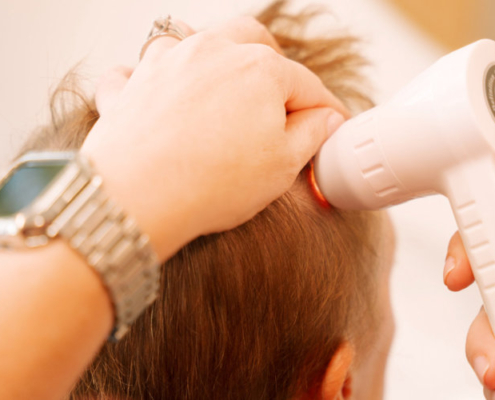
For a closer look at what to watch for, read What Does PCOS Hair Loss Look Like? Early Signs of Thinning.
What’s Happening to My Hair? Understanding Common Changes
Hair changes can look similar even when their underlying causes are quite different.
| What you may notice | Possible contributing factors | What to do next |
|---|---|---|
| Your part is becoming wider | Female pattern hair loss, potentially influenced by androgen activity | Arrange a professional hair assessment and discuss possible medical causes with your GP |
| Your ponytail feels thinner | Gradual density loss, increased shedding or breakage | Compare current changes with older photos and have your hair assessed |
| Hair is shedding more than usual | Stress, illness, nutritional deficiencies, medication changes or telogen effluvium | Discuss persistent shedding with your GP and consider a hair and scalp assessment |
| Hair around the crown looks finer | Follicle miniaturisation associated with patterned hair loss | Seek assessment before the change becomes more pronounced |
| Hair is snapping or breaking | Heat styling, chemical processing, friction or weakened hair shafts | Review haircare practices and determine whether the problem is breakage or shedding |
This table is intended as a guide, not a way to diagnose the cause of your hair loss.
If you’re unsure whether the hair you’re finding is shedding from the root or breaking along the shaft, our article on Hair Breakage vs Hair Loss explains the difference.
Why Does PCOS Cause Hair Thinning in Some Women but Not Others?
Two women can have PCOS and experience completely different changes in their hair.
One might develop noticeable scalp thinning, while another experiences acne or unwanted facial hair without any significant change to her scalp hair.
Several factors may help explain this variation.
Sensitivity to Androgens
Hair follicles differ in their sensitivity to androgen activity. Some follicles are more susceptible to miniaturisation, even when blood hormone levels are not dramatically elevated.
This helps explain why the severity of hair loss doesn’t always match the results of a hormone test.
Family History and Genetics
Genetics can influence susceptibility to female pattern hair loss. If women in your family have experienced gradual thinning, inherited factors may be relevant alongside PCOS.
Insulin Resistance and Metabolic Changes
Insulin resistance is common in women with PCOS and may contribute to hormonal changes, including increased androgen activity.
However, insulin resistance doesn’t directly explain every case of hair loss. PCOS is a complex condition, and its effects vary between individuals.
Other Factors Affecting Hair Health
Having PCOS doesn’t protect you from experiencing other forms of hair loss.
Low iron levels, thyroid conditions, recent illness, significant stress, nutritional deficiencies and certain medications can all contribute to changes in hair growth or shedding.
Sometimes more than one factor is involved.
This is why identifying the underlying cause matters. Our article on The Most Common Root Causes of Hair Loss in Women explores some of these overlapping influences.
Is PCOS Hair Loss Permanent?
This is understandably one of the biggest concerns women have when they begin noticing thinning.
The answer depends on the type of hair loss, how long it has been occurring and what is contributing to it.
When PCOS is associated with female pattern hair loss, affected follicles may gradually produce finer hairs over time. Early, appropriate medical treatment may help stabilise hair loss and, in some cases, improve density.
However, results vary, and complete restoration of previous hair density cannot be guaranteed.
If increased shedding is caused by an additional temporary factor, such as illness, nutritional deficiency or significant stress, recovery may be possible once that contributing factor has been addressed.
Hair growth is slow. Even when treatment is effective, visible improvements generally take months rather than weeks.
PCOS-related hair loss doesn’t follow the same pattern for everyone. Understanding the type of hair loss is essential before deciding which treatments may help.
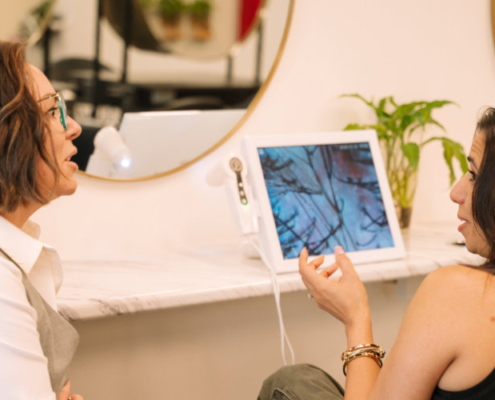
For more information, read Can PCOS Hair Loss Grow Back? What You Need to Know About Regrowth.
What Can You Do About PCOS-Related Hair Loss?
There isn’t one universal treatment for PCOS-related hair loss. The most appropriate approach depends on the underlying hair condition, your medical history and individual circumstances.
1. Seek Medical Advice About PCOS and Hormonal Factors
If you have unexplained hair thinning alongside symptoms such as irregular periods, acne or increased facial hair, speak with your GP.
A medical practitioner can assess whether PCOS or another condition may be contributing, arrange appropriate investigations and discuss treatment options.
If you’ve already been diagnosed with PCOS, it’s still worth discussing new or worsening hair loss rather than assuming it’s simply another symptom you have to accept.
2. Understand the Pattern of Hair Loss
Determining whether you’re experiencing gradual patterned thinning, excessive shedding or hair breakage is an important step.
At Tricho Health Clinic, a professional hair and scalp analysis examines visible changes in hair density, growth patterns, hair shaft condition and scalp health.
The assessment can also explore relevant factors such as haircare practices, recent illness, stress and existing blood test results.
This can provide useful information about your hair and help identify when further medical investigation may be appropriate.
3. Discuss Evidence-Based Treatments with Your Doctor
Depending on the diagnosis, medical treatments may include topical minoxidil or, for selected women, prescription medicines that address androgen-related effects.
These treatments are not suitable for everyone. Some require particular precautions around pregnancy or pregnancy planning, and all should be discussed with an appropriately qualified medical professional.
The international evidence-based PCOS guidelines provide guidance on managing the wider condition, while hair loss treatment decisions may also require dermatological assessment.
You can learn more in our guide to PCOS Hair Loss Treatment: What Works and What to Expect.
4. Pay Attention to Nutrition Without Assuming Supplements Are the Answer
Hair growth relies on adequate nutrition, including sufficient protein, iron and other essential nutrients.
However, taking supplements without identifying a deficiency is unlikely to address androgen-related follicle miniaturisation.
Some supplements can also interfere with medications or laboratory tests, and excessive amounts of certain nutrients may cause harm.
Our article on Hair Supplements for Hair Loss explains why identifying the cause of hair loss should come before choosing supplements.
5. Make Your Haircare Routine Gentler
While shampoos, conditioners and styling products cannot correct the hormonal causes of PCOS-related hair loss, appropriate haircare can help protect existing hair from unnecessary breakage.
Practical steps include using less heat, avoiding excessive tension from tight hairstyles, conditioning fragile lengths and being cautious with aggressive chemical processing.
If your hair has become finer, a different cut or styling technique may also make it easier to achieve the appearance of fullness.
These changes can improve how your hair looks and feels while underlying concerns are being assessed.
PCOS Hair Loss: Common Myths and Facts
Myth: Everyone with PCOS Will Experience Hair Loss
Fact: Hair loss is a recognised symptom of PCOS, but many women with the condition never experience noticeable scalp thinning.
Myth: If You Balance Your Hormones, Your Hair Will Automatically Grow Back
Fact: Managing hormonal factors may help some women, but regrowth depends on the underlying type of hair loss and the response of individual follicles.
Myth: PCOS Hair Loss Always Means You Have High Testosterone
Fact: Hair follicles may respond differently to androgen activity. Hormone blood tests alone don’t always explain the degree of thinning.
Myth: A Special Shampoo Can Reverse PCOS Hair Loss
Fact: Appropriate shampoos can support scalp hygiene and hair condition, but cosmetic products alone cannot reverse hormone-related follicle miniaturisation.
Myth: There’s No Point Seeking Help Unless the Thinning Becomes Severe
Fact: Earlier assessment can help identify the problem and allow appropriate medical treatment to be considered before further hair density is lost.
When Should You See a Trichologist for PCOS Hair Loss?
You don’t need to wait until hair thinning becomes obvious to everyone around you before having it assessed.
If you’ve noticed ongoing changes in density, increased shedding or difficulty understanding what’s happening to your hair, a professional assessment can be a useful step.
A trichologist can examine your hair and scalp, discuss the history of your hair changes and provide practical guidance about hair and scalp health.
However, trichologists do not diagnose PCOS or prescribe medical treatments. Those responsibilities belong to your GP, dermatologist or other appropriately qualified medical professional.
If hair loss is sudden, severe, patchy or accompanied by scalp pain, redness or scarring, prompt medical assessment is particularly important.
At Tricho Health Clinic in Riverstone, Cassandra brings more than 30 years of hair industry experience together with her qualifications as a certified trichologist. Her approach considers both the condition of the hair itself and the wider factors that may be influencing its appearance and growth.
For women living with PCOS, this can provide an additional perspective alongside appropriate medical care.
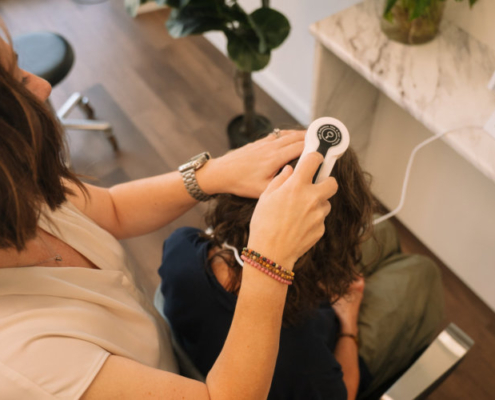
Find out more about when to see a trichologist for PCOS hair loss.
Understanding Your Hair Is the First Step
Experiencing hair loss when you have PCOS can be frustrating, particularly when you’re already managing other symptoms of the condition.
You may have tried changing shampoos, taking supplements or adjusting your styling routine, only to find that your hair continues to become thinner.
The important thing is to avoid assuming every change is caused by PCOS. Hormonal influences may be part of the picture, but other factors can contribute, and different types of hair loss require different approaches.
Understanding what’s happening gives you a better starting point for deciding what to do next.
Concerned About PCOS-Related Hair Loss?
If you’re noticing thinning, changes in hair density or ongoing shedding, Tricho Health Clinic can help you take a closer look at your hair and scalp.
Cassandra offers professional, non-invasive assessments to examine hair density, growth patterns and scalp health, along with practical guidance tailored to your concerns.
Where medical investigation or treatment is needed, this can complement the care provided by your GP or dermatologist.
Book a Hair & Scalp Analysis at Tricho Health Clinic
Tricho Health Clinic provides professional hair and scalp assessments and supportive care. Our services do not replace medical diagnosis or treatment for PCOS or other health conditions.
Frequently Asked Questions
Does PCOS always cause hair loss?
No, not every woman with PCOS experiences hair loss. Although scalp thinning is a recognised symptom of polycystic ovary syndrome, the condition affects women differently. Some may notice increased facial or body hair, acne or irregular menstrual cycles without experiencing any significant changes to their scalp hair.
Whether hair thinning develops can depend on several factors, including genetics, androgen activity and the sensitivity of individual hair follicles to hormones. Women with a family history of female pattern hair loss may also be more susceptible.
It’s also important to remember that having PCOS doesn’t mean every episode of hair loss is caused by the condition. Nutritional deficiencies, thyroid problems, stress and other factors may contribute, which is why unexplained or persistent hair thinning deserves proper assessment.
What does PCOS hair loss look like?
PCOS-related hair loss often appears as gradual thinning across the top of the scalp, particularly around the central part and crown. You might notice that your part is becoming wider, your ponytail feels thinner or your scalp is more visible under bright lighting. Unlike some other forms of hair loss, the changes can develop slowly over months or years.
One of the earliest signs may simply be that your hair doesn’t behave the way it used to. Perhaps it takes more effort to create volume, your usual hairstyle looks flatter or you find yourself changing your part to conceal thinner areas.
PCOS-associated hair loss may present as female pattern hair loss, where susceptible follicles gradually produce finer, shorter hairs. However, increased shedding can also occur for unrelated reasons. A professional hair and scalp assessment can help identify the visible pattern and determine whether further medical investigation is appropriate.
Can PCOS hair loss grow back?
Hair regrowth may be possible, but the outcome depends on the type of hair loss, how long it has been occurring and the condition of the affected follicles. Where PCOS is associated with female pattern hair loss, appropriate medical treatment may help slow progression and, in some women, improve hair density.
If additional factors such as iron deficiency, illness or stress are contributing to increased shedding, addressing those issues may also allow hair growth to recover over time.
However, restoring your previous hair density isn’t always possible, particularly when patterned thinning has progressed significantly. Hair growth is a gradual process, so even successful treatments generally require several months before visible improvements become apparent.
The most useful first step is identifying what’s contributing to the thinning rather than trying multiple hair growth products without understanding the underlying problem.
Can PCOS cause hair loss even if testosterone levels are normal?
Yes. Women with PCOS can experience scalp hair thinning even when their testosterone levels are within the laboratory reference range. This is because hair follicles differ in how sensitive they are to androgens, the hormones that can influence hair growth and follicle miniaturisation.
In susceptible follicles, androgen activity can gradually shorten the growth phase and cause new hairs to become finer. Over time, this may reduce the overall appearance of hair density, particularly around the part and crown.
Blood tests can provide useful information about hormonal activity, but they don’t always explain why someone is experiencing hair loss. Other conditions, including thyroid disorders, nutritional deficiencies and female pattern hair loss unrelated to PCOS, may also need to be considered.
Your GP can assess hormonal and medical factors, while a trichologist can examine changes in hair density, hair shaft condition and scalp health.
Will changing my shampoo help with PCOS hair loss?
Changing your shampoo may improve how your hair looks and feels, but ordinary cosmetic shampoos cannot reverse the hormonal influences responsible for PCOS-associated follicle miniaturisation.
If your hair has become finer or more fragile, choosing gentle cleansing products, appropriate conditioners and lightweight styling products may help reduce breakage and make your hair appear fuller. Avoiding excessive heat, tight hairstyles and aggressive chemical treatments can also help protect the hair you have.
However, it’s important to distinguish between improving hair condition and treating the underlying cause of hair thinning. A shampoo advertised as volumising or strengthening may temporarily improve the appearance of your hair without influencing follicle growth.
If you’re noticing a widening part, progressive thinning or ongoing shedding, it’s worth investigating the cause rather than relying on shampoos, supplements or cosmetic treatments alone. A GP or dermatologist can advise whether medical treatment is appropriate.
Should I see a GP or a trichologist for PCOS hair loss?
Both can play useful but different roles in understanding and managing hair loss associated with PCOS.
Your GP should be involved in diagnosing and managing PCOS, investigating hormonal or metabolic factors and checking for other medical conditions that may contribute to hair thinning. Depending on your symptoms, your GP may recommend blood tests, discuss medical treatment options or refer you to a dermatologist.
A trichologist focuses specifically on hair and scalp health. At Tricho Health Clinic, Cassandra can examine visible changes in hair density, growth patterns and scalp condition, discuss your hair loss history and provide practical guidance on caring for thinning or fragile hair.
A trichology assessment does not replace medical diagnosis or treatment. For women experiencing PCOS-related hair changes, combining appropriate medical care with professional hair and scalp support can provide a more complete understanding of their concerns.
How long does it take to see improvements in PCOS hair loss?
Hair growth takes time, so improvements in PCOS-related hair thinning are rarely immediate. Even when the underlying contributing factors are being appropriately managed, visible changes may take several months.
Hair follicles naturally cycle through growth, transition and resting phases. When treatment is effective, the follicles need time to produce new hair, and that hair must grow long enough to contribute noticeably to overall density.
Some women may notice reduced shedding before they see an improvement in thickness. Others may experience gradual stabilisation, meaning their hair stops becoming noticeably thinner even if significant regrowth doesn’t occur.
The timeframe depends on the underlying diagnosis, the severity and duration of thinning, and the treatment being used. Following a consistent, medically appropriate treatment plan and monitoring changes over time is generally more useful than frequently switching products in search of quick results.
Can stress make PCOS hair loss worse?
Stress can contribute to hair shedding, including in women who already have PCOS. Significant physical or emotional stress may trigger a condition called telogen effluvium, where more hairs than usual enter the resting phase of the hair growth cycle.
This can result in increased shedding, often becoming noticeable two to three months after a stressful event, illness or other physical change.
PCOS-associated female pattern hair loss and stress-related telogen effluvium involve different processes, but they can occur at the same time. This may make hair changes more noticeable or difficult to understand.
If you’re experiencing increased shedding alongside gradual thinning, it’s important not to assume stress is the only explanation. Hormonal influences, nutritional deficiencies, thyroid conditions and other medical factors may also contribute.
A GP can investigate possible medical causes, while a professional hair and scalp assessment can provide additional information about the visible changes and help you understand what may warrant further investigation.
You may be also interested in
 https://www.trichohealthclinic.com.au/wp-content/uploads/2026/10/PCOS-and-Hair-Loss.jpg
500
1000
admin
https://www.trichohealthclinic.com.au/wp-content/uploads/2026/02/Tricho-Health-Clinic-Logo.png
admin2026-10-15 17:30:402026-10-15 17:30:40PCOS and Hair Loss: Why It Happens and What You Can Do
 https://www.trichohealthclinic.com.au/wp-content/uploads/2026/10/What-does-PCOS-Hair-Loss-Look-Like.jpg
500
1000
admin
https://www.trichohealthclinic.com.au/wp-content/uploads/2026/02/Tricho-Health-Clinic-Logo.png
admin2026-10-15 17:28:322026-10-15 17:28:32What Does PCOS Hair Loss Look Like? Early Signs of Thinning
 https://www.trichohealthclinic.com.au/wp-content/uploads/2026/10/Can-PCOS-Hair-Loss-Grow-Back.jpg
500
1000
admin
https://www.trichohealthclinic.com.au/wp-content/uploads/2026/02/Tricho-Health-Clinic-Logo.png
admin2026-10-15 17:21:272026-10-15 17:21:27Can PCOS Hair Loss Grow Back? What You Need to Know About Regrowth
 https://www.trichohealthclinic.com.au/wp-content/uploads/2026/10/PCOS-Hair-Loss-Treatment.jpg
500
1000
admin
https://www.trichohealthclinic.com.au/wp-content/uploads/2026/02/Tricho-Health-Clinic-Logo.png
admin2026-10-15 17:19:592026-10-15 17:19:59PCOS Hair Loss Treatment: What Works and What to Expect
 https://www.trichohealthclinic.com.au/wp-content/uploads/2026/10/PCOS-Hair-Loss-Connection.jpg
500
1000
admin
https://www.trichohealthclinic.com.au/wp-content/uploads/2026/02/Tricho-Health-Clinic-Logo.png
admin2026-10-15 17:18:132026-10-15 17:18:13PCOS Hair Loss vs Female Pattern Hair Loss: Understanding the Connection
 https://www.trichohealthclinic.com.au/wp-content/uploads/2026/10/PCOS-When-to-See-Trichologist.jpg
500
1000
admin
https://www.trichohealthclinic.com.au/wp-content/uploads/2026/02/Tricho-Health-Clinic-Logo.png
admin2026-10-15 17:16:442026-10-15 17:16:44When Should You See a Trichologist for PCOS Hair Loss?

