
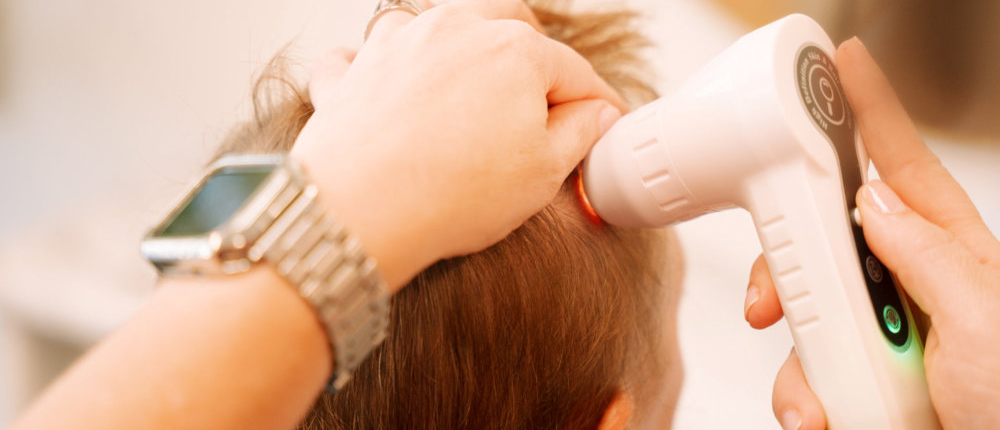
What Does PCOS Hair Loss Look Like? Early Signs of Thinning
Have you noticed that your hair doesn’t seem quite as thick as it used to? Perhaps your part is looking a little wider, your ponytail feels smaller, or you’re finding it harder to achieve the volume you’ve always had. These changes can happen so gradually that it’s difficult to know whether something is wrong or whether your hair is simply changing over time.
For women with polycystic ovary syndrome (PCOS), thinning hair can be particularly confusing. PCOS is associated with hormonal changes that may affect hair growth, but the signs aren’t always obvious. Some women experience a gradual reduction in hair density, while others notice increased shedding or changes in how their hair looks and behaves.
It’s also worth remembering that not every woman with PCOS experiences hair loss, and not every change in hair density is caused by the condition. Stress, nutritional deficiencies, thyroid problems and other forms of hair loss can produce similar symptoms.
Understanding the early signs can help you recognise when your hair may need closer attention. In this article, we’ll explore what PCOS-related hair loss typically looks like, how it differs from other types of thinning and when a professional assessment may be helpful.
What Does PCOS Hair Loss Typically Look Like?
PCOS-related hair thinning often develops in a pattern similar to female pattern hair loss, sometimes called androgenetic alopecia. Rather than experiencing sudden bald patches, women may notice a gradual reduction in density across the top of their scalp, particularly around the central part and crown.
This happens when susceptible hair follicles gradually produce finer, shorter hairs through a process known as follicle miniaturisation. Over time, the combined effect of these finer hairs can make the scalp more visible, even when hair continues to grow.
The changes may be subtle at first. You might only notice them when styling your hair, looking at photographs or comparing how your hair feels now with how it felt several months ago. Someone with naturally thick hair may experience a noticeable reduction in density long before other people recognise that anything has changed.
According to DermNet, female pattern hair loss can involve reduced hair volume, increased shedding or both. Although hormonal influences associated with PCOS can contribute, female pattern hair loss can also occur in women who do not have PCOS.
Six Early Signs of PCOS-Related Hair Thinning
1. Your Hair Part Is Becoming Wider
One of the more recognisable signs of female pattern hair loss is a gradual widening of the central part. You may notice that the line of visible scalp between the two sections of hair looks broader than it did previously, particularly towards the top of your head.
This can be difficult to recognise when you look at your hair every day. The change may only become obvious when you compare photographs taken several months apart or notice that your scalp is more visible under overhead lighting.
A widening part doesn’t automatically mean you have PCOS-related hair loss. However, if the change is persistent or becoming more noticeable, it’s worth having the underlying cause assessed.
2. Your Ponytail Feels Thinner
Sometimes the earliest indication of reduced hair density is something you can feel rather than see. You may find yourself wrapping your hair elastic around your ponytail an extra time or noticing that a bun which once looked full now appears smaller.
A reduction in ponytail thickness can have several explanations. Gradual patterned thinning is one possibility, but excessive shedding, breakage and changes in hair length can also affect how much hair you can gather together.
Pay attention to whether the change is continuing over time and whether it’s accompanied by a widening part or greater scalp visibility.
3. Your Crown Looks Flatter or Less Full
Hair around the crown and upper scalp can become progressively finer in women experiencing female pattern hair loss. You may notice that your hair sits flatter than it used to or that styling products no longer create the same volume.
For some women, the change becomes especially obvious when looking at photographs taken from above or when standing beneath bright lights.
It’s important to distinguish reduced density from changes in styling or hair texture. Fine hair can naturally sit flat, and factors such as product build-up or a different haircut may affect volume without indicating hair loss.
4. You Can See More Scalp Through Your Hair
As overall hair density decreases, more of the scalp may become visible between individual strands. This might be most noticeable when your hair is wet, when you’re standing in sunlight or when your hair is pulled back.
Wet hair naturally clumps together, making the scalp easier to see even in people with healthy hair density. The important consideration is whether you’re noticing a change compared with how your hair previously looked under similar conditions.
If increased scalp visibility is becoming more pronounced, a professional assessment may help clarify whether the change reflects reduced hair density or another concern.
5. Your Hair Seems Finer Than Before
Hair follicle miniaturisation can cause some follicles to produce hairs that are thinner than those they produced previously. As the proportion of finer hairs increases, your overall hairstyle may begin to feel less substantial.
You might notice that your usual haircut no longer holds its shape, that your fringe seems more delicate or that individual hairs around the top of your head appear finer than those at the back.
Hair texture can change for several reasons, including ageing, chemical processing and hormonal influences unrelated to PCOS. A reduction in hair shaft thickness should therefore be considered alongside other symptoms rather than used as a diagnosis on its own.
6. You’re Noticing More Hair Shedding
Finding more hair than usual in your brush, shower or on your clothing can be alarming. However, increased shedding doesn’t always mean you’re experiencing the gradual follicle miniaturisation associated with female pattern hair loss.
Temporary excessive shedding, known as telogen effluvium, can occur following illness, significant stress, nutritional deficiencies, medication changes or other physical triggers.
It’s possible to experience telogen effluvium alongside female pattern hair loss, which can make changes in density more noticeable.
If your main concern is a sudden increase in shedding rather than gradual thinning, our guide to Stress, Illness and Hair Loss explains why shedding may begin several months after a triggering event.
What’s Happening to My Hair? A Quick Comparison
Hair thinning, shedding and breakage can sometimes appear similar, particularly when you first notice changes. This table can help you describe what you’re experiencing and identify an appropriate next step.
| What you notice | What may be contributing | What to do next |
|---|---|---|
| Your central part is gradually widening | Female pattern hair loss, potentially influenced by androgen activity | Arrange a hair and scalp assessment and discuss possible medical causes with your GP |
| Your ponytail feels smaller | Reduced density, increased shedding or hair breakage | Look for changes over time and consider whether other symptoms are present |
| You’re shedding noticeably more hair | Telogen effluvium, illness, stress, nutritional factors or other hair loss conditions | Speak with your GP, especially if the shedding is sudden or persistent |
| Your hair breaks into short pieces | Heat, chemical treatments, friction or fragile hair shafts | Review your haircare routine and assess whether the problem is breakage rather than shedding |
| You notice a distinct bald patch | Alopecia areata or another condition requiring investigation | Arrange prompt medical assessment rather than assuming PCOS is responsible |
| Your scalp is painful, inflamed or developing scarring | An inflammatory or other scalp condition | Seek prompt assessment from a GP or dermatologist |
These observations are not diagnostic. Different hair loss conditions can overlap, and identifying the cause may require medical examination and investigations.
Why Can PCOS Affect Hair on Your Scalp Differently from Hair on Your Face?
One of the more confusing aspects of PCOS is that some women experience increased facial or body hair growth at the same time as thinning scalp hair.
The explanation lies partly in how hair follicles respond to androgens. These hormones, which include testosterone, are naturally present in women and play several roles in the body.
In certain areas, including the face, androgen activity may encourage the development of thicker, darker hairs. On the scalp, follicles that are genetically susceptible to androgen effects may gradually become smaller and produce finer hairs.
This doesn’t happen to every woman with PCOS. Hormone levels, genetic factors and individual follicle sensitivity all influence how hair responds.
Jean Hailes for Women’s Health identifies both excessive facial or body hair growth and scalp hair loss among the possible symptoms of PCOS.
However, scalp thinning on its own cannot establish a PCOS diagnosis. If you’re also experiencing irregular periods, persistent acne or changes in facial hair growth, a GP can assess whether further investigation is appropriate.
Is It PCOS Hair Loss or Something Else?
It’s understandable to connect hair thinning with PCOS if you’ve already been diagnosed with the condition. However, assuming PCOS is the cause can mean overlooking other contributing factors.
Female pattern hair loss can occur with or without PCOS, and many women with patterned thinning have hormone levels within the normal laboratory range. Other conditions may also cause shedding or changes in hair density.
Female Pattern Hair Loss
Female pattern hair loss commonly involves gradual thinning over the central scalp, often with preservation of the frontal hairline. Hormonal activity can be relevant, but genetics and individual follicle sensitivity are also important.
Our article on Female Pattern Hair Loss: How It Differs from Temporary Shedding explains the characteristic changes in more detail.
Telogen Effluvium
Telogen effluvium is associated with increased shedding and may follow physical or emotional stress, illness, rapid weight changes or certain nutritional problems. Unlike gradual patterned thinning, it often develops over a relatively short period.
Some women experience both conditions simultaneously, making the overall picture more complicated.
Nutritional Deficiencies and Thyroid Conditions
Iron deficiency, thyroid disorders and certain nutritional deficiencies may contribute to hair shedding or changes in hair health. They can occur independently of PCOS, which is why blood tests may be appropriate when recommended by a medical practitioner.
Taking supplements without identifying a deficiency isn’t necessarily helpful and may delay investigation of the underlying issue.
Hair Breakage and Damage
Hair that snaps along its length can create an impression of thinning, particularly around the hairline and crown. Frequent bleaching, chemical processing, high heat and tension from hairstyles can all contribute to breakage.
Our article on Hair Breakage vs Hair Loss can help you understand the differences.
Quick Self-Assessment: Have You Noticed These Hair Changes?
If you’re concerned about your hair, it can be helpful to identify exactly what’s changed before speaking with a professional. This checklist isn’t a diagnostic tool, but it can help you describe your symptoms more clearly.
Your Hair Change Checklist
- Has your central part become wider over the past few months?
- Does your ponytail feel thinner than it used to?
- Are you noticing more scalp around your crown or hairline?
- Does your hair seem finer or more difficult to style?
- Have you been shedding noticeably more hair than usual?
- Have you noticed changes following illness, stress or a medication change?
- Are you experiencing scalp discomfort, itching or inflammation?
- Have you noticed other hormonal symptoms, such as irregular periods, acne or increased facial hair growth?
What next? If several of these changes sound familiar, particularly if they’re continuing or becoming more noticeable, consider discussing your concerns with your GP and arranging a professional hair and scalp assessment.
It can also help to look at photographs taken several months apart, particularly if they show your part or crown under similar lighting. Try not to assess your hair repeatedly throughout the day, as small differences in lighting, styling and how recently you’ve washed your hair can make it appear very different.
How Quickly Does PCOS Hair Loss Develop?
There isn’t a single timeline for PCOS-related hair thinning. Some women notice gradual changes over several years, while others become aware of thinning over a shorter period.
Where female pattern hair loss is involved, changes often develop progressively as susceptible follicles produce increasingly fine hairs. The rate of progression varies considerably, and some women may experience periods when their hair appears relatively stable.
If you’re suddenly losing large amounts of hair, noticing distinct bald patches or experiencing scalp pain or inflammation, it’s important not to assume that PCOS is responsible. Those symptoms warrant medical investigation.
Early assessment can be valuable because it helps establish a baseline for your current hair density and gives you an opportunity to investigate potential causes before further changes occur.
Can You Tell Whether PCOS Hair Loss Is Getting Worse?
Because hair grows slowly and day-to-day changes can be subtle, assessing progression can be difficult without a consistent reference point.
If you want to keep a record, occasional photographs of your central part, crown and hairline can be useful. Try to use similar lighting, the same parting position and roughly the same distance from the camera each time.
A professional hair and scalp assessment can also help document visible changes in density, hair shaft thickness and scalp condition. This may provide a more consistent way to monitor concerns over time.
It’s worth avoiding constant hair counting or repeated checking in the mirror, as these approaches are often unreliable and can increase worry without providing meaningful information.
If your hair loss has been progressing, speak with your GP or dermatologist about whether medical treatment is appropriate. You can also read our article on Can PCOS Hair Loss Grow Back? to learn more about realistic expectations for recovery.
When Should You See a Trichologist About Hair Thinning?
You don’t need to wait until you’ve lost a significant amount of hair before seeking professional advice. If you’re noticing persistent changes in density, a widening part or ongoing shedding, understanding what’s happening can help you decide on the appropriate next steps.
When to Seek Professional Advice
Consider a hair and scalp assessment if: your hair is gradually becoming thinner, your part is widening, your ponytail has noticeably reduced in thickness or you’re unsure whether you’re experiencing hair loss or breakage.
Speak with your GP if: you’re concerned about PCOS, have persistent shedding or notice associated symptoms such as menstrual irregularities, acne or other hormonal changes.
Seek prompt medical assessment if: hair loss is sudden, severe or patchy, or your scalp is painful, inflamed or showing signs of scarring.
At Tricho Health Clinic in Riverstone, Cassandra offers professional hair and scalp assessments that examine visible changes in density, growth patterns, hair shaft condition and scalp health.
With more than 30 years of experience in the hair industry and qualifications as a certified trichologist, Cassandra brings an understanding of how hair changes affect everyday styling, appearance and confidence.
A trichology assessment can complement medical care by providing practical information about your hair and scalp. However, PCOS diagnosis, blood tests and medical treatment decisions should be managed by your GP or another appropriately qualified medical professional.
For a detailed explanation of what an assessment involves, read When Should You See a Trichologist for PCOS Hair Loss?
Small Hair Changes Are Worth Paying Attention To
Hair thinning doesn’t always begin with dramatic shedding or obvious bald patches. Sometimes the earliest signs are small changes that only you notice: a wider part, less volume at the crown or a ponytail that doesn’t feel quite as full.
If you have PCOS, these changes may be connected to hormonal influences, but it’s important to consider other possible causes rather than jumping to conclusions.
Recognising what has changed, documenting it sensibly and seeking appropriate advice can help you make informed decisions about your hair health.
If you’d like a broader understanding of the relationship between hormonal changes and thinning, start with our main guide to PCOS and Hair Loss: Why It Happens and What You Can Do.
Concerned About Changes in Your Hair?
If your hair is becoming noticeably thinner, you’re experiencing ongoing shedding or you’re simply unsure why your hair looks different, a professional hair and scalp assessment may help you understand the visible changes.
At Tricho Health Clinic, Cassandra provides personalised hair and scalp assessments, practical haircare guidance and supportive advice. Where medical investigation is needed, this can complement the care provided by your GP or dermatologist.
Book a Hair & Scalp Analysis at Tricho Health Clinic
This article provides general educational information and does not replace medical advice, diagnosis or treatment. Trichologists do not diagnose PCOS or prescribe medical treatments.
Frequently Asked Questions
What are the first signs of PCOS-related hair loss?
The earliest signs of PCOS-related hair loss are often subtle. You may notice that your central part is becoming wider, your hair looks flatter around the crown or your ponytail doesn’t feel as thick as it once did. Some women also notice that individual hairs appear finer or that their usual hairstyles no longer create the same volume. These changes can develop gradually, making them difficult to recognise without comparing photographs taken several months apart. PCOS-associated thinning may involve female pattern hair loss, where susceptible follicles progressively produce finer hairs.
However, these symptoms aren’t exclusive to PCOS. A professional hair and scalp assessment, alongside appropriate medical investigation, can help identify whether hormonal factors or another condition may be contributing.
Does PCOS hair loss start at the hairline or crown?
PCOS-associated hair thinning commonly affects the central scalp and crown, although the pattern varies between individuals. Some women first notice a widening central part, while others become aware of reduced volume across the top of their head.
The frontal hairline is often relatively preserved in female pattern hair loss, but different patterns can occur, and some women may experience thinning closer to the front of the scalp.
A changing hairline doesn’t automatically indicate PCOS, as other conditions can produce similar symptoms. If thinning is progressing, or you’re noticing distinct patches of hair loss, a medical assessment is important.
Can you have PCOS hair loss without excessive shedding?
Yes. Some women experience gradual thinning without noticing a dramatic increase in the amount of hair they shed each day.
This can happen when susceptible follicles progressively produce finer, shorter hairs through follicle miniaturisation. Over time, the overall appearance of hair density may decrease even though hair continues to grow.
You might notice changes in your central part, ponytail thickness or crown volume before recognising any difference in shedding.
However, gradual thinning doesn’t automatically mean PCOS is responsible. Female pattern hair loss can occur independently of PCOS, and other conditions may contribute to reduced hair density.
How can I tell the difference between PCOS hair loss and normal hair shedding?
Normal hair shedding is part of the natural hair growth cycle, and losing some hair each day is expected. The amount varies between individuals and can appear greater on wash days, particularly if you don’t wash your hair daily.
PCOS-associated female pattern hair loss often involves gradual thinning around the part and crown, whereas excessive shedding may be associated with telogen effluvium or other conditions.
If you’re noticing a sustained increase in shedding, a widening part or reduced overall density, it’s worth seeking professional advice.
Because different forms of hair loss can occur together, appearance alone isn’t always enough to determine the cause. Your GP may recommend medical investigations, and a trichologist can assess visible changes in your hair and scalp.
Can PCOS cause bald patches?
PCOS-associated female pattern hair loss usually involves gradual thinning rather than clearly defined bald patches.
If you notice a round or oval area of missing hair, the cause may be something else, such as alopecia areata. Other conditions, including inflammatory scalp disorders, can also produce patchy hair loss.\
It’s important not to assume that every form of hair loss is connected to PCOS simply because you’ve been diagnosed with the condition.
New bald patches should be assessed promptly by a GP or dermatologist, particularly if they’re accompanied by redness, pain, scaling or other scalp symptoms. Identifying the underlying condition is important because different types of hair loss require different treatments.
Can PCOS cause hair to become thinner without changing its texture?
Yes. PCOS-associated hair thinning may involve changes in the diameter of individual hairs rather than an obvious change in whether your hair is straight, wavy or curly.
As susceptible follicles gradually produce finer hairs, the overall density and volume of your hair may decrease. You might notice that your ponytail feels smaller or that your usual hairstyle doesn’t look as full, even though your hair’s general texture appears unchanged.
Hair texture can also change independently of PCOS because of ageing, chemical processing, environmental factors and other hormonal influences.
If you’re noticing progressive changes in hair thickness or density, an assessment can help distinguish possible patterned thinning from breakage or other hair concerns.
How quickly can PCOS hair loss progress?
There is no fixed timeframe for PCOS-associated hair loss. Some women experience very gradual thinning over several years, while others notice changes over a shorter period.
The rate of progression can depend on the underlying type of hair loss, genetic susceptibility, hormonal influences and whether other contributing factors are present.
Female pattern hair loss often develops progressively, although the rate and severity vary considerably. If you’re experiencing sudden, significant shedding, another condition such as telogen effluvium may also be involved.
Rather than trying to predict how quickly your hair might change, it’s more useful to establish the cause and discuss appropriate treatment options early. Occasional photographs and professional assessment may help document changes over time.
When should I seek professional help for PCOS-related hair thinning?
It’s worth seeking professional advice when you notice persistent or progressive changes in hair density, a widening part, reduced crown volume or shedding that seems unusual for you.
Your GP can investigate whether PCOS, thyroid conditions, nutritional deficiencies or other medical factors may be contributing. Depending on your circumstances, they may recommend blood tests, treatment or referral to a dermatologist.
A trichologist can provide a complementary assessment of your hair and scalp, examine visible changes and offer practical guidance about haircare.
At Tricho Health Clinic, Cassandra’s professional hair and scalp assessments can help you better understand changes in hair density and condition. If medical investigation is required, your GP or dermatologist remains responsible for diagnosis and medical treatment.
For sudden, patchy or rapidly worsening hair loss, particularly with scalp pain or inflammation, seek prompt medical attention.
You may be also interested in
 https://www.trichohealthclinic.com.au/wp-content/uploads/2026/10/PCOS-and-Hair-Loss.jpg
500
1000
admin
https://www.trichohealthclinic.com.au/wp-content/uploads/2026/02/Tricho-Health-Clinic-Logo.png
admin2026-10-15 17:30:402026-10-15 17:30:40PCOS and Hair Loss: Why It Happens and What You Can Do
 https://www.trichohealthclinic.com.au/wp-content/uploads/2026/10/What-does-PCOS-Hair-Loss-Look-Like.jpg
500
1000
admin
https://www.trichohealthclinic.com.au/wp-content/uploads/2026/02/Tricho-Health-Clinic-Logo.png
admin2026-10-15 17:28:322026-10-15 17:28:32What Does PCOS Hair Loss Look Like? Early Signs of Thinning
 https://www.trichohealthclinic.com.au/wp-content/uploads/2026/10/Can-PCOS-Hair-Loss-Grow-Back.jpg
500
1000
admin
https://www.trichohealthclinic.com.au/wp-content/uploads/2026/02/Tricho-Health-Clinic-Logo.png
admin2026-10-15 17:21:272026-10-15 17:21:27Can PCOS Hair Loss Grow Back? What You Need to Know About Regrowth
 https://www.trichohealthclinic.com.au/wp-content/uploads/2026/10/PCOS-Hair-Loss-Treatment.jpg
500
1000
admin
https://www.trichohealthclinic.com.au/wp-content/uploads/2026/02/Tricho-Health-Clinic-Logo.png
admin2026-10-15 17:19:592026-10-15 17:19:59PCOS Hair Loss Treatment: What Works and What to Expect
 https://www.trichohealthclinic.com.au/wp-content/uploads/2026/10/PCOS-Hair-Loss-Connection.jpg
500
1000
admin
https://www.trichohealthclinic.com.au/wp-content/uploads/2026/02/Tricho-Health-Clinic-Logo.png
admin2026-10-15 17:18:132026-10-15 17:18:13PCOS Hair Loss vs Female Pattern Hair Loss: Understanding the Connection
 https://www.trichohealthclinic.com.au/wp-content/uploads/2026/10/PCOS-When-to-See-Trichologist.jpg
500
1000
admin
https://www.trichohealthclinic.com.au/wp-content/uploads/2026/02/Tricho-Health-Clinic-Logo.png
admin2026-10-15 17:16:442026-10-15 17:16:44When Should You See a Trichologist for PCOS Hair Loss?

