
The Most Common Root Causes of Hair Loss in Women (And Why Supplements Often Miss Them)
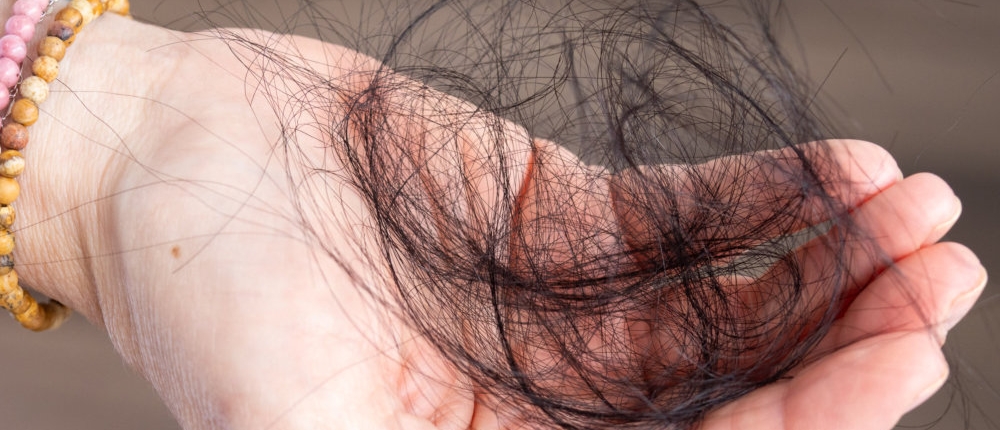
Hair loss in women is rarely random.
It is usually the visible result of something deeper — hormonal shifts, metabolic stress, growth-cycle disruption, nutritional imbalance, or scalp changes.
Yet many women begin with supplements. Biotin. Collagen. Peptides. Multivitamins.
While these products may support general hair health, they often miss the true driver of thinning or shedding.
Understanding the root cause is the most powerful step you can take.
Hair Loss Is a Pattern, Not Just a Problem
Before exploring causes, it’s important to understand that hair loss in women presents in different patterns:
- Diffuse shedding across the scalp
- Gradual thinning at the crown or part line
- Breakage and fragility
- Sudden increased hair fall after stress or illness
Each pattern suggests a different underlying mechanism.
Treating all hair loss as a single condition leads to frustration and ineffective results.
1. Hormonal Changes (Perimenopause and Menopause)
Hormonal shifts are among the most common contributors to hair thinning in midlife.
Declining oestrogen levels and relative increases in androgen sensitivity influence how follicles behave. Over time, follicles may gradually miniaturise, producing finer, shorter hairs.
This process is often slow and subtle. Many women first notice widening of the part or reduced density at the crown.
In these cases, the driver is hormonal signalling — not a lack of nutrients.
Related reading:
- Hair Loss During Perimenopause and Menopause
- Hormonal Hair Changes vs Pattern Hair Loss
- Hair Thinning During Menopause
2. Female Pattern Hair Loss
Female pattern hair loss is influenced by genetics and follicle sensitivity to androgens.
It does not typically present with sudden shedding. Instead, it involves gradual thinning and reduced density over time.
Supplements alone do not modify androgen sensitivity.
This is one reason why many women feel disappointed after trying multiple over-the-counter products.
3. Telogen Effluvium (Stress-Triggered Shedding)
Telogen effluvium is a temporary shedding condition triggered by physiological stress.
Common triggers include:
- Illness
- Surgery
- Emotional stress
- Rapid weight loss
- Major life transitions
- Medication changes
During telogen effluvium, a higher percentage of hair follicles enter the resting phase simultaneously. Shedding typically becomes noticeable 2–3 months after the trigger.
While alarming, telogen effluvium is often reversible once the body stabilises.
4. Weight Loss and Metabolic Changes
Rapid weight loss places stress on the body. Caloric restriction and metabolic shifts can trigger temporary shedding.
This has been observed in some individuals using GLP-1 medications.
In these cases, shedding is typically related to physiological stress rather than permanent follicle damage.
- Understanding the Link Between Weight Loss Drugs and Hair Shedding
- Ozempic and Hair Loss
- Wegovy and Hair Loss
- Mounjaro and Hair Loss
5. Iron and Nutritional Imbalance
Low iron stores (particularly ferritin) can influence hair growth cycles.
Women are more susceptible to iron depletion due to menstrual blood loss and dietary patterns.
In these cases, supplementation may be appropriate — but only when deficiency is confirmed.
This is one of the few scenarios where targeted supplementation can directly support improvement.
6. Thyroid Imbalance
Both hypothyroidism and hyperthyroidism can affect hair growth cycles and density.
Thyroid-related thinning often presents with diffuse changes rather than isolated pattern thinning.
If thyroid imbalance is suspected, medical evaluation is important.
7. Scalp Health and Inflammation
The scalp is the environment in which follicles function.
Chronic inflammation, buildup, or imbalance may influence hair quality and resilience.
Supporting scalp health can create a more stable foundation for growth, even when deeper factors are involved.
Why Supplements Often Miss the Root Cause
Supplements are attractive because they are simple.
However:
- Biotin does not correct hormonal signalling
- Collagen does not reverse follicle miniaturisation
- Peptides do not stop stress-triggered shedding
They may support general hair quality, but they do not replace understanding.
For ingredient-specific breakdowns:
The Importance of Pattern Recognition
Hair thinning is not simply about what is falling out.
It is about:
- Where thinning is occurring
- How quickly it developed
- Whether shedding is excessive
- Whether density is progressively reducing
- Whether breakage is contributing
Clarity in pattern changes everything.
When to Seek Structured Assessment
If you are unsure whether your hair changes reflect hormonal shifts, temporary shedding, or another pattern, structured assessment provides direction.
At Tricho Health Clinic, our Hair & Scalp Analysis appointments help identify patterns and contributing factors.
We do not diagnose medical conditions, but we help clarify what may be influencing your hair and when further medical evaluation may be appropriate.
The Bottom Line
Hair loss in women is rarely solved by a single capsule.
Understanding the root cause transforms guesswork into strategy.
Supplements may support the journey — but clarity leads it.
Frequently Asked Questions
What is the most common cause of hair loss in women?
The most common causes of hair loss in women include hormonal changes during perimenopause and menopause, female pattern hair loss, stress-related telogen effluvium, iron deficiency, thyroid imbalance, and metabolic stress. The visible thinning may look similar, but the underlying drivers differ significantly.
How can I tell if my hair loss is hormonal?
Hormonal hair thinning often develops gradually. You may notice widening of the part, reduced density at the crown, or overall volume loss without dramatic daily shedding. Hormonal thinning is typically progressive rather than sudden.
Is hair shedding always permanent?
No. Telogen effluvium is a temporary shedding condition triggered by stress, illness, surgery, rapid weight loss, or medication changes. In many cases, shedding improves once the body stabilises and the hair growth cycle resets.
Can iron deficiency cause hair loss?
Low iron stores, particularly low ferritin levels, can influence hair growth cycles. Women are more susceptible to iron depletion due to menstrual blood loss and dietary patterns. If deficiency is confirmed, targeted supplementation may support improvement.
How does menopause affect hair density?
Declining oestrogen levels during perimenopause and menopause can influence follicle behaviour. Some follicles gradually produce finer, shorter hairs over time. This process is often slow and subtle, which is why many women first notice changes in part width or overall volume.
Why do supplements often fail to improve thinning?
Supplements may support general hair quality, but they do not correct hormonal signalling, genetic follicle sensitivity, or stress-triggered growth-cycle disruption. If the underlying cause is not addressed, results are often limited.
What is the difference between breakage and thinning?
Breakage involves structural damage to the hair shaft, often from heat, chemical services, or mechanical stress. Thinning involves changes at the follicle level, where hair becomes finer or density reduces. The treatment approach differs depending on which pattern is present.
Can weight loss trigger hair loss?
Yes. Rapid weight loss can trigger telogen effluvium due to metabolic stress. This shedding typically begins several months after the weight change and is often temporary once the body stabilises.
When should I seek medical advice for hair loss?
Medical advice may be appropriate if shedding is sudden, severe, accompanied by other systemic symptoms, or associated with suspected thyroid or nutritional imbalance. Structured hair assessment can help determine whether medical investigation is advisable.
Is female pattern hair loss reversible?
Female pattern hair loss is influenced by genetics and hormonal sensitivity. While it may not be fully reversible, early recognition and appropriate support strategies can help maintain density and slow progression.
How do I know where to start?
The most helpful first step is identifying whether your hair changes reflect temporary shedding, hormonal thinning, pattern loss, breakage, or nutritional factors. Understanding the pattern creates direction and prevents unnecessary trial-and-error treatments.
You may be also interested in
 https://www.trichohealthclinic.com.au/wp-content/uploads/2026/02/The-Most-Common-Root-Causes.jpg
500
1000
admin
https://www.trichohealthclinic.com.au/wp-content/uploads/2026/02/Tricho-Health-Clinic-Logo.png
admin2026-02-24 15:48:502026-08-11 12:40:01The Most Common Root Causes of Hair Loss in Women (And Why Supplements Often Miss Them)
https://www.trichohealthclinic.com.au/wp-content/uploads/2026/02/The-Most-Common-Root-Causes.jpg
500
1000
admin
https://www.trichohealthclinic.com.au/wp-content/uploads/2026/02/Tricho-Health-Clinic-Logo.png
admin2026-02-24 15:48:502026-08-11 12:40:01The Most Common Root Causes of Hair Loss in Women (And Why Supplements Often Miss Them) https://www.trichohealthclinic.com.au/wp-content/uploads/2026/02/Why-hair-loss-treatments-fail.jpg
500
1000
admin
https://www.trichohealthclinic.com.au/wp-content/uploads/2026/02/Tricho-Health-Clinic-Logo.png
admin2026-02-24 15:43:032026-08-11 12:41:46Why Hair Loss Treatments Fail Without Identifying the Root Cause
https://www.trichohealthclinic.com.au/wp-content/uploads/2026/02/Why-hair-loss-treatments-fail.jpg
500
1000
admin
https://www.trichohealthclinic.com.au/wp-content/uploads/2026/02/Tricho-Health-Clinic-Logo.png
admin2026-02-24 15:43:032026-08-11 12:41:46Why Hair Loss Treatments Fail Without Identifying the Root Cause https://www.trichohealthclinic.com.au/wp-content/uploads/2026/02/Peptides-for-hair-growth.jpg
500
1000
admin
https://www.trichohealthclinic.com.au/wp-content/uploads/2026/02/Tricho-Health-Clinic-Logo.png
admin2026-02-24 15:41:462026-08-11 12:44:14Peptides for Hair Growth: What the Science Says (and What It Doesn’t)
https://www.trichohealthclinic.com.au/wp-content/uploads/2026/02/Peptides-for-hair-growth.jpg
500
1000
admin
https://www.trichohealthclinic.com.au/wp-content/uploads/2026/02/Tricho-Health-Clinic-Logo.png
admin2026-02-24 15:41:462026-08-11 12:44:14Peptides for Hair Growth: What the Science Says (and What It Doesn’t) https://www.trichohealthclinic.com.au/wp-content/uploads/2026/02/Collagen-and-hair-thinning.jpg
500
1000
admin
https://www.trichohealthclinic.com.au/wp-content/uploads/2026/02/Tricho-Health-Clinic-Logo.png
admin2026-02-24 15:40:532026-08-11 12:44:56Collagen and Hair Thinning: Science, Myths, and Realistic Expectations
https://www.trichohealthclinic.com.au/wp-content/uploads/2026/02/Collagen-and-hair-thinning.jpg
500
1000
admin
https://www.trichohealthclinic.com.au/wp-content/uploads/2026/02/Tricho-Health-Clinic-Logo.png
admin2026-02-24 15:40:532026-08-11 12:44:56Collagen and Hair Thinning: Science, Myths, and Realistic Expectations https://www.trichohealthclinic.com.au/wp-content/uploads/2026/02/Biotin-for-hair-loss.jpg
500
1000
admin
https://www.trichohealthclinic.com.au/wp-content/uploads/2026/02/Tricho-Health-Clinic-Logo.png
admin2026-02-24 15:39:562026-08-11 12:45:39Biotin for Hair Loss: Who Actually Benefits (and Who Won’t)
https://www.trichohealthclinic.com.au/wp-content/uploads/2026/02/Biotin-for-hair-loss.jpg
500
1000
admin
https://www.trichohealthclinic.com.au/wp-content/uploads/2026/02/Tricho-Health-Clinic-Logo.png
admin2026-02-24 15:39:562026-08-11 12:45:39Biotin for Hair Loss: Who Actually Benefits (and Who Won’t) https://www.trichohealthclinic.com.au/wp-content/uploads/2026/02/Hair-supplements-for-hair-loss.jpg
500
1000
admin
https://www.trichohealthclinic.com.au/wp-content/uploads/2026/02/Tricho-Health-Clinic-Logo.png
admin2026-02-24 15:38:432026-08-11 12:46:44Hair Supplements for Hair Loss: What Works, What Doesn’t, and Why Diagnosis Comes First
https://www.trichohealthclinic.com.au/wp-content/uploads/2026/02/Hair-supplements-for-hair-loss.jpg
500
1000
admin
https://www.trichohealthclinic.com.au/wp-content/uploads/2026/02/Tricho-Health-Clinic-Logo.png
admin2026-02-24 15:38:432026-08-11 12:46:44Hair Supplements for Hair Loss: What Works, What Doesn’t, and Why Diagnosis Comes First
