

Iron Deficiency and Hair Loss in Women: The Ferritin Connection
Iron is one of the most commonly discussed nutrients when it comes to hair loss in women, yet it is also one of the most misunderstood. Many women are told their iron levels are “normal,” while still experiencing ongoing shedding, reduced volume, or slower regrowth. This can be frustrating, especially when there are no clear answers as to why the hair is changing.
While iron deficiency is not the sole cause of hair loss, it can be a contributing factor in certain situations, particularly when levels are low over time. Understanding how iron works in the body, and why ferritin levels are often more relevant than standard iron markers, can help bring much-needed clarity to what is actually happening beneath the surface.
For a broader overview of how nutrient levels may influence hair, you can refer to Nutrient Deficiencies That Affect Hair Growth in Women.
Why Iron Matters for Hair Growth
Iron plays a critical role in transporting oxygen throughout the body, including to the hair follicles. Hair follicles are highly active structures that require a consistent supply of oxygen and nutrients to sustain the growth phase of the hair cycle. When iron levels are low, this process may be disrupted, potentially influencing how the hair grows and sheds over time.
Research has explored the relationship between iron deficiency and hair loss, including a study published on PubMed which examined the link between low iron stores and hair shedding in women. While findings vary, there is enough evidence to suggest that iron status is an important factor to consider as part of a broader assessment.
What Is Ferritin (And Why It Matters More Than Iron Alone)
When assessing iron levels, ferritin is often the most relevant marker to look at. Ferritin reflects the body’s stored iron, rather than just the iron circulating in the bloodstream at a given moment. This is important because it provides a better indication of whether the body has sufficient reserves to support ongoing processes like hair growth.
It is possible for standard iron levels to appear within range while ferritin levels are low or borderline. This is where confusion often arises, as “normal” results do not always mean optimal levels for hair health. A study exploring serum ferritin levels in hair loss patients, available on PubMed, highlights the importance of looking beyond basic markers when assessing hair-related concerns.
Signs Your Iron Levels May Be Affecting Your Hair
Hair changes related to iron levels are not always obvious and can overlap with other causes of shedding. However, there are some patterns that may suggest iron could be playing a role, particularly when combined with other symptoms.
These may include increased daily shedding, reduced hair density, slower regrowth, or hair that feels finer than usual. Some women may also experience fatigue, low energy, or difficulty concentrating, although these symptoms are not exclusive to iron deficiency and should not be used in isolation.
Because these signs can be subtle and non-specific, they are best considered as part of a broader picture rather than a definitive indicator.
Why Women Are More Prone to Low Iron
Women are more likely to experience low iron levels due to a combination of biological and lifestyle factors. Regular menstrual cycles, pregnancy, postpartum recovery, and certain dietary patterns can all influence iron stores over time.
In addition, periods of increased demand, such as stress, illness, or rapid weight loss, can place additional pressure on the body’s nutrient reserves. If iron intake or absorption does not keep up with these demands, levels may gradually decline.
This is one of the reasons iron is frequently considered when assessing hair changes in women, particularly during transitional life stages.
Hair Shedding and Low Ferritin
Low ferritin levels have been associated with telogen effluvium, a form of diffuse hair shedding where more hairs than usual enter the shedding phase. This type of hair loss often occurs a few months after a triggering event, such as illness, stress, or nutritional imbalance.
Iron deficiency is not the only trigger for telogen effluvium, but it can be one of several contributing factors. This is why it is important to avoid oversimplifying the cause and instead look at all potential influences together.
Why “Normal” Blood Results Can Be Misleading
One of the most common points of confusion is being told that iron levels are “within range,” while hair shedding continues. Standard laboratory ranges are designed to identify deficiency states for general health, but they do not always reflect what may be considered optimal for hair growth.
This means that even when results fall within the reference range, they may still be on the lower end, which can be relevant when looking at hair concerns. Understanding this distinction can help explain why some women continue to experience hair changes despite being told their results are normal.
The Role of Blood Testing
Blood testing provides a more accurate way to assess iron status and determine whether it may be contributing to hair changes. Looking at ferritin alongside other markers helps create a clearer picture of what is happening internally.
If you want to understand how this works in more detail, you can read How Blood Tests Help Identify Hair-Related Deficiencies.
Why Self-Supplementing Isn’t Always the Answer
It is common for women to start taking iron supplements as soon as hair shedding begins, particularly if iron deficiency is suspected. However, supplementing without knowing your current levels may not be appropriate and can sometimes lead to unnecessary or excessive intake.
Iron supplementation should always be approached carefully, as both low and excessively high levels can have implications for overall health. A more structured approach involves identifying whether supplementation is needed and, if so, in what form and amount.
A More Structured Approach to Hair and Iron Levels
At Tricho Health Clinic, the focus is on understanding the full picture before making recommendations. This includes reviewing hair history, lifestyle factors, and relevant blood markers to determine whether iron may be contributing to the changes you are experiencing.
From there, personalised guidance can be provided within safe, non-prescription ranges, and where appropriate, in collaboration with your GP. This ensures that any recommendations are aligned with your individual situation rather than based on assumptions.
You can learn more about this process here: Hair & Scalp Analysis.
Final Thoughts
Iron is one of the most commonly explored factors when it comes to hair shedding in women, but it is rarely the only piece of the puzzle. While low ferritin levels may contribute to changes in how the hair grows and sheds, they need to be considered alongside other factors such as stress, hormonal shifts, overall health, and lifestyle patterns.
The key is not to jump to conclusions or self-prescribe solutions based on assumptions. A more structured, assessment-first approach allows you to understand what is actually happening within your body and make informed decisions that are appropriate for your situation.
If you are noticing ongoing shedding or changes in your hair, taking the time to explore potential underlying contributors — including iron levels — can provide clarity and direction, rather than adding to the confusion.
Frequently Asked Questions
Can low iron cause hair loss even if my blood test is normal?
Yes, it can. Standard blood test ranges are designed to detect deficiency for general health, not specifically for hair growth. This means your results may fall within the “normal” range while still being on the lower end. For some women, this may be relevant when looking at ongoing hair shedding, which is why interpreting results in context is more useful than relying on a single number.
What ferritin level is considered optimal for hair growth?
There is no single number that applies to everyone, which is why this question can be misleading. Ferritin levels need to be considered alongside symptoms, hair history, and other health factors. What matters more is whether your levels are sufficient for your body’s needs, rather than aiming for a specific target without context.
Should I take iron supplements if I think my levels are low?
It is generally not recommended to start iron supplements without confirming your levels first. Iron is not something that should be taken unnecessarily, as excessive intake can have negative effects. A more appropriate approach is to assess your levels and then determine whether supplementation is needed and suitable for you.
How long does it take for hair to improve after iron levels increase?
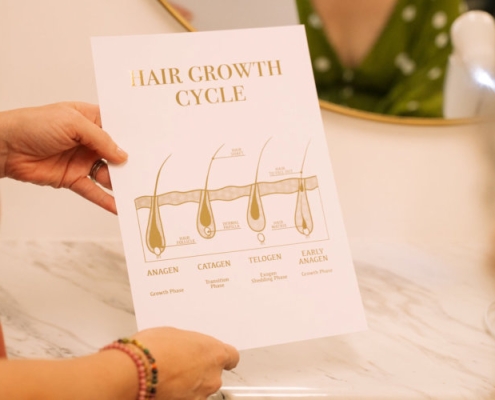
Hair growth operates on a delayed cycle, so changes are not immediate. Even after iron levels are improved, it can take several months before any visible changes occur. This is because the hair you see now was formed some time ago, and new growth needs time to move through the cycle.
Is iron deficiency the main cause of hair loss in women?
Iron deficiency is one of the more commonly discussed factors, but it is not the main cause of hair loss on its own. Hair changes are usually influenced by a combination of factors, including hormones, stress, health conditions, and lifestyle. This is why focusing on one single cause often leads to incomplete answers.
How do I know if this is actually affecting my hair?
It can be difficult to determine this based on symptoms alone, as many hair concerns present in similar ways. Looking at patterns over time, combined with relevant background information and, where appropriate, blood testing, can provide a clearer understanding of whether this factor may be contributing.
If my results are within the normal range, could this still be relevant?
Yes, it can be. Standard reference ranges are designed for general health and may not always reflect what is optimal for hair growth. Results that fall within range can still be on the lower or borderline end, which may be worth exploring further in the context of your hair concerns.
Do I need to see a GP or specialist for this?
In many cases, working with both a GP and a trichology-focused clinic can be helpful. A GP can assist with medical testing and broader health considerations, while a trichologist can assess hair and scalp patterns and help connect the dots between different contributing factors.
You may be also interested in
 https://www.trichohealthclinic.com.au/wp-content/uploads/2026/04/Iron-Deficiency.jpg
500
1000
admin
https://www.trichohealthclinic.com.au/wp-content/uploads/2026/02/Tricho-Health-Clinic-Logo.png
admin2026-10-19 15:13:462026-08-19 15:14:47Iron Deficiency and Hair Loss in Women: The Ferritin Connection
 https://www.trichohealthclinic.com.au/wp-content/uploads/2026/04/Nutrition-Deficicencies.jpg
500
1000
admin
https://www.trichohealthclinic.com.au/wp-content/uploads/2026/02/Tricho-Health-Clinic-Logo.png
admin2026-10-14 15:13:442026-08-19 15:14:35Nutrient Deficiencies That Affect Hair Growth in Women
 https://www.trichohealthclinic.com.au/wp-content/uploads/2026/04/Zinc-Defficiency.jpg
500
1000
admin
https://www.trichohealthclinic.com.au/wp-content/uploads/2026/02/Tricho-Health-Clinic-Logo.png
admin2026-09-28 15:12:322026-08-19 15:12:44Zinc Deficiency and Scalp Health: A Hidden Contributor to Hair Loss
 https://www.trichohealthclinic.com.au/wp-content/uploads/2026/04/How-blood-tests-help.jpg
500
1000
admin
https://www.trichohealthclinic.com.au/wp-content/uploads/2026/02/Tricho-Health-Clinic-Logo.png
admin2026-09-24 15:11:422026-10-15 06:55:59How Blood Tests Help Identify Hair-Related Deficiencies
 https://www.trichohealthclinic.com.au/wp-content/uploads/2026/04/Vitamin-D.jpg
500
1000
admin
https://www.trichohealthclinic.com.au/wp-content/uploads/2026/02/Tricho-Health-Clinic-Logo.png
admin2026-09-04 15:13:462026-09-03 12:54:31Vitamin D and Hair Thinning: What the Research Suggests
 https://www.trichohealthclinic.com.au/wp-content/uploads/2026/04/Vitamin-B12.jpg
500
1000
admin
https://www.trichohealthclinic.com.au/wp-content/uploads/2026/02/Tricho-Health-Clinic-Logo.png
admin2026-08-25 12:13:482026-08-24 11:30:42Vitamin B12 and Hair Changes: When Levels May Matter
