
Vitamin D and Hair Thinning: What the Research Suggests
Vitamin D is often associated with bone health and immune function, but its role in hair growth has gained increasing attention in recent years. Many women experiencing hair thinning or increased shedding are surprised to learn that vitamin D levels may be one of several factors worth exploring, particularly when changes seem to occur without a clear external cause.
While vitamin D deficiency is not a direct or sole cause of hair loss, research suggests it may influence the hair growth cycle and the behaviour of hair follicles. Understanding how vitamin D functions in the body, and how it may relate to hair changes, can help bring clarity to what is often a confusing and frustrating experience.
For a broader overview of how nutrient levels may influence hair, you can refer to Nutrient Deficiencies That Affect Hair Growth in Women.
What Vitamin D Does in the Body
Vitamin D plays an important role in regulating immune function, supporting cell growth, and maintaining overall health. Unlike many other vitamins, it also functions more like a hormone, influencing a wide range of processes throughout the body. It is produced when the skin is exposed to sunlight and can also be obtained through certain foods and supplements.
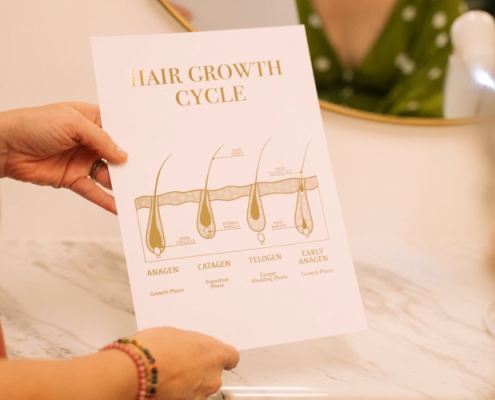
Because vitamin D is involved in cellular activity, it has been studied in relation to tissues that rely on continuous growth and renewal, including the hair follicle. Hair follicles are dynamic structures that cycle through phases of growth, rest, and shedding, and these processes are influenced by a variety of internal signals, including those linked to vitamin D.
The Link Between Vitamin D and Hair Follicles
Vitamin D receptors are present in hair follicles, which has led researchers to explore whether vitamin D plays a role in regulating the hair growth cycle. These receptors appear to be involved in the activation of hair follicles and the transition between different phases of growth.
A systematic observation published on PubMed found that individuals experiencing certain types of hair loss often had lower vitamin D levels compared to control groups. While this does not establish a direct cause-and-effect relationship, it does suggest that vitamin D may be a contributing factor in some cases.
Additional research examining nutrient levels in hair loss patients, including this study on serum ferritin and vitamin D, further supports the idea that multiple micronutrients may work together in influencing hair health.
How Low Vitamin D May Affect Hair
When vitamin D levels are low, it may influence how hair follicles function and cycle over time. This can potentially contribute to increased shedding, slower regrowth, or hair that appears thinner than usual. However, these changes are rarely immediate and often develop gradually, which can make the connection less obvious.
It is also important to recognise that vitamin D is just one piece of a much larger picture. Hair thinning is usually influenced by multiple factors, including hormones, stress, nutritional status, and overall health. Low vitamin D levels may contribute to the overall pattern rather than act as a standalone cause.
Who May Be More at Risk of Low Vitamin D
Vitamin D deficiency is relatively common, particularly in individuals who have limited sun exposure, spend most of their time indoors, or use consistent sun protection. Women in certain life stages, such as postpartum or menopause, may also experience changes that affect nutrient levels more broadly.
Other factors, such as skin tone, geographical location, and lifestyle habits, can also influence how effectively the body produces vitamin D. This means that even women who consider themselves generally healthy may still have suboptimal levels without realising it.
Why Symptoms Alone Are Not Enough
One of the challenges with vitamin D is that low levels do not always present with clear or specific symptoms. Hair thinning may occur alongside other subtle signs such as fatigue or low mood, but these are not unique to vitamin D deficiency and can be influenced by many different factors.
This is why relying on symptoms alone can lead to guesswork. Without a clearer understanding of what is happening internally, it becomes difficult to determine whether vitamin D is actually playing a role in your hair changes.
The Role of Blood Testing
Blood testing provides a more reliable way to assess vitamin D levels and determine whether they may be relevant to your hair concerns. It allows you to move beyond assumptions and gain a clearer understanding of your current status.
If you would like to explore how this works in more detail, you can read How Blood Tests Help Identify Hair-Related Deficiencies.
Why Self-Supplementing May Not Be the Best Approach
Because vitamin D is widely discussed, many people choose to start supplements without testing their levels first. While this may seem like a simple solution, it does not always address the underlying issue and may not be necessary in every case.
A more effective approach involves identifying whether your levels are low and then determining the most appropriate way to address this. This ensures that any changes are relevant to your individual needs rather than based on general assumptions.
A Structured Approach to Understanding Hair Thinning
At Tricho Health Clinic, the focus is on understanding the full picture before making recommendations. This includes reviewing your hair history, lifestyle factors, and any relevant test results to identify potential contributing factors.
This approach allows for more personalised guidance and helps avoid unnecessary or ineffective strategies. Where appropriate, this may involve working alongside your GP to ensure all aspects of your health are considered.
If you would like to take a closer look at what may be contributing to your hair changes, you can learn more here: Hair & Scalp Analysis or Personalised Treatment Plans & Follow Up Care.
Final Thoughts
Vitamin D is one of several factors that may influence hair thinning, particularly when levels are low over time. While it is not a standalone cause of hair loss, it can be part of a broader pattern that affects how hair grows and sheds.
The most helpful approach is not to rely on assumptions, but to take a structured and informed view of what may be contributing to your hair changes. By understanding your individual situation, you can make decisions that are more targeted, appropriate, and ultimately more effective.
Frequently Asked Questions
Can low vitamin D cause hair thinning on its own?
Low vitamin D levels may contribute to hair thinning, but they are rarely the sole cause. Hair changes are usually influenced by multiple factors, including hormones, stress, and overall health. Vitamin D is best considered as part of a broader picture rather than a single explanation.
How do I know if my vitamin D levels are affecting my hair?
It is difficult to determine this based on symptoms alone, as hair thinning can occur for many different reasons. Blood testing provides a clearer understanding of your vitamin D levels and whether they may be relevant to your situation.
Should I take vitamin D supplements if I’m experiencing hair loss?
Starting supplements without knowing your current levels may not be the most effective approach. It is generally more helpful to assess your levels first and then determine whether supplementation is appropriate based on your individual needs.
How long does it take for hair to improve after correcting vitamin D levels?
Hair growth takes time, and changes are not immediate. Even after vitamin D levels are improved, it may take several months before noticeable differences occur, as new hair needs to move through the growth cycle.
Is vitamin D deficiency common in women?
Yes, vitamin D deficiency is relatively common, particularly in individuals with limited sun exposure or certain lifestyle factors. This is why it is often considered when assessing hair concerns, even in otherwise healthy individuals.
Can I get enough vitamin D from sunlight alone?
Sunlight is a primary source of vitamin D, but factors such as time spent indoors, sunscreen use, and geographical location can all influence how much is produced. This means some individuals may still have low levels despite regular exposure.
Is vitamin D linked to specific types of hair loss?
Research has explored associations between vitamin D and certain types of hair loss, but it is not limited to one specific condition. It is generally considered as part of an overall assessment rather than being tied to a single diagnosis.
What should I do if I suspect vitamin D is affecting my hair?
The most helpful step is to gain a clearer understanding of your levels and overall health context. This allows for a more informed approach rather than relying on guesswork, and helps guide appropriate next steps.
You may be also interested in
 https://www.trichohealthclinic.com.au/wp-content/uploads/2026/04/Iron-Deficiency.jpg
500
1000
admin
https://www.trichohealthclinic.com.au/wp-content/uploads/2026/02/Tricho-Health-Clinic-Logo.png
admin2026-10-19 15:13:462026-08-19 15:14:47Iron Deficiency and Hair Loss in Women: The Ferritin Connection
https://www.trichohealthclinic.com.au/wp-content/uploads/2026/04/Iron-Deficiency.jpg
500
1000
admin
https://www.trichohealthclinic.com.au/wp-content/uploads/2026/02/Tricho-Health-Clinic-Logo.png
admin2026-10-19 15:13:462026-08-19 15:14:47Iron Deficiency and Hair Loss in Women: The Ferritin Connection https://www.trichohealthclinic.com.au/wp-content/uploads/2026/04/Nutrition-Deficicencies.jpg
500
1000
admin
https://www.trichohealthclinic.com.au/wp-content/uploads/2026/02/Tricho-Health-Clinic-Logo.png
admin2026-10-14 15:13:442026-08-19 15:14:35Nutrient Deficiencies That Affect Hair Growth in Women
https://www.trichohealthclinic.com.au/wp-content/uploads/2026/04/Nutrition-Deficicencies.jpg
500
1000
admin
https://www.trichohealthclinic.com.au/wp-content/uploads/2026/02/Tricho-Health-Clinic-Logo.png
admin2026-10-14 15:13:442026-08-19 15:14:35Nutrient Deficiencies That Affect Hair Growth in Women https://www.trichohealthclinic.com.au/wp-content/uploads/2026/04/Zinc-Defficiency.jpg
500
1000
admin
https://www.trichohealthclinic.com.au/wp-content/uploads/2026/02/Tricho-Health-Clinic-Logo.png
admin2026-09-28 15:12:322026-08-19 15:12:44Zinc Deficiency and Scalp Health: A Hidden Contributor to Hair Loss
https://www.trichohealthclinic.com.au/wp-content/uploads/2026/04/Zinc-Defficiency.jpg
500
1000
admin
https://www.trichohealthclinic.com.au/wp-content/uploads/2026/02/Tricho-Health-Clinic-Logo.png
admin2026-09-28 15:12:322026-08-19 15:12:44Zinc Deficiency and Scalp Health: A Hidden Contributor to Hair Loss https://www.trichohealthclinic.com.au/wp-content/uploads/2026/04/How-blood-tests-help.jpg
500
1000
admin
https://www.trichohealthclinic.com.au/wp-content/uploads/2026/02/Tricho-Health-Clinic-Logo.png
admin2026-09-24 15:11:422026-10-15 06:55:59How Blood Tests Help Identify Hair-Related Deficiencies
https://www.trichohealthclinic.com.au/wp-content/uploads/2026/04/How-blood-tests-help.jpg
500
1000
admin
https://www.trichohealthclinic.com.au/wp-content/uploads/2026/02/Tricho-Health-Clinic-Logo.png
admin2026-09-24 15:11:422026-10-15 06:55:59How Blood Tests Help Identify Hair-Related Deficiencies https://www.trichohealthclinic.com.au/wp-content/uploads/2026/04/Vitamin-D.jpg
500
1000
admin
https://www.trichohealthclinic.com.au/wp-content/uploads/2026/02/Tricho-Health-Clinic-Logo.png
admin2026-09-04 15:13:462026-09-03 12:54:31Vitamin D and Hair Thinning: What the Research Suggests
https://www.trichohealthclinic.com.au/wp-content/uploads/2026/04/Vitamin-D.jpg
500
1000
admin
https://www.trichohealthclinic.com.au/wp-content/uploads/2026/02/Tricho-Health-Clinic-Logo.png
admin2026-09-04 15:13:462026-09-03 12:54:31Vitamin D and Hair Thinning: What the Research Suggests https://www.trichohealthclinic.com.au/wp-content/uploads/2026/04/Vitamin-B12.jpg
500
1000
admin
https://www.trichohealthclinic.com.au/wp-content/uploads/2026/02/Tricho-Health-Clinic-Logo.png
admin2026-08-25 12:13:482026-08-24 11:30:42Vitamin B12 and Hair Changes: When Levels May Matter
https://www.trichohealthclinic.com.au/wp-content/uploads/2026/04/Vitamin-B12.jpg
500
1000
admin
https://www.trichohealthclinic.com.au/wp-content/uploads/2026/02/Tricho-Health-Clinic-Logo.png
admin2026-08-25 12:13:482026-08-24 11:30:42Vitamin B12 and Hair Changes: When Levels May Matter
