

How Blood Tests Help Identify Hair-Related Deficiencies
When hair starts shedding more than usual or feels noticeably thinner, one of the most common questions is, “What’s actually causing this?” The challenge is that hair changes rarely come down to a single factor, which makes guessing both frustrating and unreliable. This is where blood testing becomes a valuable tool, helping to move from assumptions to a clearer understanding of what may be happening internally.
Rather than relying on symptoms alone, blood tests provide objective information about nutrient levels and other markers that may influence hair growth. This allows for a more structured, evidence-informed approach, especially when multiple factors could be contributing at the same time.
For a broader overview of how nutrient levels may influence hair, you can refer to Nutrient Deficiencies That Affect Hair Growth in Women.
Why Blood Testing Matters for Hair Health
Hair follicles are highly sensitive to changes within the body, but those changes are not always visible through symptoms alone. Many nutrient deficiencies can develop gradually and may not present with obvious signs until they begin to affect areas like hair growth. Blood testing provides a way to identify these changes earlier and with greater accuracy.
Research has shown that micronutrient levels, including iron, vitamin D, and zinc, may be associated with certain types of hair shedding. A review available through the National Institutes of Health highlights the role these nutrients can play in hair loss patterns, reinforcing the value of assessing them as part of a broader evaluation.
What Blood Tests Can Reveal
Blood tests can provide insight into a range of markers that may influence hair growth and shedding. These include nutrient levels, indicators of overall health, and factors that may affect how the body supports the hair growth cycle.
Some of the commonly reviewed markers include iron stores (ferritin), vitamin D levels, vitamin B12, and zinc. Each of these plays a different role in supporting hair growth, and imbalances may contribute to changes in how the hair behaves over time.
To understand how these individual nutrients may affect your hair, you can explore:
- Iron Deficiency and Hair Loss
- Vitamin D and Hair Thinning
- Vitamin B12 and Hair Changes
- Zinc Deficiency and Scalp Health
Why “Normal” Results Don’t Always Tell the Full Story
One of the most common misconceptions is that if blood test results fall within the normal range, they cannot be contributing to hair concerns. In reality, reference ranges are designed for general health and may not always reflect what is optimal for hair growth.
Results that sit at the lower or borderline end of the range may still be relevant, particularly when combined with symptoms such as increased shedding or reduced hair density. This is why interpreting results in context is just as important as the results themselves.
Looking at Patterns, Not Just Numbers
Blood test results are most useful when viewed as part of a bigger picture. Rather than focusing on a single number, it is important to look at patterns across multiple markers, along with your hair history, lifestyle, and recent changes in health or routine.
For example, low ferritin levels combined with recent stress or illness may provide more insight than either factor alone. This type of pattern-based approach allows for a more accurate understanding of what may be contributing to hair changes.
Why Symptoms Alone Can Be Misleading
Many of the symptoms associated with nutrient deficiencies, such as fatigue or low energy, are non-specific and can overlap with a wide range of conditions. Hair shedding itself is also a common response to different types of internal stress, which makes it difficult to identify the cause based on symptoms alone.
This is why blood testing plays such an important role. It provides a clearer and more reliable foundation for understanding what may be happening, rather than relying on assumptions or trial-and-error approaches.
The Timing of Hair Changes
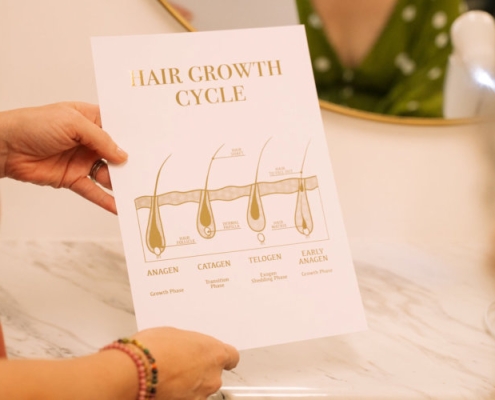
Hair growth operates on a delayed cycle, which means that changes in nutrient levels or health status may not show up in the hair immediately. In many cases, increased shedding occurs several weeks or even months after the initial trigger.
This delay can make it difficult to connect cause and effect, which is another reason why blood testing can be helpful. It allows you to look back and identify whether there may have been changes during that earlier period that are now affecting your hair.
Moving Away from Guesswork
Without testing, it is easy to fall into a cycle of trying different supplements or dietary changes without knowing whether they are actually needed. This trial-and-error approach can be frustrating and may not address the underlying issue.
By identifying what is happening internally, you can take a more targeted and effective approach, focusing only on what is relevant to your situation rather than making broad or unnecessary changes.
A Structured, Assessment-First Approach
At Tricho Health Clinic, blood testing is considered as part of a broader assessment rather than a standalone solution. This includes reviewing your hair history, lifestyle factors, and any recent changes that may be influencing your hair.
This approach allows for more personalised guidance and helps ensure that any recommendations are aligned with your individual needs. Where appropriate, collaboration with your GP ensures that all aspects of your health are considered.
If you would like to understand what may be contributing to your hair changes, you can learn more here: Hair & Scalp Analysis or Personalised Treatment Plans & Follow Up Care.
Final Thoughts
Blood testing is not about finding a single answer, but about building a clearer understanding of what may be influencing your hair. By looking at relevant markers alongside your personal history, it becomes possible to move away from guesswork and toward more informed decisions.
If you have been trying to make sense of ongoing hair changes, taking a structured approach that includes appropriate testing can provide clarity, direction, and a more confident path forward.
Frequently Asked Questions
Do I need blood tests if I’m experiencing hair loss?
Blood tests can be helpful when trying to understand whether internal factors such as nutrient levels may be contributing to hair changes. While they are not always required in every situation, they provide valuable information that can help guide a more informed and structured approach.
Which blood tests are relevant for hair loss?
Common markers that are often considered include iron stores (ferritin), vitamin D, vitamin B12, and zinc. These nutrients play a role in supporting hair growth, although they are usually assessed as part of a broader picture rather than in isolation.
If my blood test results are normal, does that mean nothing is wrong?
Not necessarily. Results within the normal range may still be on the lower or borderline end, which can be relevant in the context of hair concerns. Interpreting results alongside symptoms and history is often more helpful than looking at numbers alone.
Can blood tests identify the exact cause of my hair loss?
Blood tests can provide useful information about potential contributing factors, but they do not usually identify a single cause. Hair loss is often influenced by multiple factors, which is why results are best considered as part of a broader assessment.
How long after a blood test can I expect to see changes in my hair?
Hair growth is a gradual process, so even if an underlying issue is identified and addressed, it may take several months before noticeable changes occur. This delay is due to the natural hair growth cycle.
Should I take supplements based on my blood test results?
Any supplementation should be based on a clear understanding of your levels and individual needs. Taking supplements without proper context may not be effective and can sometimes create imbalances.
Can stress or lifestyle affect my blood test results?
Yes, factors such as stress, diet, sleep, and overall health can influence nutrient levels and how the body processes them. This is why these factors are often considered alongside blood test results.
What is the next step after getting my blood test results?
The most helpful next step is to review your results in context, alongside your hair history and lifestyle factors. This allows for a more personalised approach and helps guide appropriate decisions without relying on guesswork.
You may be also interested in
 https://www.trichohealthclinic.com.au/wp-content/uploads/2026/04/Iron-Deficiency.jpg
500
1000
admin
https://www.trichohealthclinic.com.au/wp-content/uploads/2026/02/Tricho-Health-Clinic-Logo.png
admin2026-10-19 15:13:462026-08-19 15:14:47Iron Deficiency and Hair Loss in Women: The Ferritin Connection
 https://www.trichohealthclinic.com.au/wp-content/uploads/2026/04/Nutrition-Deficicencies.jpg
500
1000
admin
https://www.trichohealthclinic.com.au/wp-content/uploads/2026/02/Tricho-Health-Clinic-Logo.png
admin2026-10-14 15:13:442026-08-19 15:14:35Nutrient Deficiencies That Affect Hair Growth in Women
 https://www.trichohealthclinic.com.au/wp-content/uploads/2026/04/Zinc-Defficiency.jpg
500
1000
admin
https://www.trichohealthclinic.com.au/wp-content/uploads/2026/02/Tricho-Health-Clinic-Logo.png
admin2026-09-28 15:12:322026-08-19 15:12:44Zinc Deficiency and Scalp Health: A Hidden Contributor to Hair Loss
 https://www.trichohealthclinic.com.au/wp-content/uploads/2026/04/How-blood-tests-help.jpg
500
1000
admin
https://www.trichohealthclinic.com.au/wp-content/uploads/2026/02/Tricho-Health-Clinic-Logo.png
admin2026-09-24 15:11:422026-10-15 06:55:59How Blood Tests Help Identify Hair-Related Deficiencies
 https://www.trichohealthclinic.com.au/wp-content/uploads/2026/04/Vitamin-D.jpg
500
1000
admin
https://www.trichohealthclinic.com.au/wp-content/uploads/2026/02/Tricho-Health-Clinic-Logo.png
admin2026-09-04 15:13:462026-09-03 12:54:31Vitamin D and Hair Thinning: What the Research Suggests
 https://www.trichohealthclinic.com.au/wp-content/uploads/2026/04/Vitamin-B12.jpg
500
1000
admin
https://www.trichohealthclinic.com.au/wp-content/uploads/2026/02/Tricho-Health-Clinic-Logo.png
admin2026-08-25 12:13:482026-08-24 11:30:42Vitamin B12 and Hair Changes: When Levels May Matter

