
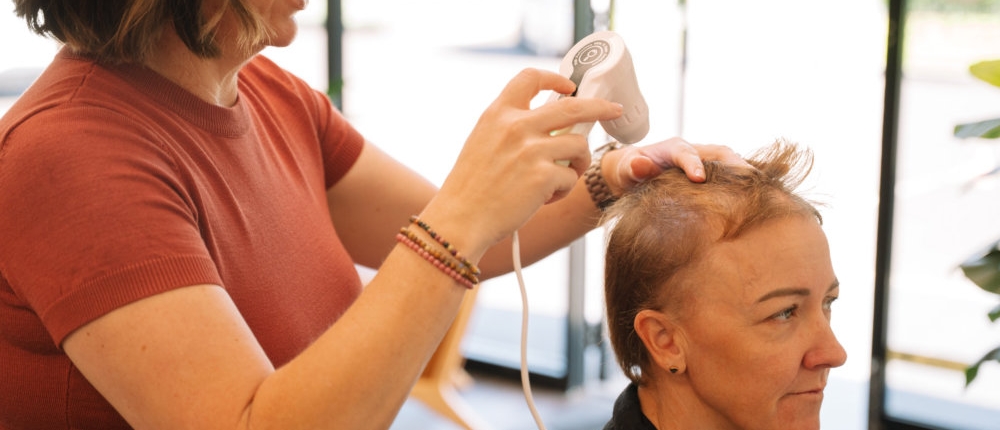
Dandruff vs Seborrhoeic Dermatitis: Understanding the Difference
Flaking of the scalp is one of the most common concerns women experience, yet it is also one of the most misunderstood. Many people use the term “dandruff” to describe any form of flaking, but in reality, there is a spectrum of scalp conditions that can present in similar ways. Two of the most commonly confused conditions are dandruff and seborrhoeic dermatitis.
While they may appear similar at first glance, these conditions differ in their underlying causes, severity, and how they affect the scalp environment. Understanding the difference is important, not only for managing symptoms, but also for recognising how ongoing scalp imbalance may influence overall hair health.
For a broader understanding of how the scalp environment supports hair growth, you can refer to Scalp Health and the Hair Growth Environment.
Why Flaking Happens in the First Place
The scalp is a living skin surface that is constantly renewing itself. As part of this process, old skin cells are shed and replaced with new ones. Under normal conditions, this turnover is gradual and not visible. However, when the process becomes accelerated or disrupted, it can lead to visible flaking.
This disruption is often linked to an imbalance in the scalp environment, including factors such as oil production, microbial activity, and inflammation. According to DermNet NZ, both dandruff and seborrhoeic dermatitis are associated with an inflammatory response to naturally occurring yeast on the scalp, although the degree of inflammation varies between the two conditions.
What Is Dandruff?
Dandruff is generally considered the milder end of the spectrum. It typically presents as light, dry, or slightly oily flakes that are visible on the scalp or in the hair. While it can be persistent and frustrating, it is usually not associated with significant inflammation or discomfort.
In many cases, dandruff is linked to a mild imbalance in the scalp environment rather than an underlying inflammatory condition. The scalp may feel slightly dry or mildly itchy, but symptoms are often manageable and do not significantly affect the overall health of the scalp.
Because dandruff is relatively common, it is often treated as a cosmetic issue. However, ongoing flaking can still indicate that the scalp environment is not fully balanced, which may be worth addressing as part of a broader approach to hair and scalp health.
What Is Seborrhoeic Dermatitis?
Seborrhoeic dermatitis is a more complex and inflammatory scalp condition. It exists on the same spectrum as dandruff but involves a stronger inflammatory response and tends to present with more noticeable symptoms. These may include thicker, yellowish or greasy flakes, redness, and increased irritation of the scalp.
According to DermNet NZ, seborrhoeic dermatitis is linked to an overgrowth of Malassezia yeast combined with an inflammatory response from the skin. This interaction disrupts the scalp barrier and can lead to ongoing cycles of flaking and irritation.
Unlike dandruff, seborrhoeic dermatitis may extend beyond the scalp, affecting areas such as the hairline, eyebrows, or behind the ears. This broader involvement can make it more noticeable and, in some cases, more difficult to manage without a structured approach.
Key Differences Between Dandruff and Seborrhoeic Dermatitis
Although these conditions share similarities, there are some important differences that can help distinguish between them. Dandruff tends to be milder, with finer flakes and minimal inflammation, while seborrhoeic dermatitis is typically associated with more visible redness, irritation, and thicker scaling.
The level of discomfort is often a distinguishing factor. Dandruff may cause mild itching, whereas seborrhoeic dermatitis can lead to more persistent irritation or sensitivity. The appearance of the flakes can also differ, with dandruff appearing lighter and drier, and seborrhoeic dermatitis presenting with more oily or yellowish scales.
Understanding these differences helps guide a more appropriate approach, as treating both conditions in the same way may not always be effective.
How These Conditions Affect the Scalp Environment
Both dandruff and seborrhoeic dermatitis reflect an imbalance in the scalp environment, but the degree of disruption differs. In dandruff, the imbalance is usually mild and may not significantly affect the function of the hair follicle. In seborrhoeic dermatitis, the presence of inflammation can have a more noticeable impact on how the scalp behaves.
Inflammation plays a key role in this process. Research on scalp inflammation and hair loss highlights how inflammatory processes can influence the hair growth environment. While this does not mean that seborrhoeic dermatitis directly causes hair loss, ongoing inflammation may contribute to changes in shedding patterns in some individuals.
Why These Conditions Are Often Confused
One of the main reasons dandruff and seborrhoeic dermatitis are confused is that they exist on a spectrum rather than as completely separate conditions. This means that symptoms can overlap, and the severity may fluctuate over time.
In addition, many people self-diagnose based on visible symptoms alone, which can make it difficult to distinguish between the two. Without a closer look at the scalp and a better understanding of the underlying patterns, it is easy to misinterpret what is actually happening.
The Role of Triggers and Lifestyle Factors
Both dandruff and seborrhoeic dermatitis can be influenced by external and internal factors. Stress, changes in weather, hormonal fluctuations, and product use can all affect how the scalp behaves. These triggers do not cause the condition directly, but they can influence its severity and persistence.
Understanding these patterns can help explain why symptoms may come and go, or why they seem to worsen at certain times. This reinforces the importance of looking at the scalp as a dynamic environment rather than a static condition.
A Structured Approach to Scalp Concerns
At Tricho Health Clinic, scalp conditions are assessed as part of the overall hair growth environment. This involves looking beyond the visible symptoms and considering factors such as scalp balance, lifestyle influences, and how these may relate to hair changes.
This approach allows for a more personalised and effective understanding of what may be contributing to ongoing scalp concerns, rather than relying on general assumptions or temporary fixes.
If you would like to explore this further, you can learn more here: Hair & Scalp Analysis or Scalp Treatments.
Final Thoughts
Dandruff and seborrhoeic dermatitis may appear similar, but they represent different points on a spectrum of scalp imbalance. Understanding the difference can help you make more informed decisions and recognise when a more structured approach may be needed.
If flaking, irritation, or discomfort is ongoing, looking beyond surface symptoms and considering the health of the scalp environment can provide greater clarity and direction.
Frequently Asked Questions
What is the main difference between dandruff and seborrhoeic dermatitis?
The main difference lies in severity and inflammation. Dandruff is generally milder, with light flaking and minimal irritation, while seborrhoeic dermatitis involves more inflammation, redness, and thicker, often oily flakes.
Can dandruff turn into seborrhoeic dermatitis?
They exist on a spectrum, so symptoms can progress or fluctuate over time. What starts as mild flaking may develop into a more inflamed condition depending on triggers and underlying factors.
Does seborrhoeic dermatitis cause hair loss?
It does not directly cause hair loss, but ongoing inflammation may influence the scalp environment and contribute to increased shedding in some cases.
Why does my scalp keep flaking even after using anti-dandruff products?
Persistent flaking may indicate that the underlying cause has not been fully addressed. It may also suggest that the condition is more than simple dandruff and requires a more tailored approach.
Is dandruff caused by a dry scalp?
Not always. Dandruff is often linked to an imbalance in the scalp environment rather than dryness alone, and in some cases, it can occur on an oily scalp.
What triggers seborrhoeic dermatitis flare-ups?
Common triggers include stress, weather changes, hormonal shifts, and certain hair or scalp products. These factors can influence how the scalp behaves over time.
Can scalp conditions spread beyond the scalp?
Yes, seborrhoeic dermatitis can affect other areas such as the eyebrows, hairline, and behind the ears, which can help distinguish it from dandruff.
What is the best way to manage ongoing scalp flaking?
A structured assessment that looks at the scalp condition, lifestyle factors, and potential triggers can help identify what is contributing and guide a more effective approach.
You may be also interested in
 https://www.trichohealthclinic.com.au/wp-content/uploads/2026/04/Scalp-Health.jpg
500
1000
admin
https://www.trichohealthclinic.com.au/wp-content/uploads/2026/02/Tricho-Health-Clinic-Logo.png
admin2026-09-22 15:11:422026-08-19 15:12:05Scalp Health and the Hair Growth Environment
 https://www.trichohealthclinic.com.au/wp-content/uploads/2026/04/Dandruff-vs-Seborrhoeic-Dermititis.jpg
500
1000
admin
https://www.trichohealthclinic.com.au/wp-content/uploads/2026/02/Tricho-Health-Clinic-Logo.png
admin2026-09-17 15:11:182026-08-19 15:11:31Dandruff vs Seborrhoeic Dermatitis: Understanding the Difference
 https://www.trichohealthclinic.com.au/wp-content/uploads/2026/04/Scalp-Inflammation.jpg
500
1000
admin
https://www.trichohealthclinic.com.au/wp-content/uploads/2026/02/Tricho-Health-Clinic-Logo.png
admin2026-09-15 15:10:092026-08-19 15:11:05Scalp Inflammation and Hair Shedding: What’s the Link?
 https://www.trichohealthclinic.com.au/wp-content/uploads/2026/04/Scalp-Psoriasis.jpg
500
1000
admin
https://www.trichohealthclinic.com.au/wp-content/uploads/2026/02/Tricho-Health-Clinic-Logo.png
admin2026-09-09 15:10:082026-08-19 15:10:49Scalp Psoriasis and Hair Density: What Women Should Know
 https://www.trichohealthclinic.com.au/wp-content/uploads/2026/04/Burning-or-tender-scalp.jpg
500
1000
admin
https://www.trichohealthclinic.com.au/wp-content/uploads/2026/02/Tricho-Health-Clinic-Logo.png
admin2026-09-08 15:10:062026-08-19 15:10:34Burning or Tender Scalp: When Sensitivity May Signal Something More
 https://www.trichohealthclinic.com.au/wp-content/uploads/2026/04/Product-Buildup.jpg
500
1000
admin
https://www.trichohealthclinic.com.au/wp-content/uploads/2026/02/Tricho-Health-Clinic-Logo.png
admin2026-08-19 15:10:142026-08-19 15:10:14Product Buildup and Scalp Barrier Disruption

